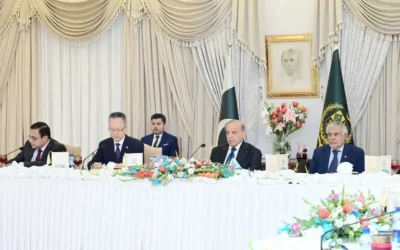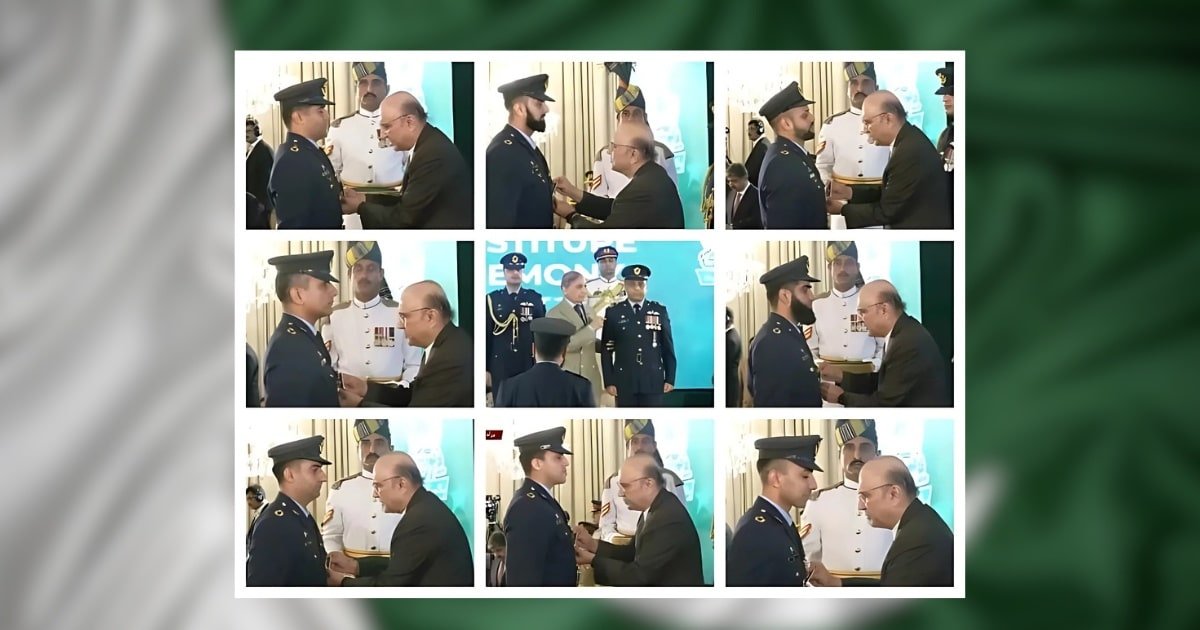





For the first time since their daring missions in May’s conflict with India, the Pakistan Air Force (PAF) pilots who downed six Indian fighter jets—including advanced Rafales—and destroyed the Russian-made S-400 air defense system stepped into the public eye on Thursday. Their long-awaited appearance came as President Asif Ali Zardari and Prime Minister Shehbaz Sharif decorated them with top gallantry awards during an Independence Day ceremony at Aiwan-e-Sadr. The ceremony was part of broader celebrations for Pakistan’s 79th Independence Day, officially designated as “Marka-i-Haq” (Battle of Truth) by the government.
Awards and Recognition
Prime Minister Shehbaz Sharif paid special tribute to Wing Commander Malik Rizwanul Haq, who was awarded the Tamgha-e-Basalat for his pivotal role in destroying the S-400 system during Operation Bunyanum Marsoos. The prime minister personally conferred the medal, inviting the pilot to stand beside him before a cheering audience. “He destroyed the S-400 system,” the prime minister announced, prompting widespread applause.
According to the Inter-Services Public Relations (ISPR), the Sitara-e-Jurat was conferred upon several pilots for their exceptional bravery in combat. Recipients included Wing Commander Bilal Raza, Wing Commander Hammad Ibne Masood, Squadron Leader M. Yousaf Khan, Squadron Leader Muhammad Osama Ishfaq, Squadron Leader Muhammad Hassan Anees, Squadron Leader Talal Hassan, and Squadron Leader Fida Muhammad Khan. In total, eight Sitara-i-Jurat, 24 Sitara-i-Basalat, and 45 Tamgha-i-Basalat were awarded to military personnel during the ceremony.
Pakistan Air Force Shaheens who downed Indian Rafale jets & laid to waste the S-400 systems, and with them all nefarious plans of the enemy were awarded with Sitara-e-Jurat by the President of Pakistan at an investiture ceremony today. #IndependenceDay #PakistanAirForce pic.twitter.com/2YNmNfvdDZ
— PTV News (@PTVNewsOfficial) August 14, 2025
Escalation of the May Conflict
The latest escalation between Pakistan and India began on April 22 with an attack in Pahalgam, which killed 26 people. India immediately blamed Pakistan, a claim Islamabad categorically rejected. In response, India undertook a series of hostile actions on April 23, including suspending the 65-year-old Indus Waters Treaty and cancelling visas.
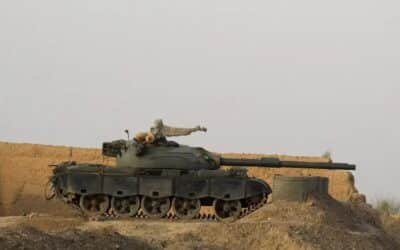
Tensions further escalated in the early hours of May 7, when Indian missile strikes hit six cities in Punjab and Azad Jammu and Kashmir (AJK), destroying a mosque and killing dozens of civilians. In a swift military response, Pakistan’s armed forces shot down several Indian warplanes. The confrontation intensified again on May 10 when India targeted Pakistani airbases with missile strikes. In retaliation, Pakistan launched Operation Bunyanum Marsoos, damaging Indian military installations, including airbases and missile storage sites.
International Confirmation and Conflicting Claims
Reports from international sources, in addition to, French Air Chief Gen Jerome Bellanger confirmed that he had seen evidence of at least three Indian aircraft being downed, including a Rafale. Additionally, a Reuters report, citing an unnamed US official, assessed with high confidence that Pakistani J-10 aircraft had shot down at least two Indian fighter jets. The report also detailed how the use of China-made PL-15 missiles with a range exceeding 200km gave the PAF a tactical edge. The conflict ultimately concluded with a ceasefire announced by then-US President Donald Trump following intense diplomatic efforts.
You May Like To Read: