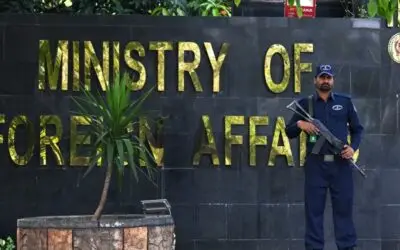





The Ministry of Water Resources on Thursday formally reiterated that the Indus Waters Treaty (IWT) remains fully operational and binding, rejecting claims that the agreement has been put in abeyance. This position has been firmly endorsed by the Hague-based Court of Arbitration (CoA), which confirms the treaty continues to be a legally effective instrument between Pakistan and India.
During a Senate Standing Committee meeting chaired by Jam Saifullah Khan, Secretary of Ministry of Water Resources Syed Ali Murtaza clarified that despite India’s assertions, the international legal standing of the treaty remains unchanged. The Secretary also confirmed that Additional Secretary Mehar Ali Shah has been assigned the additional charge of Indus Water Commissioner to ensure uninterrupted oversight of hydropower and water-sharing matters.
Indus Waters Treaty: Hague-based CoA endorses Pakistan’s position https://t.co/gsYvqFrMor
— Shehzad Younis شہزاد یونس (@shehzadyounis) February 20, 2026
Strategic Infrastructure and Economic Milestones:
The Ministry provided critical updates on national water and energy security projects:
-
Diamer-Bhasha Dam: Now 30% complete, funded entirely by the Government of Pakistan through the Public Sector Development Programme (PSDP).
-
Dasu Hydropower Project: 21% of construction work is finished.
-
Tarbela Hydropower: Currently generating electricity at a highly competitive rate of Rs 0.53 per unit.
-
Flood Monitoring: A network of 707 telemetry stations is under consideration with ADB assistance, while 27 critical water-flow monitoring sites are scheduled for completion by June 2026.
You May Like To Read: Gulf Nations Commit $4.2B to Trump’s Board of Peace
Governance and Safety Reforms:
In a push for enhanced disaster resilience, the Ministry announced that the National Flood Protection Plan has been submitted to the Council of Common Interests, and a new Dam Safety Act is in its final stages. While Punjab has successfully removed over 2,600 encroachments from river waterways, the Committee stressed the need for stricter provincial zoning to mitigate climate-induced flood risks.
Addressing urban water security, the Pakistan Council of Research in Water Resources (PCRWR) noted that rainwater harvesting has now been made mandatory for all new housing societies in Islamabad to combat declining groundwater levels.
Check out our latest video: