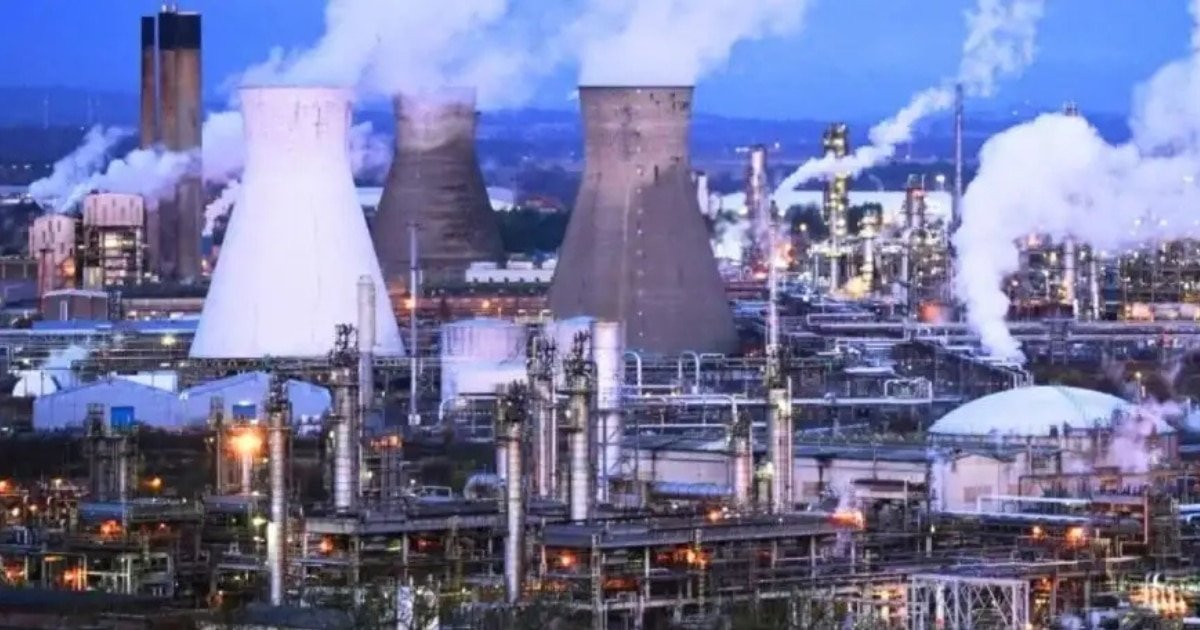





The UK’s chemical manufacturing sector is facing an existential crisis as global energy prices skyrocket due to escalating international tensions. Huntsman Corporation, the American owner of one of Britain’s last major chemical plants, has warned that it will be forced to close its UK operations if energy costs do not subside within the next three months. While Huntsman maintains facilities across the US, China, and the Middle East, its European and British sites are uniquely vulnerable to the international gas market, where prices have hit levels not seen since the 2022 invasion of Ukraine.
One of Britain’s last major chemical plants at risk as energy prices surge
If costs stay high for the next three months, US owner Peter Huntsman says he will close the site on Teessidehttps://t.co/TnG6YU2OE3— dave lawrence 🐟🐟🐠 (@dave43law) March 15, 2026
The crisis highlights a stark regional divide in industrial resilience. Despite the ongoing war in the Middle East, energy prices in that region, as well as in the US and China, have remained relatively stable compared to the “unsurvivable” spikes hitting the EU and UK. Huntsman Corporation has already taken drastic measures to offset these costs, cutting 10% of its global workforce and shuttering seven facilities over the past year, with the majority of those losses concentrated in Europe.
You May Like To Read: Global Power Realignment: Navigating Sovereignty in a Multipolar Age
Industrial leaders and major stakeholders have labeled the situation a “self-inflicted” consequence of failed government policy. Critics argue that successive UK administrations have failed to lower industrial energy bills or provide robust trade defenses, leaving the sector exposed to rising carbon costs. This decline has already led to the loss of domestic production for essential chemicals like ammonia and sulfuric acid, which are critical for fertilizer and defense manufacturing. The potential closure of these remaining plants raises significant alarms regarding Britain’s sovereign capability in food production and national security.
Check out our latest video: