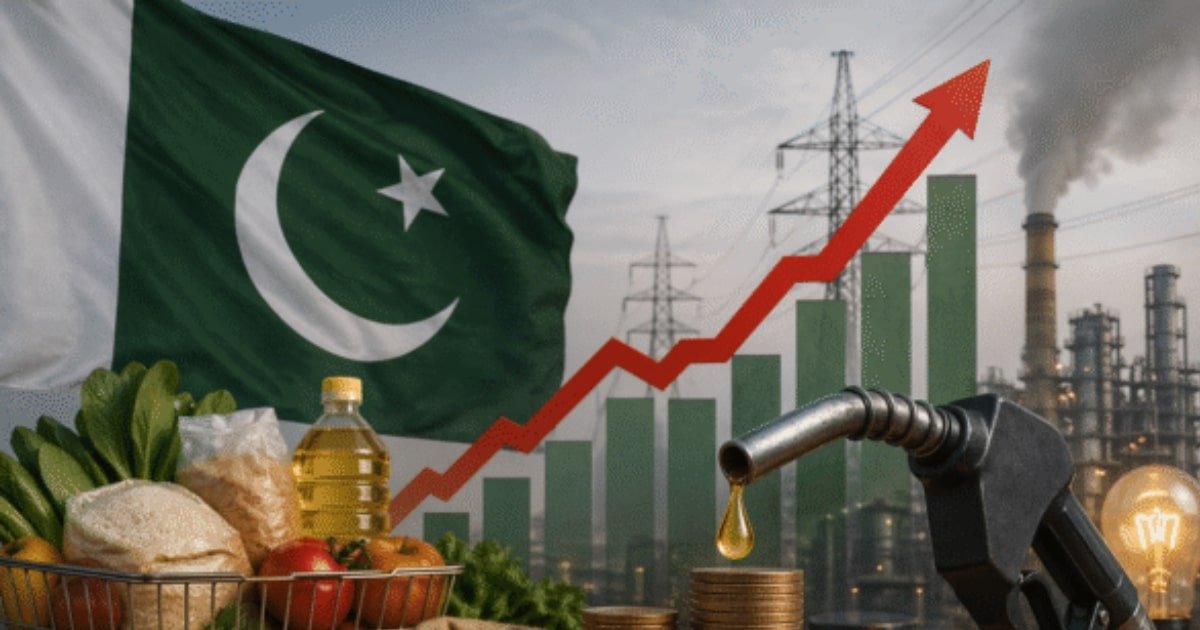





Pakistan’s consumer inflation returned to double digits in April for the first time in nearly two years. Official data shows the Consumer Price Index (CPI) rose to 11.11 percent. This jump marks a 21-month high and ends a long period of single-digit price growth. The sudden spike is largely due to the global energy crisis caused by the ongoing Middle East conflict. Prime Minister Shehbaz Sharif noted that the national oil import bill has more than doubled recently. While the government had set a lower target, supply shocks and rising transport costs are now putting fresh pressure on household budgets across the country.
📉🇵🇰 Middle East war could cost Pakistan $10B to $68B annually
🟢 Current (51 days): $10-14B | 10-12% inflation
🟡 Adverse (3 months): $24-32B | 13-15% inflation
🔴 Severe ($150/barrel): $50-68B | 17% inflationRemittances could drop 40%, exports halve💔 pic.twitter.com/h0NbzwPoro
— Gwadar Pro Official (@Gwadar_Pro) May 1, 2026
Quick Facts
- National inflation reached an 11.11 percent high in April.
- Transport and fuel costs jumped by more than 15 percent.
- Perishable food items saw a sharp monthly price increase.
- The weekly oil import bill rose to 800 million dollars.
- The State Bank raised interest rates to 11.5 percent.
- Urban areas faced higher price hikes than rural regions.
Global Supply Shocks Drive Local Costs
The current inflationary wave is closely tied to international events. The blockage of the Strait of Hormuz has forced energy prices upward globally. Pakistan feels this impact deeply as its energy import bill has risen from $300 million to $800 million per week. These higher fuel costs have moved quickly into the transport sector. As it costs more to move goods, the price of everyday items in local markets has climbed.
Housing and utility costs also saw a rise during April. This adds another layer of difficulty for middle-income families. While wheat prices have stayed somewhat stable, the overall cost of living is rising faster than expected. The nation is now feeling the direct heat of global conflict on its local kitchen budgets.
State Bank Response and Economic Outlook
In response to these figures, the State Bank of Pakistan (SBP) increased its interest rate. The rate now stands at 11.5 percent. This move aims to slow down the economy and control the flow of money. However, some economic experts argue that high rates may not work against inflation caused by global supply issues. They suggest that the current pressure comes from high oil and gas prices rather than too much local demand.
The government remains hopeful that these pressures are temporary. Efforts are underway to manage the energy supply chain and protect the most vulnerable citizens. For now, the focus remains on stabilizing the rupee and ensuring that essential food items remain available. Despite the global challenges, the state is working to bring the inflation rate back toward its original target.
You May Like To Read: Hidden Cost of Iran War: Asia’s Rice Paddies are Facing a “Perfect Storm”
Check out our latest video: