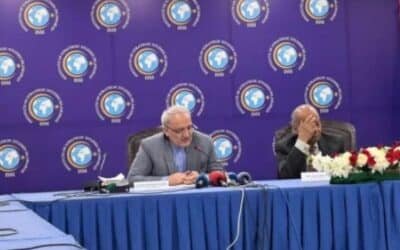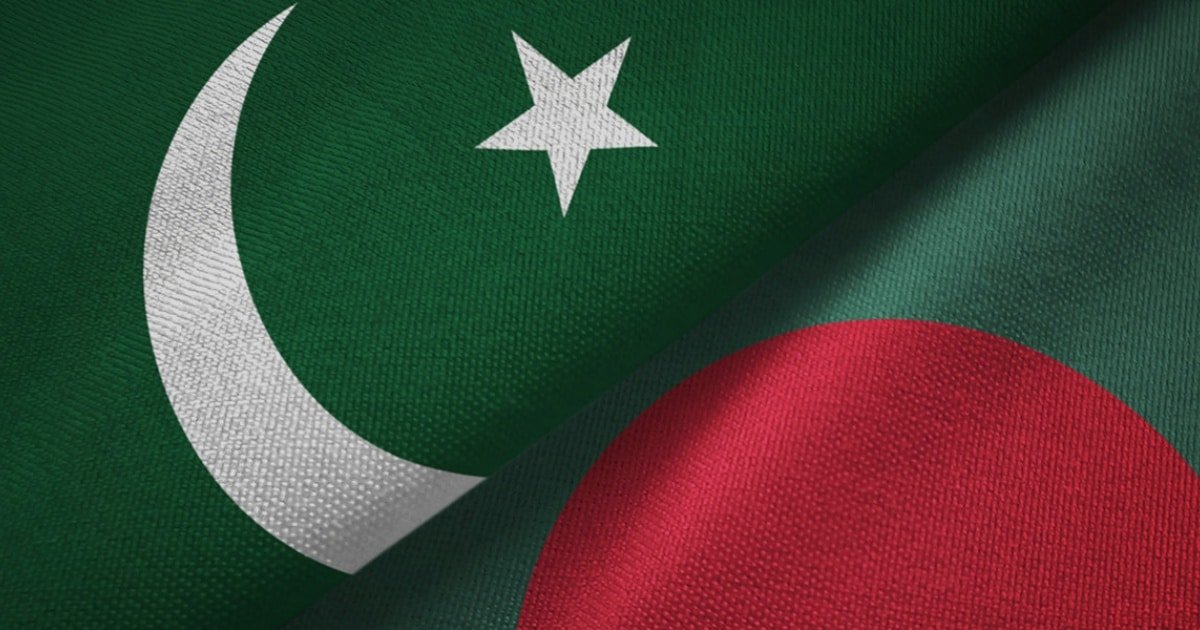



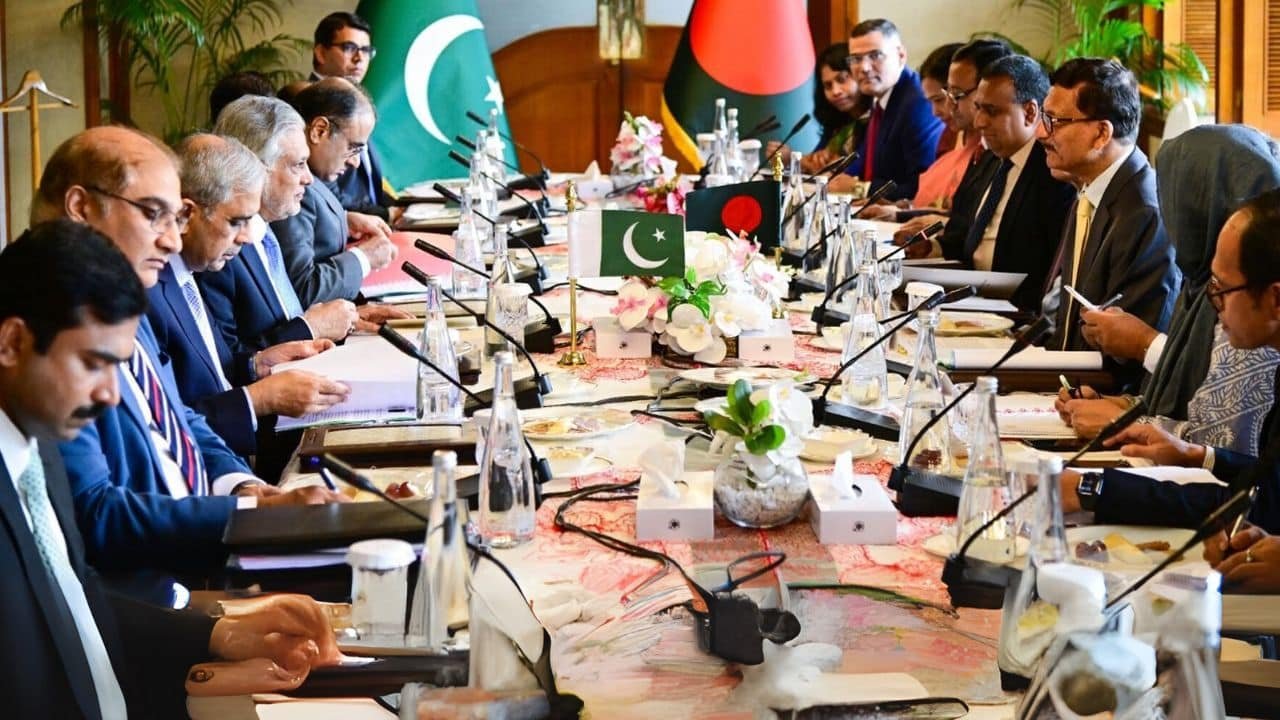
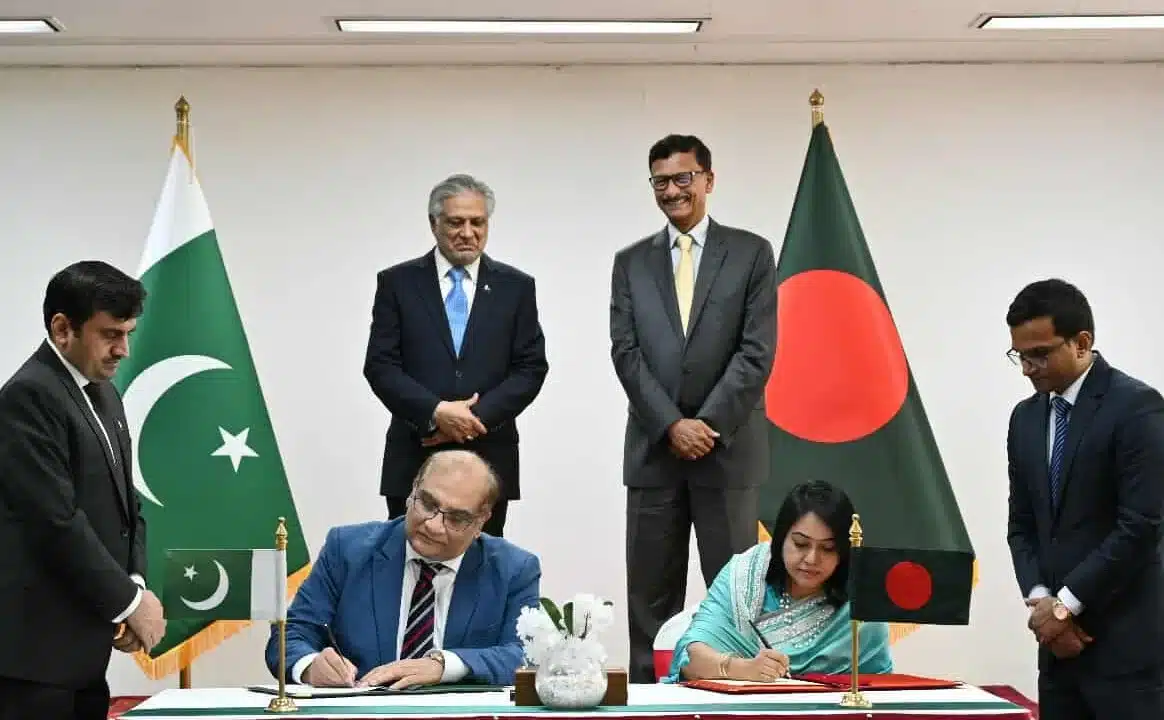
Pakistan and Bangladesh have taken a significant step in the direction of enhancing the relationship between them by sending Pakistan’s Foreign Minister, Ishaq Dar, to Dhaka in August 2025. In the course of this historic visit, the two countries have signed six agreements that revolve around defense, diplomacy, media, education, and culture. It is assumed that these agreements can make trust and come up with new chances of collaboration, thus ending years of minimum contact. By liquidating impediments on the side of officials, establishing training programmes, opening cultural and academic exchange, Pakistan and Bangladesh are demonstrating that they are ready to forget the past and work to bring a stronger and more connected future in the region of South Asia.
Diplomats, and Officials Granted Visa-Free Entry
The most prominent commitment made was the provision of a visa-free entry to holders of diplomatic and official passports. It implies that government officials and diplomats of the two countries can travel more freely to meet and negotiate, and also to jointly undertake projects. Previously, there always existed a delay in official communication because of visa barriers. By eliminating this obstacle, the two nations are expressing an ability to trust one another and maintain high-level communication channels open at any time. Not only does it enhance bilateral relations, but it also provides a good precedent on how a regional relationship can be improved.
You May Like To Read: China and Russia Vow to Safeguard Mutual Interests, and Foster ‘Equitable’ World Order
Cooperation in Providing Training at the Foreign Service Academies
Another major agreement was signed between the foreign service academies of Pakistan and Bangladesh. The concept is to provide even the young diplomat a chance to train with each other and pool in their experiences and learn each of their counterparts’ approach to diplomacy. This form of cooperation assists in building understanding between the two countries and eliminates the possibility of miscommunication between them two countries in the future. It also enables the two nations to develop a pool of experts who are more suited and prepared to handle international issues such as climate change, regional conflicts, and economic problems. In the long term, this move has a higher chance of turning into a more professional and cooperative relationship between the foreign ministries of the two states involved.
National News Agency Cooperation
Associated Press of Pakistan (APP) and Bangladesh Sangbad Sangstha (BSS) also signed a privilege to collaborate more in the domain of media. This cooperation aims to share news, exchange information, and promote more balanced images of each other’s countries. In the past decades, negative coverage and misconceptions have caused obstacles to the common perception. The object of initiating direct media collaboration is to decrease stereotypes and contribute to coverage of cooperation, the cultural richness of people, and human-to-human relations. Such media collaboration is important in the perception of the ordinary person towards one another and can be used to mend old scores.
Strategic, and Academic Think Tank Cooperation
Another important step is the agreement between the Institute of Strategic Studies, Islamabad (ISSI), and the Bangladesh Institute of International and Strategic Studies (BIISS). Such think tanks will now collaborate in research projects, conferences, and policy discussions. This type of cooperation between academics and policy in both countries is critical because it will enable the nations to learn about new concepts of peace and security in the region. It also provides them with a platform on which to talk about international matters like energy security, trade routes, and counterterrorism measures. In engaging think tanks, the two governments are making sure that future policies are policy research-informed and based on research, analysis, and mutual understanding.
Cultural Exchange Program
It is also during the visit that a new cultural exchange program was launched. The program is meant to facilitate collaboration in the areas of arts, literature, sports, and heritage. Culture is one of the most potent means to unite people together, and both Pakistan and Bangladesh possess numerous cultural and linguistic ties in spite of the political barrier. By holding concerts, art exhibitions, sports exchanges, and culture festivals, the two countries will be able to forge stronger emotional connections amongst their citizens. Younger generations will find these types of initiatives especially important since they can observe how to see the similarities instead of concentrating on the differences.
Pakistan Bangladesh Knowledge Corridor
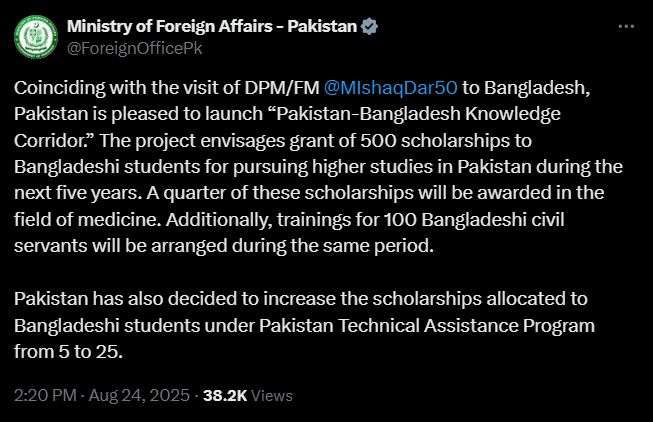
The most ambitious was the initiation of the Knowledge Corridor, which will be used to support 500 scholarships for Bangladeshi students, including the medical and technical ones, along with training sessions for the Bangladeshi civil servants in Pakistan. This is one of the greatest steps since education and skills development a long-term investment that directly helps the affected society. It also creates the possibility of future leaders, physicians, engineers, and administrators of Bangladesh to establish sustainable ties with Pakistan. Pakistan, in turn, enhances its soft influence and creates a reserve of goodwill that can pay off both nations in the future.
Regional, and Strategic Implications
The six agreements between Bangladesh and Pakistan are not only concerned with building up their bilateral relationship, but also with the restructuring of the region of South Asia. Both states participate in SAARC, which, over the years, has failed to take form because of political differences, mainly between India and Pakistan. By strengthening their relationships, Pakistan and Bangladesh have demonstrated that South Asia still holds some potential to cooperate when countries are ready to dig out of the previous animosities. Their newfound interaction can also act as an impetus not to dismiss regional cooperation by other SAARC members.
At the same time, these agreements leave both countries with more room to correct their international relations. Bangladesh enjoys balancing economic relationships with India and a burgeoning relationship with China, and Pakistan also has close ties with China and is developing its relationship with other neighboring actors. By restoring the feud between them, the two countries will prevent isolation in regional politics and will rather play a positive role. One can also counter outside pressures through defense partnerships, academic exchanges, and the media, thereby demonstrating that South Asians are capable of resolving their own issues.
You May Like To Read: Pakistan Army Deployed | Punjab Declares Emergency | Torrential Rains, and Indian Dam Discharges Trigger High Floods