

In a sharp escalation of diplomatic rhetoric, the Government of Pakistan has “categorically rejected” the recent statements issued by India’s Ministry of External Affairs (MEA) opposing the upcoming general elections in Gilgit-Baltistan (G-B). Characterizing New Delhi’s objections as “baseless” and part of a “carefully choreographed attempt to conflate fact with fiction,” Islamabad reaffirmed that the final status of the region must be decided by its people under international auspices.
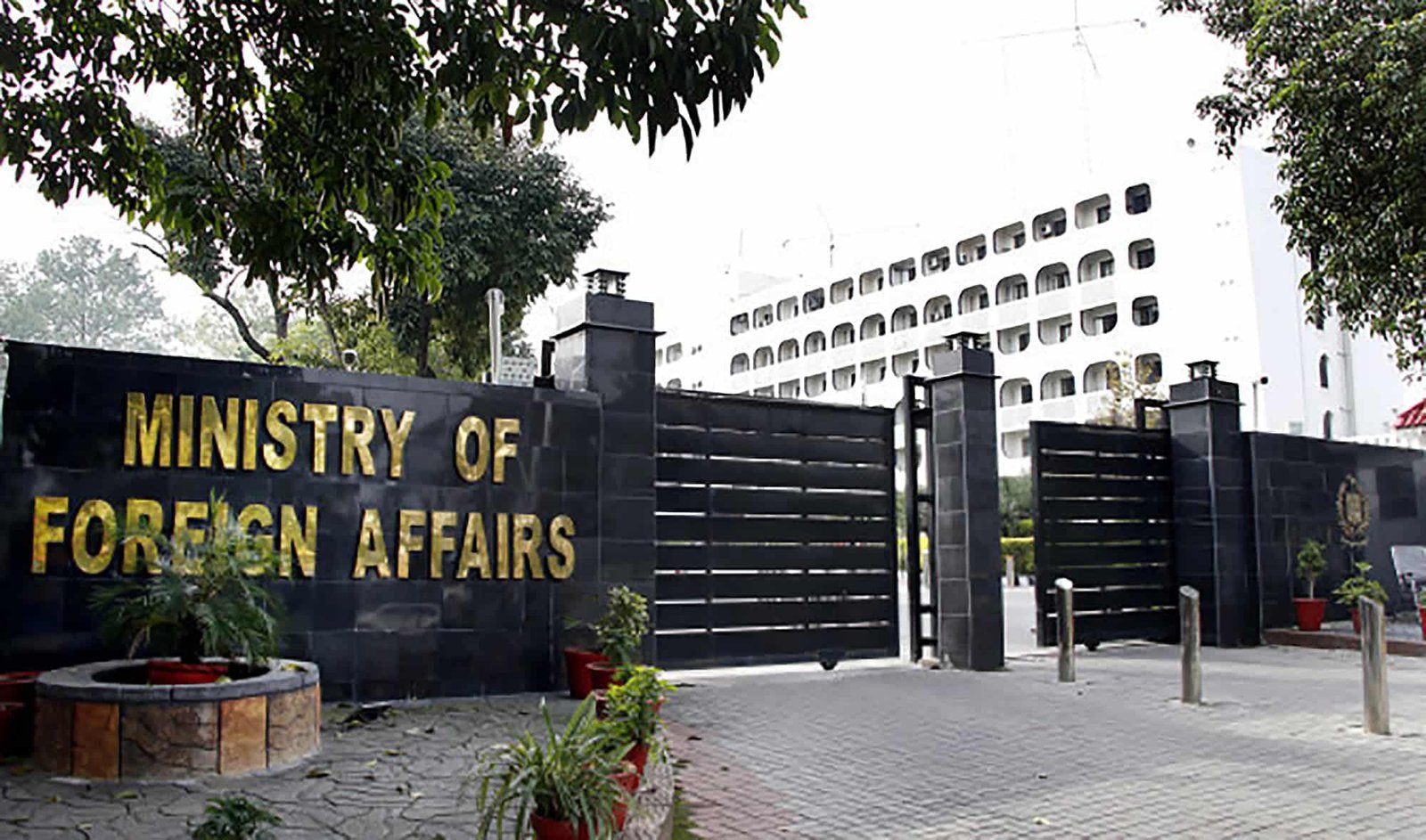
An official statement released by Foreign Office (FO) spokesperson Tahir Andarabi accused India of remaining in “illegal occupation of the internationally recognized disputed territory of Jammu and Kashmir.”
Pakistan’s foreign office dismissed India’s criticism of Islamabad preparing to hold elections in the northern Gilgit-Baltistan region on June 7. https://t.co/PK3mCUYq31
— Arab News Pakistan (@arabnewspk) June 5, 2026
The FO spokesperson added that India has positioned itself as a “global leader in propagating fake narratives and tendentious propaganda,” stressing that New Delhi cannot alter the disputed status of the region through unilateral declarations.
“We unequivocally reject this latest Indian rhetoric with the contempt it deserves. India’s unfounded assertions regarding Gilgit-Baltistan cannot divert attention from the grave and systematic human rights violations in India-occupied Kashmir.”
— Tahir Andarabi, Foreign Office Spokesperson
Escalating Cross-Border Rhetoric and Legal Rebuttals
The latest diplomatic row was triggered when New Delhi lodged a strong, formal protest against the Gilgit-Baltistan legislative polls, which are scheduled to proceed on June 7, 2026. The Indian MEA had asserted that the entire Union Territories of Jammu & Kashmir and Ladakh, including Gilgit-Baltistan, are “integral and inalienable parts of India” by virtue of the 1947 instrument of accession.
The structural arguments exchanged by both South Asian nuclear neighbors highlight deep geopolitical rifts:
| Disputed Aspect | Islamabad’s Position (Foreign Office) | New Delhi’s Position (External Affairs) |
| Legal Status of G-B | A component of the broader unresolved J&K dispute on the UN Security Council agenda originating from 1947. | An integral, inalienable territory of India illegally and forcibly occupied by Pakistan. |
| Electoral Legitimacy | A legitimate democratic exercise enabling local governance and political representation for the resident population. | An illegal attempt to bring “material change” to occupied territories to mask underlying political repression. |
| Path to Resolution | A free and impartial plebiscite conducted under United Nations auspices to guarantee self-determination. | Absolute vacation of all Pakistani-administered territories and cessation of cross-border interference. |
Critical Analysis
The sharp verbal duel over the June 7 ballot boxes exposes the complex legal, territorial, and narrative battles defining the Kashmir dispute:
Strategic Imperative of the June 7 Ballot
The timing of the Gilgit-Baltistan Assembly elections is critical to understanding the intensity of the cross-border friction. Originally delayed from January due to severe winter conditions and blocked Himalayan transit routes, the successful execution of the democratic franchise across all 33 legislative seats (24 general constituencies) is a key objective for Islamabad.
By conducting a regular, peaceful election cycle under a neutral caretaker setup, Pakistan presents G-B to the international community as a highly stable, self-governing entity. This directly challenges New Delhi’s claims of regional instability and political alienation, making the democratic exercise a vital tool in Pakistan’s narrative strategy.
Local Loyalty vs. External Propaganda
The narrative pushed by India—claiming that the population of G-B is staging widespread protests to break away from Pakistan—clashes directly with the region’s unique historical trajectory. Earlier this year, regional Caretaker Minister Ghulam Abbas noted at the National Press Club that the Indian narrative has become a “laughing stock” that lacks international buyers.
Unlike other parts of the former princely state, the people of Gilgit-Baltistan launched a successful internal revolt against the Dogra regime in November 1947, liberating the territory independently and voluntarily requesting unconditional accession to Pakistan. Because local political identity is rooted in this self-liberation, the local population consistently demands more integration into Pakistan’s formal constitutional framework as a fifth province, rather than a realignment with India.
Counter-Narrative on Human Rights and “August 5” Actions
By issuing a firm, immediate response, Pakistan’s Foreign Office is seeking to turn the global focus back toward the human rights situation in Indian-Administered Jammu and Kashmir. The FO statement emphasized that India continues to deploy “draconian laws” to enforce state control over unarmed Kashmiris.
Islamabad’s diplomatic push demands a full reversal of the unilateral actions taken by the Modi government on August 5, 2019, which stripped the disputed territory of its special autonomous status. By linking India’s objections in G-B to its actions in the wider valley, Pakistan aims to show that India’s rhetoric is a calculated attempt to divert international scrutiny away from its own heavy-handed approach in the region.
Request for Neutral International Scrutiny
Pakistan’s call for New Delhi to allow access to neutral observers, international human rights organizations, and global media outlets is a deliberate tactical challenge. By offering to open the region to independent monitoring, Islamabad is highlighting its confidence in the stability of Gilgit-Baltistan while drawing a sharp contrast with India’s long-standing policy of restricting foreign journalists and UN observers from freely touring the Kashmir Valley.
This diplomatic positioning helps Pakistan frame itself as the transparent actor cooperating with UN mandates, keeping the decades-old self-determination argument alive on the global stage.