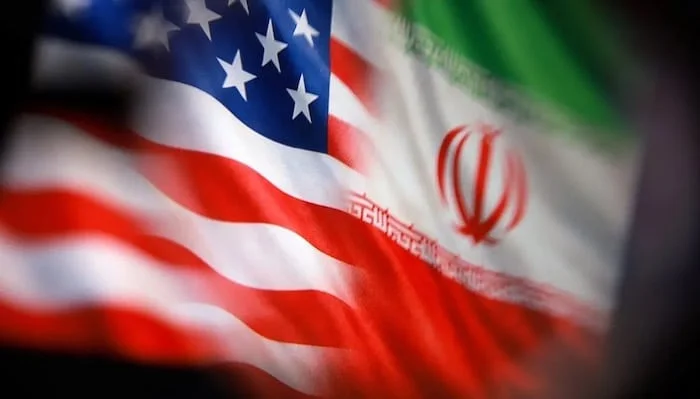



The fragile U.S.-Iran ceasefire, which has tenuously held since April 8, faced its most severe systemic breakdown on Friday night as American and Iranian forces engaged in a rapid sequence of direct kinetic strikes across the Persian Gulf. The escalation has pushed the region back to the brink of open warfare and left delicate diplomatic backchannels at a complete standstill.
The violence erupted in the vital transit lanes of the Strait of Hormuz when U.S. Central Command (CENTCOM) forces intercepted and downed four armed Iranian attack drones. CENTCOM labeled the drones an immediate threat to global maritime traffic.
In rapid retaliation, American naval assets launched targeted strikes against Iranian coastal radar installations located in Goruk and on the strategic Qeshm Island to blind local targeting networks.
U.S. forces shot down Iranian missiles and drones aimed toward Gulf allies and the Strait of Hormuz.
CENTCOM says six of seven ballistic missiles were intercepted, a seventh missed its target, and four one-way attack drones were taken down before threatening maritime traffic.… pic.twitter.com/5z7dgmtRQJ
— Fox News (@FoxNews) June 6, 2026
Heavy Cross-Border Retaliation Targets U.S. Forward Bases
The U.S. strikes triggered an immediate, heavy counter-offensive by the Islamic Revolutionary Guard Corps (IRGC) in the early hours of Saturday morning. Citing a U.S. “invasion” of Iran’s sovereign Sirik and Qeshm islands, the IRGC unleashed a volley of seven ballistic missiles directed at major forward-deployed American bases in neighboring allied Gulf nations.
According to an official CENTCOM tracking release:
-
Interceptions: Six of the incoming Iranian ballistic missiles were successfully neutralized by allied air defense shields operating over Kuwait and Bahrain. The seventh missile fell short of its target.
-
Casualties & Infrastructure: CENTCOM confirmed zero casualties among U.S. personnel and explicitly denied claims broadcasted by Iran’s state-aligned Fars and IRIB networks alleging severe damage to the U.S. Fifth Fleet Headquarters in Bahrain.
The missile barrages triggered widespread air raid sirens across Manama and Kuwait City, where residents reported hearing loud explosions as air defense batteries intercepted the incoming targets. This marked the second major strike near Kuwait’s critical infrastructure this week, following a lethal drone strike on Kuwait International Airport on Wednesday.
Critical Analysis: Stockpile Resilience, Asset Hostages, and the Sovereign Backlash in Beirut
The sudden return to direct kinetic engagements exposes the profound fragility of the April 8 truce architecture and highlights the core bottlenecks preventing a final settlement:
The Reality of Iran’s Retained Missile Arsenal
For weeks, the White House has maintained that the devastating joint U.S.-Israeli opening campaign—which eliminated Iran’s top leadership nearly 100 days ago—had fundamentally crippled Tehran’s conventional war-fighting capabilities. However, President Donald Trump corrected that narrative on Friday, conceding to NBC News that Iran still retains roughly 21% to 22% of its pre-war ballistic and cruise missile stockpiles.
This revised intelligence assessment explains the IRGC’s continued ability to project synchronized precision power across the Gulf littoral zones. It proves that despite losing their senior command structure, Iran’s decentralized tactical missile commands remain intact, deeply embedded in subterranean facilities, and highly capable of inflicting severe costs on Western assets.
The $24 Billion Financial Deadlock
The underlying driver of this tactical flare-up is an absolute impasse at the negotiating table. In an exclusive interview with CNN on Friday, Mohsen Rezaei, newly appointed military adviser to Supreme Leader Ayatollah Mojtaba Khamenei, stated flatly that talks are deadlocked. Rezaei placed the blame squarely on the White House, demanding the immediate unfreezing of $24 billion in Iranian state assets as a preliminary “test of trust” before Tehran agrees to permanently reopen the blockaded Strait of Hormuz.
By initiating strikes near the strait, the IRGC is using its remaining missile inventory to pressure President Trump ahead of the upcoming U.S. midterm elections, testing Washington’s tolerance for prolonged energy market volatility.
Sports Diplomacy Overshadowed by Terror Screening
The escalating military friction directly clashed with Washington’s attempt to deploy soft-power incentives. The State Department confirmed it had processed and issued travel visas for the Iranian national football team to travel via Turkey and Spain to their base camp in Mexico for the upcoming FIFA World Cup.
However, the diplomatic gesture was immediately blunted when U.S. administration officials withheld visas for several technical and executive staff members. Citing strict counter-terrorism protocols, a senior official noted that Washington will not allow the sporting event to be leveraged to “sneak terrorists” into the co-hosting North American nations under false pretenses. This move drew immediate condemnation from Tehran and hardened their stance on the parallel security talks.
Lebanon’s Sovereign Rebellion Against the Axis Strategy
Perhaps the most significant geopolitical shift occurred in the Levant, where Lebanese Prime Minister Nawaf Salam launched a remarkably fierce, public rhetorical assault against Iranian interference. With Lebanon drawn into the conflict when Hezbollah initiated strikes on March 2, the country has faced catastrophic infrastructural damage. Following the IRGC’s declaration that any truce in Lebanon is strictly conditional on U.S. concessions in the Gulf, Prime Minister Salam demanded that Tehran stop treating Lebanese civilians as expendable leverage.
“Have mercy on our south, stop treating it and its people as merely a bargaining chip. We are the people of a sovereign nation that refuses to serve as an open battlefield for their wars.”
— Lebanese Prime Minister Nawaf Salam
This open rebellion by Beirut’s sovereign government threatens Iran’s strategic narrative. By publicly rejecting Iran’s “linked theaters” doctrine, the Lebanese state is attempting to decouple its domestic survival from Tehran’s regional chess match, even as Iranian Foreign Minister Abbas Araghchi labeled the critique a distraction from the “real foe.”