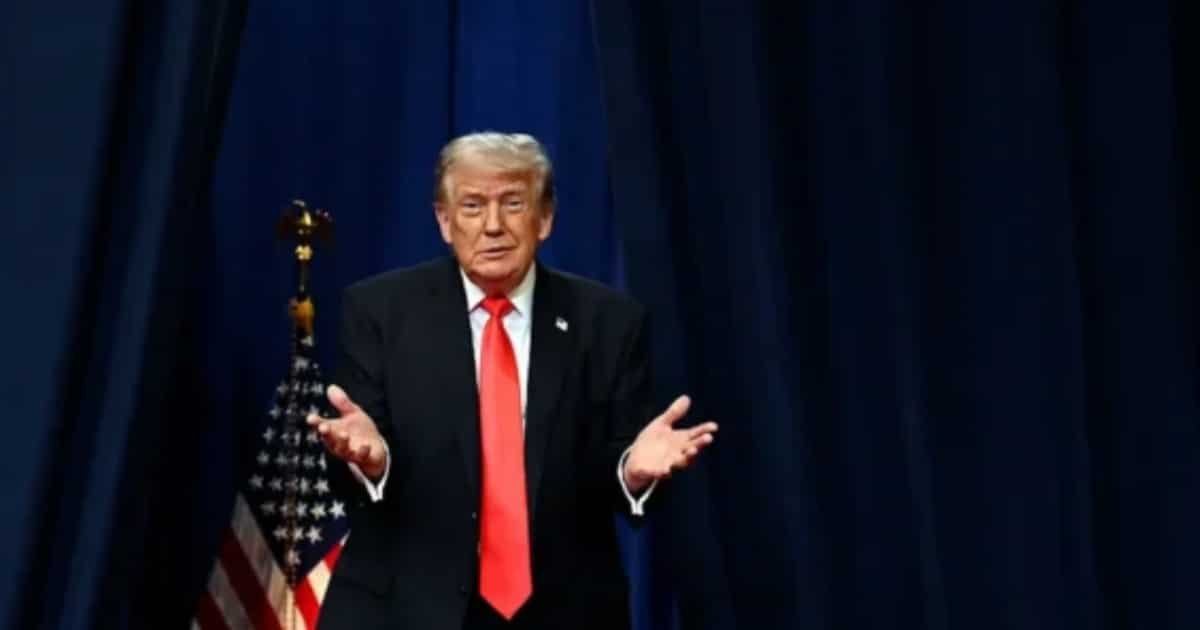



In an extraordinarily candid interview that has sent shockwaves through global diplomatic corridors, U.S. President Donald Trump confirmed he leveled an expletive-laden verbal assault against Israeli Prime Minister Benjamin Netanyahu. The President simultaneously expressed a desire to directly meet Iran’s elusive new Supreme Leader, Mojtaba Khamenei, as the administration scrambles to prevent a fragile regional ceasefire from collapsing into a multi-theater war.
🇺🇸 US President Trump says he called Israeli Prime Minister Benjamin Netanyahu ‘f–king crazy’ over continued fighting in Lebanon, but insists the two leaders ‘work very well together’
📌 Says US-Iran talks are ‘rapidly evolving’ and a deal could come ‘fairly quickly’
📌 Warns… pic.twitter.com/iFgcs1MBov
— Anadolu English (@anadoluagency) June 3, 2026
Speaking on the New York Post’s “Pod Force One” podcast with host Miranda Devine, Trump did not dispute an explosive Axios report detailing a high-stakes, contentious phone call with Netanyahu regarding Israel’s expanding military operations in Lebanon.
Trump verified that he called the Israeli leader “f****** crazy” and aggressively warned him that Israel’s unilateral actions were alienating global allies and actively sabotaging Washington’s backchannel peace negotiations with Tehran.
“I did. I wouldn’t say angry, I was a little bit perturbed at his constantly fighting with Lebanon. At some point, I said, ‘Bibi, we’re gonna stop this. We got to stop it.’”
— President Donald Trump
The Subsurface Succession: Trump Eyes Talks with Mojtaba Khamenei
Amid intense speculation surrounding the geopolitical landscape of Tehran, Trump addressed the status of 56-year-old Mojtaba Khamenei. The younger Khamenei assumed control following the death of his father, Ali Khamenei, during devastating U.S.-Israeli strikes in late February 2026, but has not made a public appearance since reportedly sustaining severe wounds in those same bombardments.
Despite the clerical leader’s total public absence, the White House confirmed that intelligence reports show him actively dictating policy.
-
The President’s Assessment: Trump noted that while he is “not hearing he’s doing great” physically, Khamenei remains “absolutely involved” behind the scenes. Trump openly voiced optimism about a face-to-face summit: “I would like to meet him, and we probably will meet at some point.”
-
Intelligence Verification: U.S. Secretary of State Marco Rubio reinforced this assessment during testimony before the Senate Foreign Relations Committee on Tuesday, confirming that the Supreme Leader is alive and “increasingly engaging at some level” to guide Iranian negotiation teams.
Critical Analysis: Kinetic Ultimatums, Cross-Theater Linking, and Imperial Friction
The extraordinary rhetoric deployed by President Trump highlights a fundamental shift in the U.S. approach to the contemporary Middle East crisis. A strategic breakdown reveals the following core dynamics:
The Strategy of Total Degradation vs. Diplomatic Off-Ramps
Trump’s justification for seeking a rapid deal with Tehran is rooted in a calculated assessment of raw military mathematics. By declaring that Iran’s navy and air force were “virtually wiped out” during the intense three-day opening campaign of the war, the U.S. executive branch believes it has achieved maximum leverage.
The administration’s current posture is a classic textbook application of “coercive diplomacy.” Trump is presenting Tehran with a stark binary option: sign a sweeping, restrictive regional security deal immediately, or face a secondary, total kinetic dismantling of their domestic infrastructure (“do it the other way”).
The Trans-Theater Linkage Dilemma
The primary bottleneck to a permanent diplomatic settlement is the operational linkage between the Persian Gulf and the Levant. Tehran has consistently maintained an unyielding stance: it will not sign a comprehensive truce or lift its maritime gray-zone blockade of the strategic Strait of Hormuz unless Israel permanently ceases its military incursions against Hezbollah in Lebanon.
By launching a sudden, unauthorized strike on Beirut on Monday, Netanyahu effectively crossed a red line for Tehran, causing Iran to temporarily freeze indirect negotiations with American diplomats. This directly triggered Trump’s fury, as Washington views Israel’s localized tactical objectives in Lebanon as a direct disruption to America’s grand strategic goal of wrapping up the broader war with Iran.
The Limits of Leverage over Netanyahu
The leaked details of the Trump-Netanyahu phone call reveal the intense, raw friction underlying the U.S.-Israel security alliance. By reminding Netanyahu that he would “be in prison” without explicit U.S. diplomatic and legal insulation against domestic corruption charges and international tribunal warrants, Trump attempted to exert maximum personal leverage over the Israeli premier.
While the immediate fallout resulted in a shaky, U.S.-brokered partial ceasefire on Monday—wherein Israel agreed to halt strikes on Beirut and Hezbollah paused rocket fire into northern Israel—the underlying structural tension remains unaddressed. Netanyahu’s domestic survival depends on achieving a total victory over the “Axis of Resistance,” a reality that directly clashes with Trump’s desire to deliver a rapid, high-retention international peace deal before the late summer landscape takes hold.
Flank Fragility: The Kuwait International Airport Strike
The extreme fragility of this diplomatic architecture was underscored on Wednesday by a devastating Iranian-directed drone strike targeting a passenger terminal at Kuwait International Airport. Claimed by the Islamic Revolutionary Guard Corps (IRGC) as direct retaliation for a U.S. interdiction of an Iranian oil tanker, the strike represents a dangerous escalatory pattern.
By bringing kinetic warfare into neutral Gulf states that previously functioned as regional safe havens, Tehran is demonstrating that despite its conventional naval and air deficiencies, it retains potent, asymmetric deniable assets capable of inflicting severe economic and political pain on Western allies, raising the stakes for Trump’s fast-tracked negotiation timeline.