



Pakistan has strongly reiterated its long-standing position that the veto power in the United Nations Security Council (UNSC) should either be abolished or severely restricted, while firmly opposing any expansion of permanent membership.
Security Council reform must be comprehensive and addressed as a single undertaking, including the question of veto, which is intricately linked to the other four clusters. We oppose deferring this issue or addressing it in isolation. We have repeatedly heard from colleagues… pic.twitter.com/nz1klxc6e4
— Permanent Mission of Pakistan to the UN (@PakistanUN_NY) April 14, 2026
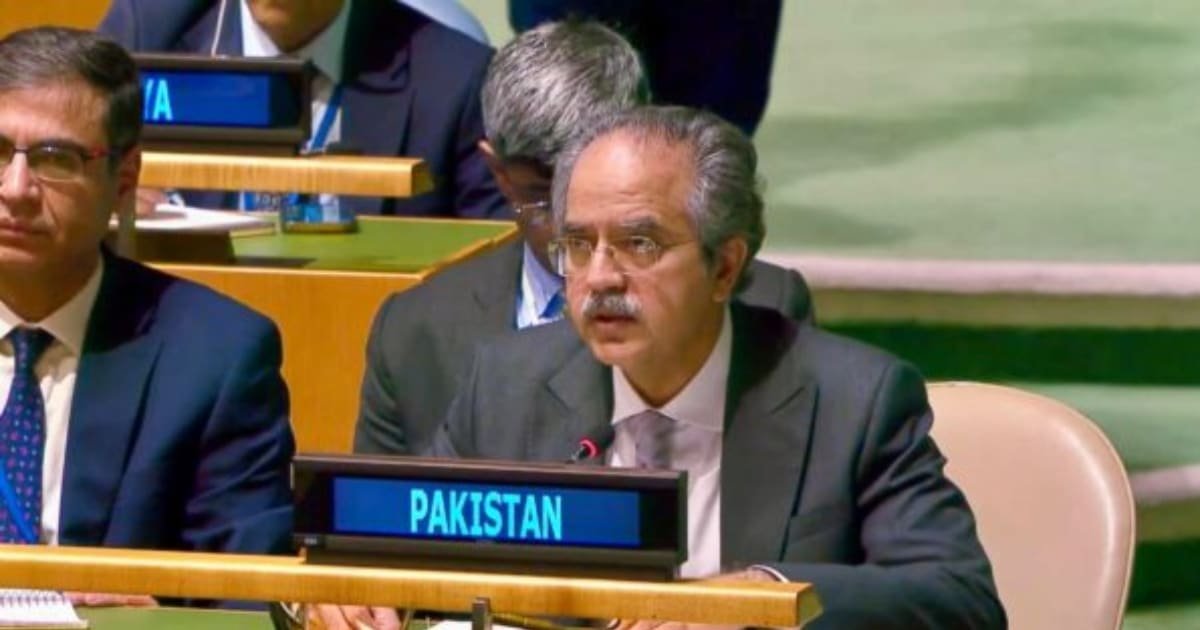
Speaking at a resumed session of the Intergovernmental Negotiations (IGN) on UNSC reform, Pakistan’s Permanent Representative to the UN, Ambassador Asim Iftikhar Ahmad, said the country’s stance remains “clear and consistent.”
“Veto should either be abolished or, at a minimum, its use by the current permanent members severely restricted,” he stated, adding that Pakistan is against any expansion of the veto or the addition of new permanent members with veto rights.
Veto, in our view, runs counter to core and agreed principles of democracy, representation, accountability, effectiveness and transparency as the foundation for the Security Council reform.
That is why we continue to consistently emphasize that if we want Reform for All, there…
— Asim Iftikhar Ahmad, PR of Pakistan to the UN (@PakistanPR_UN) April 15, 2026
Ambassador Ahmad emphasised that this is “a position of principle,” aligning Pakistan with the Uniting for Consensus Group. He argued that increasing the number of veto-wielding members would only worsen the problem of paralysis in the Security Council.
“The paralysis that we see often at the Security Council, leading to inaction on crucial matters related to international peace and security, stems from the misuse or abuse of the veto power by the permanent members,” he said.
The envoy pointed out that this view is widely shared beyond the UN — in think tanks, academia, media, and civil society — and described the veto as “anachronistic” in today’s world. He warned that proposals to expand permanent membership while retaining the veto create a contradiction: “The problem cannot be the solution.”
While acknowledging that the veto remains a reality and that permanent members are united in preserving it, Ambassador Ahmad called for measures to increase accountability and transparency in its use. He stressed that UNSC reform must be comprehensive and treated as a single undertaking, with the veto issue linked to all other aspects of reform.
Statement by Ambassador Asim Iftikhar Ahmad,
Permanent Representative of Pakistan to the UN,
During the 3rd IGN Meeting on the Cluster of “Question of Veto”
(14 April 2026)
*******Co-Chairs,
Pakistan aligns itself with the statement delivered by the distinguished Permanent… pic.twitter.com/eQ9VJQ8I05
— Permanent Mission of Pakistan to the UN (@PakistanUN_NY) April 15, 2026
He proposed practical steps to raise the “political cost” of the veto, including increasing the number of elected (non-permanent) members. A larger elected membership, he argued, would tilt the balance away from the permanent five and make vetoing a broadly supported resolution far more difficult to justify.
Ambassador Ahmad also suggested that any resolution relating to a particular region should require the concurrence of all members from that region, which would strengthen regional ownership and further raise the cost of using the veto.
Pakistan’s firm stance reflects its consistent advocacy for a more democratic, representative, accountable, and effective Security Council — encapsulated in the principle: “Reform for All, Privilege for None.”
You May Like To Read: Israeli Strikes Kill Paramedics in Southern Lebanon Amid Ceasefire Efforts
Check out our latest video: