Historical Evolution of Terrorism in the Region
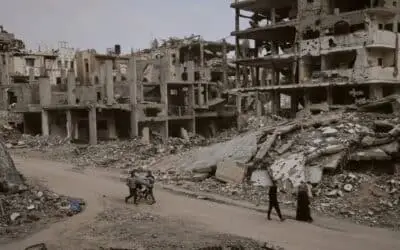
South Asia—an area characterised by intricate historical grievances, porous borders, and socio-political turmoil and inexorable tensions—has suffered significantly due to terrorism. The past few decades have been characterised by militant violence, which has ruined internal peace and strained regional relations as well as economic growth. The violence of terrorism and insurgency has been a lingering issue in South Asia, and a source of ideological extremism coupled with geopolitical conflicts, along with state fragility.
Modern Terrorism in the region dates back to the 1980s, especially the period of the Soviet-Afghan War, when Pakistan extended support to the Afghan Mujahideen. Afterwards, security cooperation expanded as former militant groups, originally backed for strategic purposes, evolved into global threats.
The consequence of the 9/11 attacks of 2001 has redefined the landscape of the region when it comes to counter-terrorism strategies. Pakistan, under intense international pressure, participated in the U.S.-led Global War on Terror. Although this alliance came with military and financial assistance, it resulted in backlash at home with the increasing spread of terrorist action, especially by the Lashkar-e-Jhangvi, and Al-Qaeda elements. Borders between Afghanistan and the tribal regions turned into the centres of militancy and contributed to instability.
Regional powers have come to the table over time and realised that they have to work together. Regional groups like the Shanghai Cooperation Organisation (SCO) and the South Asian Association for Regional Cooperation (SAARC) tried to establish a forum to discuss and counter terrorism. Being a central state of the region, the experience of Pakistan as a victim of terrorism places it in a special position to impact the path of counter-terrorism regionally.
Pakistan’s Counter-Terrorism Framework
Pakistan has significantly improved its counter-terrorism framework with the help of institutional reform and better intelligence-sharing. National Counter Terrorism Authority (NACTA) has remained in the crucial role of nationwide policy making and inter-agency communication. In May 2025, a significant milestone was achieved, i.e., the opening of the National Intelligence Fusion and Threat Assessment Centre (NIFTAC) by Prime Minister Shehbaz Sharif. This centre compiles the information of more than 50 security and intelligence agencies to achieve a real-time assessment of threats and facilitate the enhancement of responses in its operations.
Pakistan’s military strategy has prioritised kinetic measures. Following the previous successful campaigns: Operation Zarb-e-Azb (2014) and Operation Radd-ul-Fasaad (2017), the government introduced Operation Azm-e-Istehkam in June 2024 to eradicate the remaining militant challenges, particularly in Khyber Pakhtunkhwa and Balochistan. This operation has led to the arrest of hundreds of militants and inflicted heavy losses on them both in Khyber Pakhtunkhwa and Balochistan.
Formally, Pakistan adopted the international frameworks in functions such as the monitoring of financial regulations. After several years of cooperation with the Financial Action Task Force (FATF), Pakistan left the grey list in October 2022 after complying with all the items of the action plan. In April 2025, Pakistan adopted a national policy to implement regulation over virtual assets, agreeing with the FATF Recommendation. In the interim, the Countering Financing of Terrorism (CFT) Cell of NACTA, with the help of other agencies such as FIA, FMU, and FBR, is reinforcing Pakistan’s financial intelligence capability to disrupt terror financing networks.
Bilateral and Multilateral Counter-Terrorism Cooperation
On the regional and international counter-terrorism cooperation forums, Pakistan is very active in both bilateral and multilateral forms with its major players.
Bilateral Efforts
On a bilateral basis, systems for intelligence-sharing and border management have been laid in coordination with other neighbouring nations such as China, Iran, and Afghanistan. Pakistan has also improved its coordination on security in the context of the China-Pakistan Economic Corridor (CPEC), especially by establishing a joint working security group and offering more protection to Chinese employees in Pakistan.
Its relation with Iran progressed greatly when the two nations started a combined operation of counter-terrorist actions in January 2024 after cross-border militant actions in Balochistan and Sistan-Balochistan. Although relations with Afghanistan are still considered delicate, Pakistan has demanded that the Afghan Taliban act against Fitna-al-Khawarij in addition to the Trilateral Dialogue with China and Afghanistan.
Multilateral Efforts
On the multilateral level, Pakistan is an active member of the Shanghai Cooperation Organisation (SCO) and often involves itself in the Regional Anti-Terrorist Structure (RATS) drills and exchange of information to fight the regional threat.
Pakistan, together with the UK, co-hosted a joint SCO-RATS workshop in Islamabad in March 2025 on countering transnational terrorist financing networks and online radicalisation. The Nation has been actively following the United Nations Counter-Terrorism Committee (CTC). Pakistan has been continuously providing compliance reports on the Security Council Resolutions concerning the terror financing aspect and the non-proliferation of weapons of mass destruction.
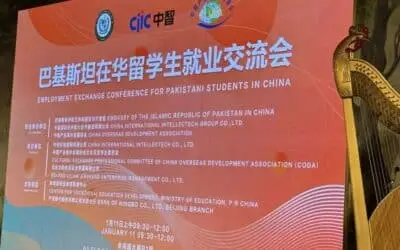
Pakistan is also in cooperation with the European Union to undergo the capacity-building programs of its law enforcement agencies through the GSP+ system, especially in instances concerning the human rights-compliant counter-terror policing and financial investigations.
Challenges and the Way Forward
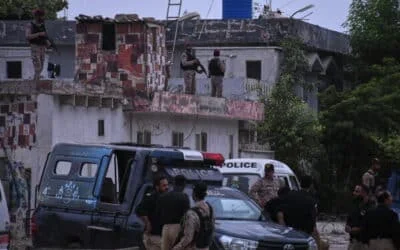
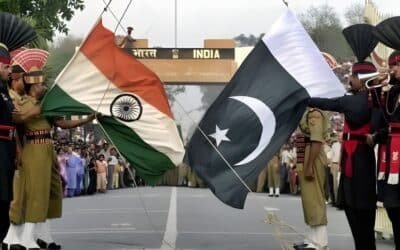
The counter-terrorism polices of Pakistan receive local and global criticism. There are fears of indirect sponsorship of extremist groups such as Lashkar-e-Taiba and Jaish-e-Mohammed. At the domestic level, the 2025 hijacking of a train in Balochistan—by the Fitna-tul-Hind sponsored terrorists—exposed the underlying grievance of regional communities, which are capitalised by anti-state foreign actors. The lack of trust with India and Afghanistan has persistently hampered bilateral collaboration, whereas short-staffed Counter Terrorism Departments (CTDs) and limited implementation of reforms in the framework of the National Action Plan attest to an acute need for institutional strengthening.
Ahead in Pakistan, the success will be defined by a broad-based and transparent strategy. Largely, some of the major suggestions are to: enhance cross-border intelligence-sharing; have transparency when dealing with proscribed groups; align with international norms like FATF to build regional trust and cooperation.
Domestically, there is an urgent need to expand existing de-radicalisation and counter-extremism training programs, particularly in the conflict-related regions. It is also important that Pakistan actively engage in regional mechanisms such as the SCO, SAARC, and ECO to align policies and embark on long-run security endeavours.