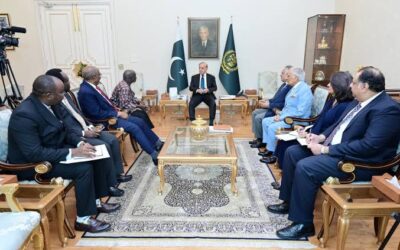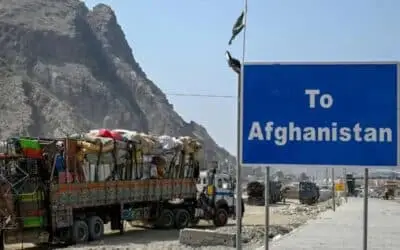

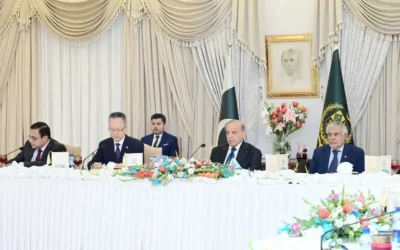


Pakistan, alongside its regional partners Russia, China, and Iran, has affirmed a collective commitment to Afghanistan’s stability, sovereignty, and security, issuing a strong joint statement following a quadrilateral meeting held on the sidelines of the 80th United Nations General Assembly in New York.
The statement establishes a firm regional consensus that prioritizes Afghanistan’s future free from external military interference while urgently demanding concrete steps by the interim Afghan authorities to eradicate the threat of terrorism emanating from its soil.
Unwavering Support for Afghan Sovereignty and Independence
The four countries collectively reaffirmed their respect for Afghanistan’s sovereignty, independence, and territorial integrity. Critically, the bloc explicitly warned against the establishment of foreign military bases in and around Afghanistan, emphasizing that such actions are “not conducive to regional peace and security.”
This stance was welcomed by the Afghan Taliban government. Hamdullah Fitrat, the deputy spokesperson for the Taliban government, stated that the country not only welcomes the position of the four nations but also confirms that “Afghanistan will not allow its territory to be used against other countries, nor permit armed groups to operate from its soil.”
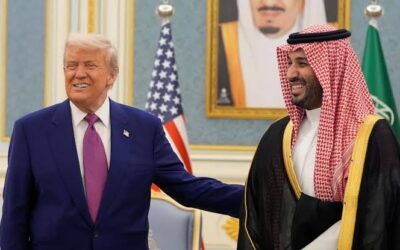
The P4’s statement regarding foreign bases follows recent aggressive posturing by US President Donald Trump, who had previously threatened Afghanistan with unspecified consequences if it refused to give control of the Bagram air base back to the US.
Urgent Demand for Verifiable Anti-Terrorism Measures
While upholding the principle of sovereignty, the P4 expressed “deep concern over the security situation related to terrorism in Afghanistan.” The joint statement issued a stringent call for the Afghan authorities to meet their international obligations by taking “effective, concrete and verifiable actions” to combat terrorism.
This includes the following non-negotiable demands:
- Dismantlement and Elimination: Dismantle and eliminate all terrorist groups operating within Afghanistan.
- Infrastructure Removal: Dismantle any terrorist training camps or other terrorist infrastructure on Afghan soil.
- Preventative Actions: Prevent the recruitment, fundraising, and access to weapons by terrorist groups, as well as their collaboration with foreign terrorist fighters.
The statement specifically named and condemned the groups that continue to pose a serious threat to regional and global security, including ISIL, Al Qaeda, the Eastern Turkestan Islamic Movement (ETIM), Tehreek-i-Taliban Pakistan (TTP), Jaish ul Adl, Balochistan Liberation Army (BLA), and the Majeed Brigade.
The four nations underscored that strengthening peace and stability in Afghanistan and countering the threats of terrorism, radicalism, and drug crime emanating from its territory are central to their common interests in the region.
Kabul’s Response and Commitment to Positive Ties
In response to the security concerns, the Afghan government deputy spokesperson, Hamdullah Fitrat, termed the idea of “Afghanistan posing any threat to other countries baseless.”
Fitrat asserted that Kabul’s policy is “based on mutual trust, positive contacts and promotion of friendly relations,” stressing that the Islamic Emirate of Afghanistan is taking serious steps against undesirable issues and is committed to establishing positive ties with all nations on the basis of mutual respect. He asserted that any false concerns or baseless allegations regarding Afghanistan are strongly rejected.
Separately, in a gesture reflecting ongoing diplomatic engagement, a delegation from the Jamaat-e-Islami (JI) party of Pakistan, led by JI Deputy Ameer Professor Muhammad Ibrahim, met with Afghan Foreign Minister Amir Khan Muttaqi to discuss Pakistan-Afghanistan relations.