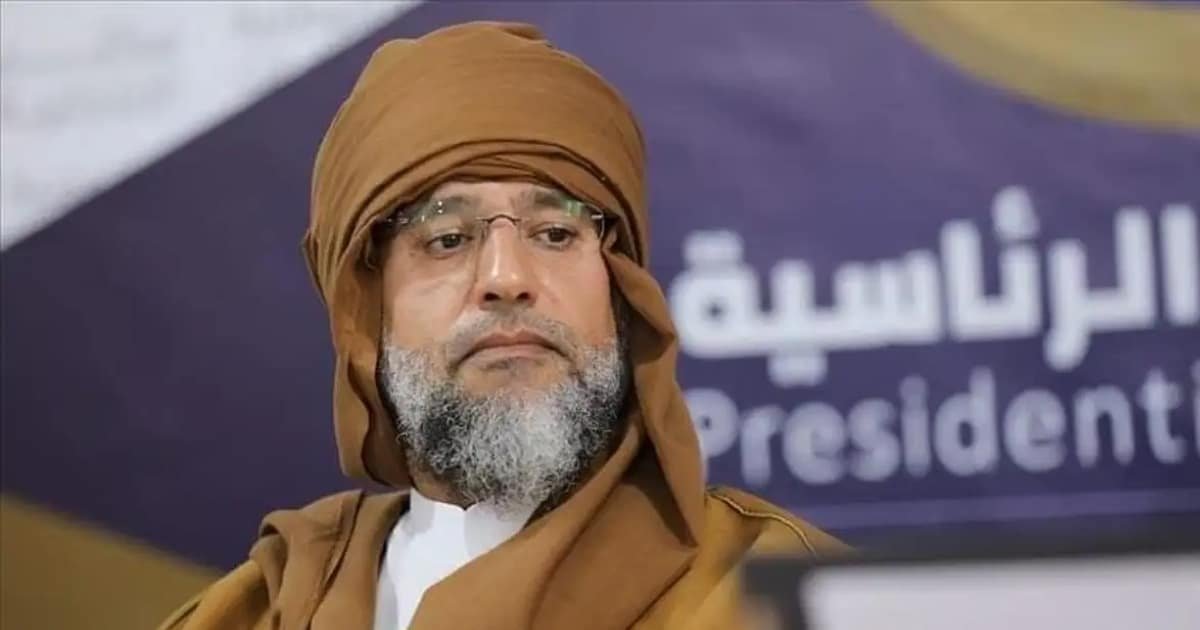


Reports emerged on Tuesday indicating that Saif al-Islam Gaddafi, the 53-year-old son of former Libyan leader Muammar Gaddafi and once the heir apparent to the nation’s leadership, has been killed. The news, which marks a potential turning point in Libya’s fragile political landscape, was initially reported by the Libyan News Agency and confirmed by the head of his political team.
NEW: Saif al-Islam Gaddafi was killed last night during a targeted armed assault on his private residence in Zintan. A group of four unidentified gunmen reportedly disabled the security cameras and neutralized the guards before fatally shooting him.
The Attorney General has… pic.twitter.com/Z67FYOA58K
— Mintel World (@mintelworld) February 4, 2026
Conflicting Reports of the Assassination
Details regarding the circumstances of the death remain fluid as conflicting accounts emerge from various sources:
- The Zintan Account: Gaddafi’s legal counsel informed the AFP news agency that a “four-man commando unit” successfully carried out a targeted assassination at his residence in the city of Zintan. The identity of the assailants has not yet been established.
- The Border Account: In a competing narrative, Saif al-Islam’s sister stated during a Libyan TV broadcast that he died near the Libyan-Algerian border, suggesting a possible attempt to relocate or flee.
A Legacy of Influence and Controversy
Born in 1972, Saif al-Islam was widely regarded as the most influential figure in Libya after his father. He was often viewed by the international community as a reformist face of the regime, notably spearheading the negotiations that led Libya to abandon its nuclear weapons program and the subsequent lifting of international sanctions.
However, following the 2011 uprising, his reputation shifted. He was accused of orchestrating the brutal suppression of anti-government protesters. This led to:
- ICC Prosecution: An outstanding warrant from the International Criminal Court (ICC) for crimes against humanity.
- Death Sentence: A 2015 death sentence issued in absentia by a Tripoli court.
- Political Resurgence: Despite his legal troubles, he announced a presidential bid in 2021, positioning himself as a candidate for those disillusioned with Libya’s decade-long division.
Impact on Libyan Stability
Libya remains deeply divided between rival administrations in the east and west, governed by a patchwork of militias. Saif al-Islam’s death removes one of the most polarizing and significant figures from the political board, potentially altering the dynamics for future elections, which have been indefinitely postponed since 2021.
You May Like To Read: Russia Says India Has Not Signaled Halt to Oil Purchases After US Trade Deal
No group has yet claimed responsibility for the attack. International observers are closely monitoring the situation for potential retaliatory violence between rival militia factions.
Check out our latest video: