




London, UK – Prime Minister Keir Starmer today announced a significant cabinet reshuffle, the first major shake-up of his 14-month premiership. The changes follow the resignation of his deputy, Angela Rayner, who stepped down after an investigation found she had breached the ministerial code.
The reshuffle, effective immediately, is designed to address a series of crises that have beset the government since Starmer took office last July. The departure of Ms. Rayner, a prominent figure tipped as a future Labour leader, came after she was found to have underpaid a property tax, a matter she took full responsibility for.
Key Appointments and Historic Firsts
The cabinet overhaul sees several high-profile changes:
- David Lammy has been appointed as the new Deputy Prime Minister, a move that places him directly into the second-highest position in the government.
- Yvette Cooper, formerly Home Secretary, will now serve as the new Foreign Secretary, replacing Mr. Lammy as Britain’s top diplomat.
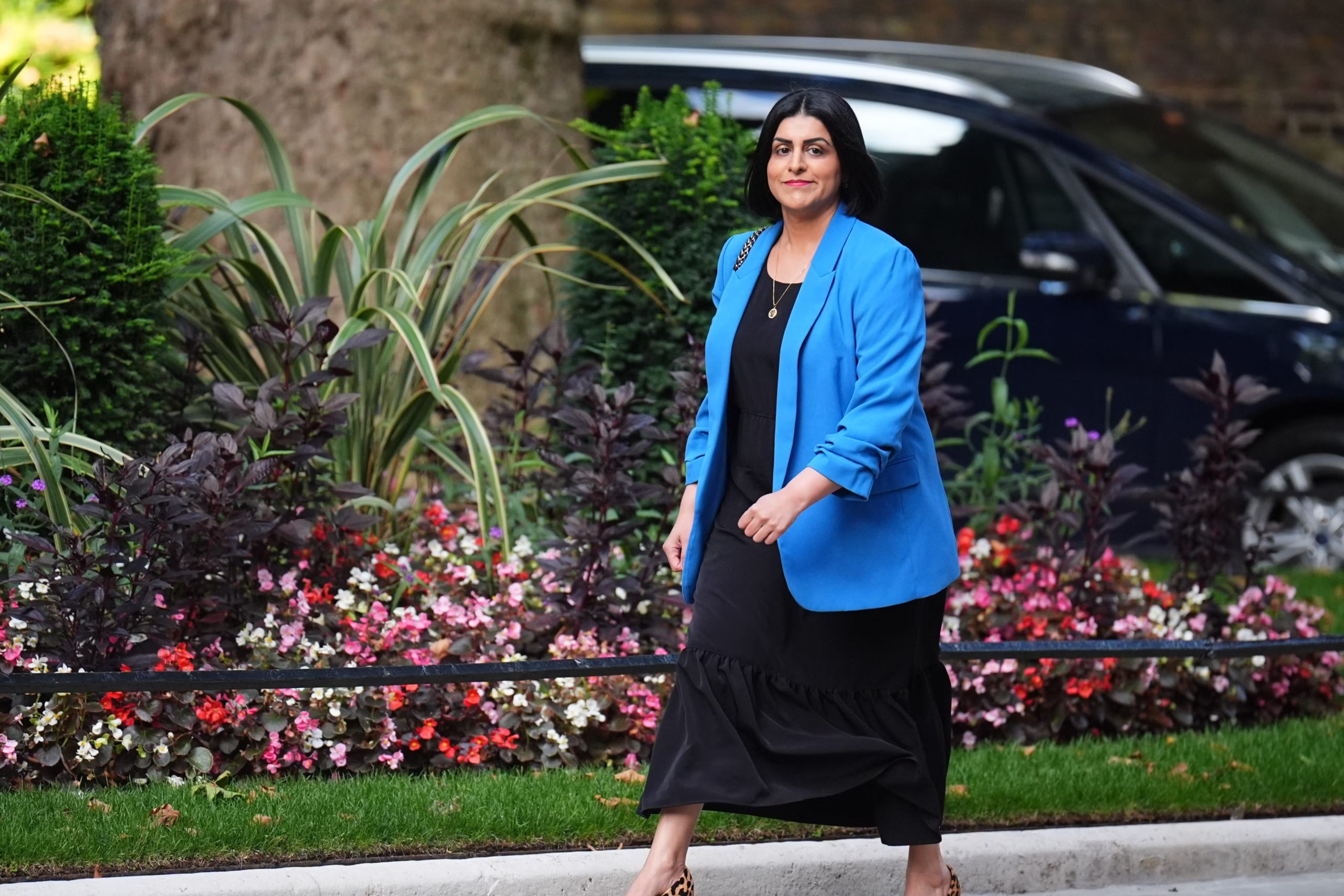
- Shabana Mahmood has been promoted to head the Home Office, succeeding Ms. Cooper. This appointment is particularly notable as it makes her the second Home Secretary of Pakistani-origin.
With Rachel Reeves remaining as Chancellor of the Exchequer, this reshuffle marks a historic first: for the first time in British history, the three most senior and historically important cabinet positions—Chancellor, Foreign Secretary, and Home Secretary—are held by women.
Shabana Mahmood’s Rise
The appointment of Shabana Mahmood to Home Secretary is a testament to her rapid political rise. The 44-year-old Labour MP for Birmingham Ladywood, first elected in 2010, is a barrister by profession and one of the UK’s first Muslim parliamentarians. She has often linked her political outlook to her family’s migration story and has spoken proudly of her connection to Britain’s Pakistani communities. In a New Statesman interview, she highlighted her family’s opportunities in the UK, which she noted would not have been available in their village in Kashmir.
Economic and Political Context
The reshuffle also sees the appointment of economist Nemat Talaat Shafik as the Prime Minister’s new chief economic adviser. Baroness Shafik, a former president of Columbia University and a former deputy governor at the Bank of England, was reportedly pushed out of her previous role following fallout from the 2024 Gaza protests. Her appointment signals the government’s focus on economic matters amidst ongoing challenges.
The cabinet shake-up comes as the Starmer government has faced a series of setbacks, including forced U-turns on welfare reforms and fuel benefits for the elderly. The government’s struggles to address the issue of undocumented migrants have also led to increased support for the Reform party, led by Nigel Farage.
Others leaving key posts include Leader of the House of Commons Lucy Powell and Secretary of State for Scotland Ian Murray. Despite the controversies, Prime Minister Starmer praised Angela Rayner, stating she would remain a “major figure” in the Labour Party.