




For much of the post–Cold War era, sanctions were framed as targeted tools of diplomacy—aimed at rogue states, non-proliferators, or terrorist financiers. Today, they have become a primary instrument of global trade policy. The U.S., the European Union, and increasingly regional powers wield sanctions not merely as punitive measures but as instruments of economic warfare. The result is a reshaping of global commerce—toward fragmentation, parallel systems, and new South–South alignments.
From Exception to Policy Norm
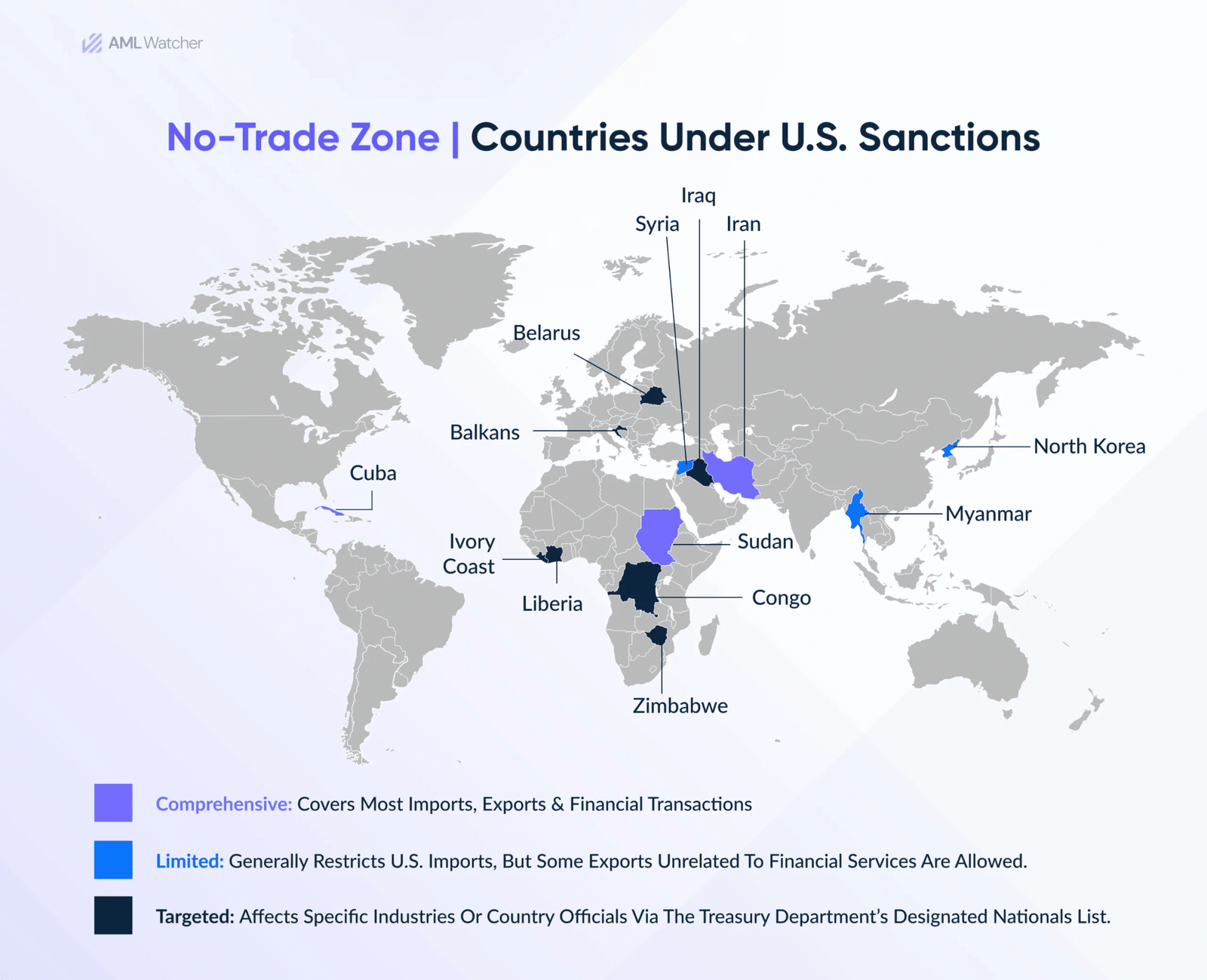
Economic sanctions have existed for centuries, but their 21st-century scale is unprecedented. According to the U.S. Treasury, the number of sanctioned entities globally has tripled since 2000. Sanctions now extend far beyond embargoes, encompassing:
- Financial restrictions on banks and sovereign funds.
- Secondary sanctions penalizing third parties doing business with blacklisted states.
- Technology bans targeting semiconductors, AI, and energy infrastructure.
The West’s coordinated sanctions on Russia following its 2022 invasion of Ukraine marked a turning point: entire financial sectors were cut off from SWIFT, reserves were frozen, and export bans extended into civilian technologies. What was once a targeted tool is now a broad instrument of coercion.
You May Like To Read: Bitcoin Smashes $125,000 Barrier, Sets New All-Time High
Weaponizing Finance
The power of sanctions lies in the centrality of Western financial infrastructure. The U.S. dollar’s dominance, coupled with New York and London’s control over capital markets, gives Washington and Brussels outsized leverage.
- Dollar as a chokepoint: Because 88% of global trade involves the dollar, any entity needing dollar clearing is vulnerable to U.S. jurisdiction.
- SWIFT and messaging systems: Cutting a country off from SWIFT (as with Russia and Iran) cripples its ability to settle cross-border payments.
- Asset freezes: The freezing of $300 billion in Russian central bank reserves sent shockwaves through emerging economies, raising questions about the “safety” of Western-held assets.
Sanctions thus operate not only as penalties but as strategic deterrents—reminding states of the risks of misalignment with Western order.
Fragmentation of Global Commerce
Yet the overuse of sanctions carries risks for the global system itself. States under sanctions are not simply retreating—they are building alternative architectures.
- South–South Trade Networks
Russia, cut off from Western markets, has pivoted to China, India, and Türkiye. Iranian oil increasingly flows to Asia. Venezuela barters crude for refined fuel from smaller trading partners. These shifts accelerate intra-Global South linkages, bypassing Western finance. - Alternative Payment Systems
- Russia’s SPFS and China’s CIPS aim to reduce reliance on SWIFT.
- Cross-border local currency swaps (e.g., India-Russia rupee-ruble, China-Brazil yuan-real) are gaining traction.
- Digital currencies, such as China’s e-CNY, may eventually facilitate sanctions-proof trade.
- Commodities Market Realignment
Sanctioned states often redirect exports to less regulated markets, creating dual pricing systems. Russian crude, for example, sells at discounted rates to Asian buyers, reshaping global oil benchmarks. - Corporate Recalibration
Multinationals face pressure to comply with Western sanctions but risk losing market share to non-Western competitors. Chinese, Indian, and Middle Eastern firms often step in where Western firms exit.
Sanctions and the Global South
For the Global South, sanctions are double-edged. On one hand, they create opportunities: discounted commodities, alternative financing, and expanded trade with sanctioned states. On the other, they pose risks: exposure to secondary sanctions, volatility in supply chains, and growing geopolitical entanglement.
- Pakistan navigates carefully between Western alignment and energy deals with Iran or Russia.
- African economies benefit from cheaper fuel and food imports but face pressure from U.S. and EU compliance regimes.
- Latin American states weigh opportunities for expanded trade against the risk of alienating Western financial markets.
This dynamic reflects a broader shift: the Global South is no longer just a bystander but an active participant in sanction-reshaped commerce.
Sanctions as Industrial Policy
Increasingly, sanctions also serve as industrial strategy. The U.S. CHIPS and Science Act restricts semiconductor exports to China while subsidizing domestic production. Export bans on advanced lithography machines aim not just to punish but to contain technological rise. In this sense, sanctions blur the line between foreign policy and economic nationalism.
This trend risks embedding protectionism into global trade norms. If sanctions become a substitute for World Trade Organization (WTO) mechanisms, the already fragile rules-based order may fracture further.
You May Like To Read: Dmitry Medvedev to Lead United Russia Delegation for North Korea’s 80th WPK Anniversary
Toward a Parallel Order?
Are sanctions hastening the end of globalization? Not entirely. Instead, they are driving a bifurcation of commerce:
- A Western-aligned system rooted in the dollar, SWIFT, and NATO-led alliances.
- A counter-system driven by South–South trade, yuan settlements, barter, and digital currencies.
Rather than a single global market, the future may resemble overlapping blocs, each with its own financial plumbing.
Sanctions, once exceptional, are now central to trade policy. Yet their expansion risks undermining the very system they rely on. By weaponizing finance, the West accelerates the creation of alternative networks of commerce, many centered in the Global South.
For policymakers in developing economies, the challenge will be to navigate this fragmented terrain—balancing compliance with Western regimes while seizing opportunities in new trade corridors.
The 21st century may not mark the end of globalization, but it will be a globalization fractured by finance.
You May Like To Read: Hundreds of Thousands Across Europe and Turkiye Demand Immediate End to Gaza War and Famine