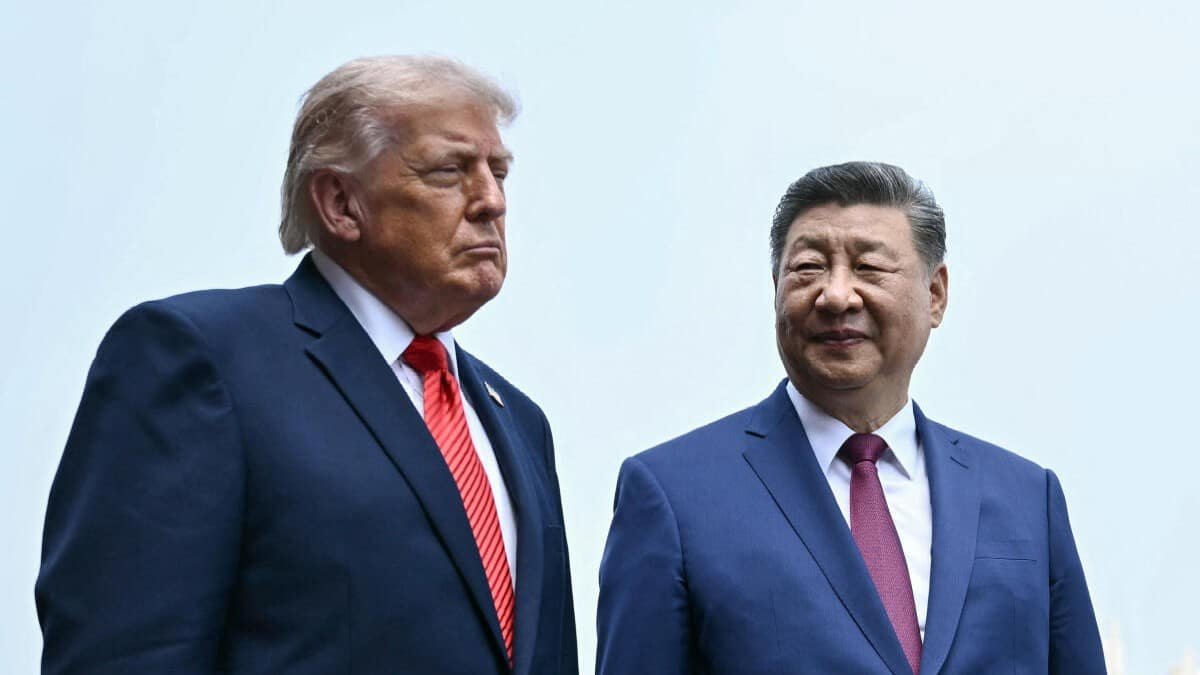





President Donald Trump is set to meet with Chinese President Xi Jinping in Beijing this week, a visit fraught with complex geopolitical and economic considerations. Despite Trump’s earlier optimistic predictions of a warm welcome, the atmosphere may be tempered by ongoing trade disputes, China’s relationship with Iran, and differing strategic priorities.
President Trump is meeting in Beijing with Chinese President Xi Jinping for a multi-day summit, during which Trump said he’d seek to deepen diplomatic and economic ties between the world’s two largest economic powers. https://t.co/SetAOMG11N pic.twitter.com/XW8sPLh1f4
— ABC News (@ABC) May 14, 2026
The visit, which begins Wednesday night, will include a welcome ceremony, one-on-one meetings, and a tour of the Temple of Heaven, a historic religious complex. Discussions will focus on establishing a new Board of Trade to address economic issues, as well as key industries like energy, aerospace, and agriculture, according to White House spokesperson Anna Kelly.
China’s Foreign Ministry spokesperson Guo Jiakun emphasized China’s willingness to collaborate with the U.S. based on mutual respect and equality, aiming to manage differences and foster stability in a turbulent global landscape. He noted the critical role of leader diplomacy in bilateral relations.
While the visit will feature ceremonial elements, it is not expected to match the grandeur of Trump’s 2017 visit, which China dubbed a “state visit-plus.” During that trip, Trump received an elaborate welcome, a tour of the Forbidden City, and a state banquet that included personal touches like a video of his granddaughter singing in Chinese.
Experts suggest that China’s approach may be different this time around. “Xi has a much better understanding of Trump,” said Ali Wyne, senior U.S.-China research and advocacy adviser for the Crisis Group. The pomp and circumstance may be strategically employed to ensure Trump feels the visit is extraordinary, but the underlying dynamic has shifted as China is recognized as a near-peer competitor.
Expectations for significant breakthroughs may be lower, according to Jonathan Czin, a former director for China at the National Security Council. He suggested that China may be hesitant to offer major concessions on trade, anticipating that its leverage will increase closer to the U.S. midterm elections.
The White House maintains that Trump’s focus is on achieving tangible results, not just symbolic gestures. “President Trump cares about results, not symbols,” Kelly stated. Despite domestic concerns about Trump’s economic policies and views on international relations, the White House emphasizes the strong relationship between Trump and Xi, suggesting the summit will be both symbolically and substantively significant.
Critical Analysis
This meeting occurs at a critical juncture in U.S.-China relations. While both sides acknowledge the importance of dialogue, significant obstacles remain. China’s economic ties with Iran and ongoing trade disputes represent major points of contention. The approaching U.S. midterm elections add another layer of complexity, potentially influencing China’s negotiating strategy.
The success of this summit will depend on the willingness of both leaders to address these challenges directly and find common ground. While ceremonial gestures and positive rhetoric may help to ease tensions, tangible progress on trade and other key issues will be necessary to ensure a productive and mutually beneficial relationship. The differing expectations on each side could also lead to disappointment if not managed carefully. Ultimately, this meeting will serve as a crucial test of the U.S.-China relationship in an increasingly complex global environment.