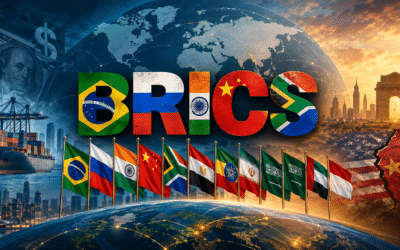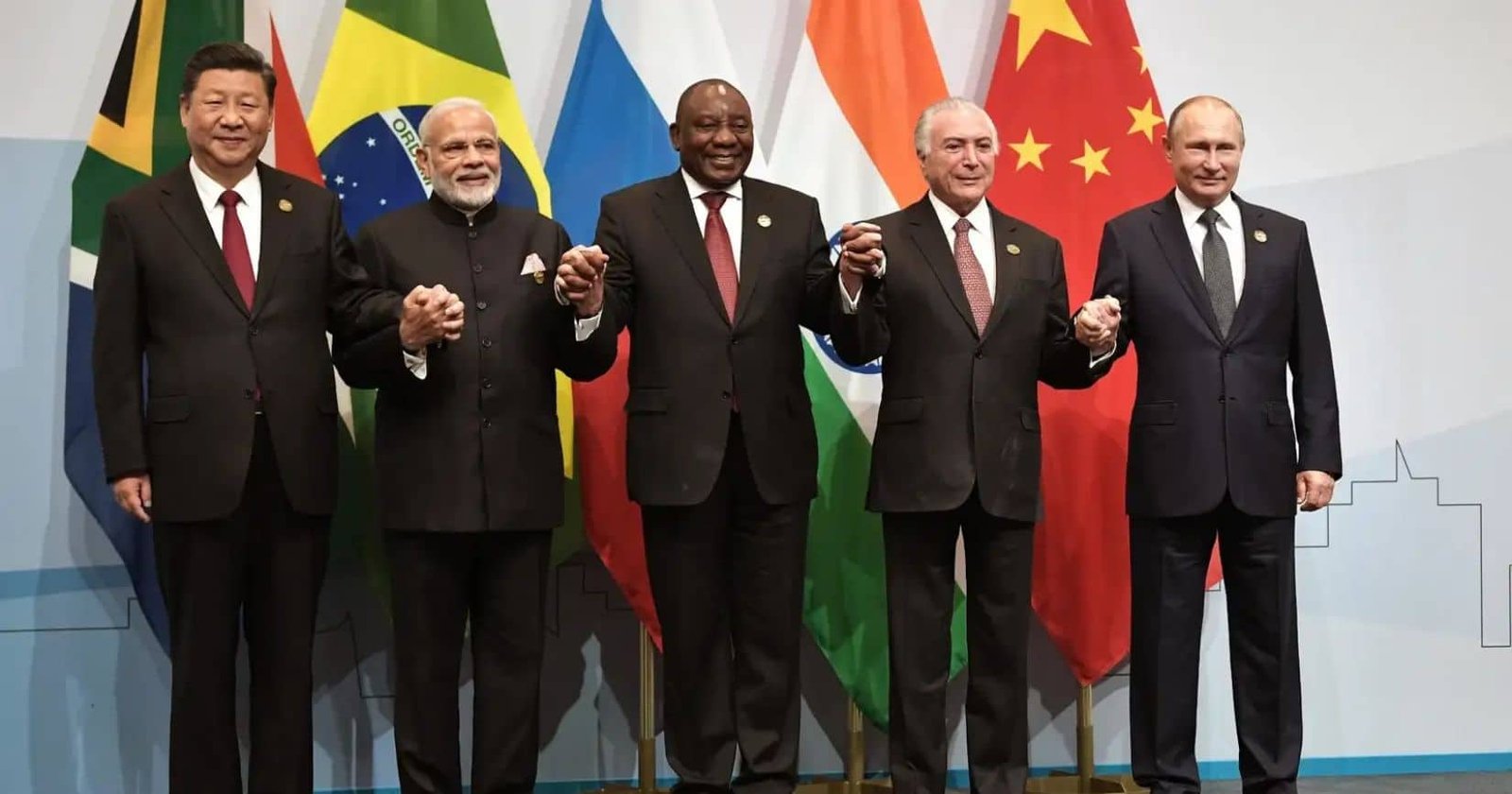





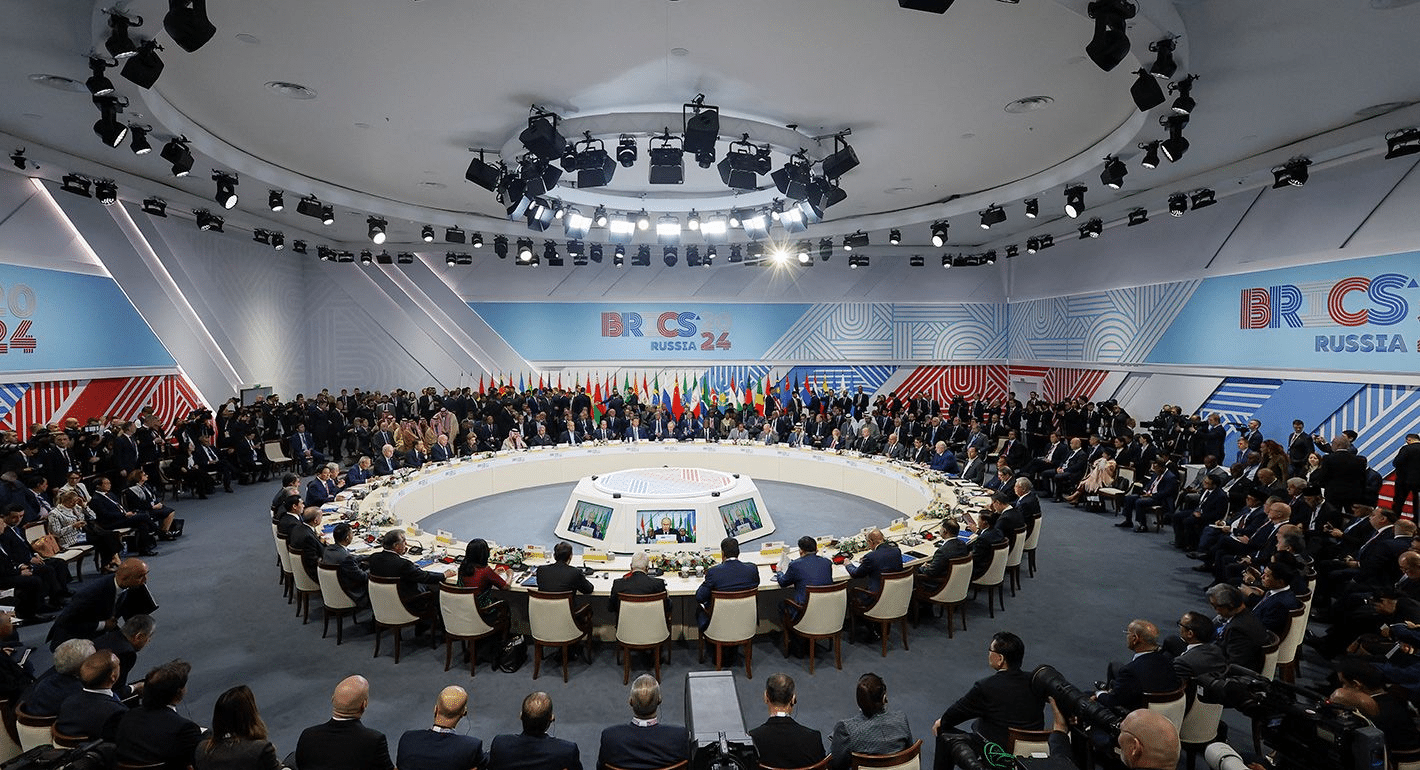
The expansion of BRICS — once a modest coalition of Brazil, Russia, India, China, and South Africa — is being heralded by its advocates as a turning point in the trajectory of global governance. With the inclusion of new members such as Saudi Arabia, Iran, Egypt, Ethiopia, and the United Arab Emirates, the bloc has grown into a formidable entity representing diverse regions across the Global South. To many observers, this is not just an enlargement of membership but a symbolic statement that challenges the Western-led international order. Yet beneath the rhetoric, fundamental questions persist: does the expansion signify the rise of a genuine counter-Western pole in global politics, or is it primarily symbolic posturing that masks internal contradictions and institutional weaknesses?
Economic Weight and Strategic Promise
On the surface, the new BRICS is an economic heavyweight. The bloc now represents more than 45 percent of the global population and over a quarter of the world’s GDP. With the inclusion of major energy producers like Saudi Arabia, Iran, and the UAE, BRICS also commands significant influence over global oil and gas markets. This energy leverage, when combined with China’s manufacturing capacity, Russia’s resource wealth, India’s demographic power, and Brazil’s agricultural dominance, paints a picture of an alternative economic pole that could rival Western frameworks.
The establishment of the New Development Bank (NDB), designed to provide financing without the austerity-heavy conditions of the IMF and World Bank, further signals ambitions of institutional autonomy. The bank has already funded projects in sustainable energy, infrastructure, and digital connectivity across member states, offering a glimpse of what a non-Western financial ecosystem might look like.
However, translating potential into power is rarely straightforward. While the numbers are impressive, the bloc struggles to act cohesively in ways that rival NATO, the G7, or even regional groupings like the EU.
You May Like To Read: The Return of Spheres of Influence: Is the 21st Century Looking More Like the 19th?
Internal Contradictions: The Achilles’ Heel
The BRICS grouping is plagued by contradictions that undercut its ability to project unified power. China and India, arguably the bloc’s two strongest economies, remain embroiled in border disputes and deep mistrust. Russia seeks to reorient itself toward the Global South after Western sanctions, but its war in Ukraine has complicated collective diplomacy. Meanwhile, Brazil, under President Lula da Silva, oscillates between engagement with BRICS and the desire not to alienate Western partners.
The addition of Saudi Arabia and Iran, historical rivals in the Middle East, could either enhance BRICS’ credibility as a platform for reconciliation or exacerbate internal divisions. Ethiopia, Africa’s second most populous country, brings geostrategic weight but also fragile domestic stability. With so many competing interests, the prospect of a unified bloc acting decisively on global issues remains remote.
Symbolism as Strategy
Yet, even if BRICS is more stage than structure, symbolism matters in geopolitics. The very act of expansion demonstrates a shared dissatisfaction with Western-dominated institutions like the IMF, World Bank, and WTO. For many Global South countries, BRICS serves as a political and psychological counterweight — a reminder that alternatives exist outside U.S. or EU-led frameworks.
This symbolic dimension is especially valuable for states seeking bargaining leverage. Membership in BRICS allows them to negotiate with the West from a position of enhanced visibility, using affiliation with the bloc as a diplomatic asset. Even if the bloc is not fully functional as a rival order, it is already effective as a pressure point on Western-dominated governance.
The Dollar Question: De-Dollarization or Diversification?
Perhaps the most ambitious claim made by BRICS proponents is that the bloc could challenge the hegemony of the U.S. dollar. Talk of a common BRICS currency has generated excitement, but practical obstacles abound. The economic asymmetries between members, divergent monetary policies, and lack of institutional integration make such a currency unrealistic in the near term.
What is more feasible is gradual diversification. The bloc is already experimenting with trade settlements in local currencies, expanded use of the Chinese yuan, and development of alternative payment systems insulated from Western sanctions. While these measures are incremental, they chip away at the dollar’s dominance over time. Instead of abrupt displacement, what BRICS can realistically achieve is a slow reshaping of financial ecosystems toward greater plurality.
Implications for Global Governance
The central question is whether BRICS expansion signifies a move toward multipolar governance or simply entrenches fragmentation. Optimists argue that a larger BRICS enhances the representation of the Global South, empowering countries long marginalized in global decision-making. The inclusion of African and Middle Eastern states broadens the bloc’s reach beyond Asia and Latin America, giving it a more balanced geopolitical profile.
Critics, however, warn that the lack of institutional coherence makes BRICS expansion less about governance and more about symbolism. Without binding commitments, enforcement mechanisms, or even a shared strategic vision, the bloc risks becoming little more than a diplomatic club. Its communiqués may capture headlines, but its capacity to implement meaningful global reforms remains untested.
A Platform in Flux
In truth, BRICS expansion is both more and less than its boosters claim. It is more in that it reflects the structural dissatisfaction of much of the world with Western dominance and gives institutional form to the desire for alternatives. It is less in that it does not, at least yet, provide a coherent blueprint for a rival order.
The bloc’s expansion is better understood as part of a transitional phase in global politics. It reflects not the arrival of a new order but the turbulence of a world shifting away from unipolarity toward uncertain multipolarity. In that sense, BRICS is not the answer to Western hegemony but one of many evolving experiments in global governance.
The expansion of BRICS is undeniably significant, but its significance lies more in symbolism than in structure. It underscores a world increasingly skeptical of Western-led systems, highlights the agency of Global South states, and experiments with alternatives like the NDB and local currency trade. Yet, its internal contradictions and lack of cohesion mean it is not yet a true counter-order.
For now, BRICS remains a platform in flux — important enough to watch, but not yet powerful enough to fundamentally reorder global politics. Whether it evolves into a durable alternative or remains a symbolic coalition will depend on whether its members can move from shared grievances to shared governance.
You May Like To Read: The Silent Frontline: Africa’s Emerging Role in the New Cold War Between the U.S., China, and Russia