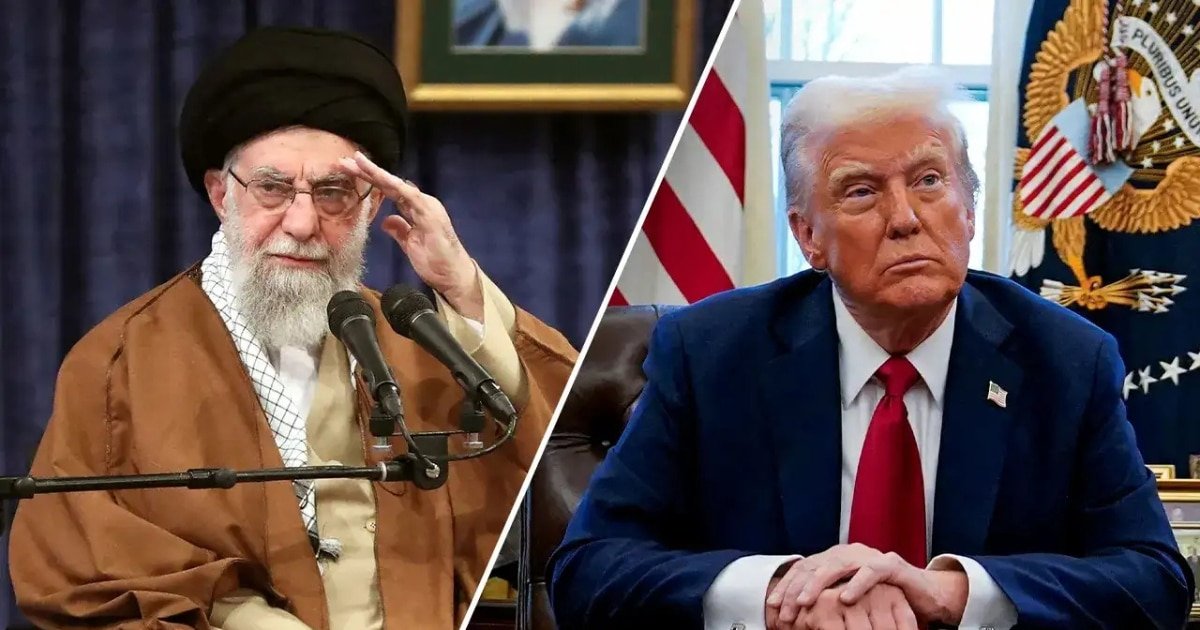





Tensions between the United States and the Islamic Republic of Iran reached a critical juncture this Sunday as President Donald Trump expressed hope for a diplomatic breakthrough, even as Tehran warned that any military provocation would ignite a broad regional conflict.
US President Donald Trump says he is hopeful of agreeing a deal with Iran after the country’s supreme leader warned that any US attack on the Islamic republic would trigger a regional war. A US aircraft carrier group is already deployed in the Middle East.https://t.co/VlvzhhWYZq pic.twitter.com/iGfx3SyaVj
— AFP News Agency (@AFP) February 1, 2026
The “Deal or Conflict” Crossroads
Responding to reporters regarding the latest threats from Tehran, President Trump maintained a dual-track approach of pressure and pragmatism. “Hopefully we’ll make a deal,” Trump stated, while addressing the Iranian Supreme Leader’s warnings. “If we don’t make a deal, then we’ll find out whether or not he was right.”
The President’s comments follow a period of heightened military readiness, including the dispatch of an aircraft carrier strike group to the Middle East following the suppression of anti-government protests in Iran.
🗣 ‘Hopefully, we’ll make a deal’
US President Donald Trump responds to Iran’s Supreme Leader Ayatollah Ali Khamenei’s warning of a regional war, saying ‘we’ll find out whether or not he was right’ https://t.co/NFlwiOZ1WI pic.twitter.com/043lXtSyD5
— Anadolu English (@anadoluagency) February 1, 2026
Khamenei Warns of Regional Escalation
In a televised address, Supreme Leader Ayatollah Ali Khamenei likened recent internal unrest to a “coup” attempt orchestrated by foreign adversaries. He issued a stern warning against U.S. military intervention:
- Regional Consequences: Khamenei declared that a U.S. attack would not remain localized but would trigger a “regional war.”
- Internal Stability: The Supreme Leader asserted that the “coup” had been suppressed and urged the Iranian public to remain resilient against U.S. rhetoric.
Diplomatic Channels, and “Terrorist” Designations
Despite the aggressive posturing, signs of back-channel diplomacy have emerged:
- Search for Middle Ground: Iranian Foreign Minister Abbas Araghchi expressed concern over “miscalculations” but acknowledged Trump’s potential “wisdom” in seeking a fair deal that addresses nuclear concerns without targeting Iran’s defense capabilities.
- Mediation Efforts: Tehran confirmed that regional intermediaries are currently working to rebuild trust between the two nations.
- Tit-for-Tat Designations: In a symbolic escalation, the Iranian Parliament designated European armies as “terrorist organizations,” mirroring recent moves by the EU, U.S., and Canada against the Islamic Revolutionary Guard Corps (IRGC).
Humanitarian Impact, and Official Toll
The Iranian presidency released an official list of 2,986 names of those killed during the recent unrest, totaling over 3,100 casualties. While authorities attribute the violence to “terrorist acts” against security forces, the scale of the loss has left the Iranian citizenry in a state of high anxiety.
You May Like To Read: Brain Survival: U-M Scientists Discover ‘Sugar Switch’ to Save Neurons
“Lately, all I do is watch the news until I fall asleep,” said Firouzeh, a 43-year-old resident of Tehran, echoing the fears of millions caught in the crossfire of international brinkmanship.
Check out our latest video: