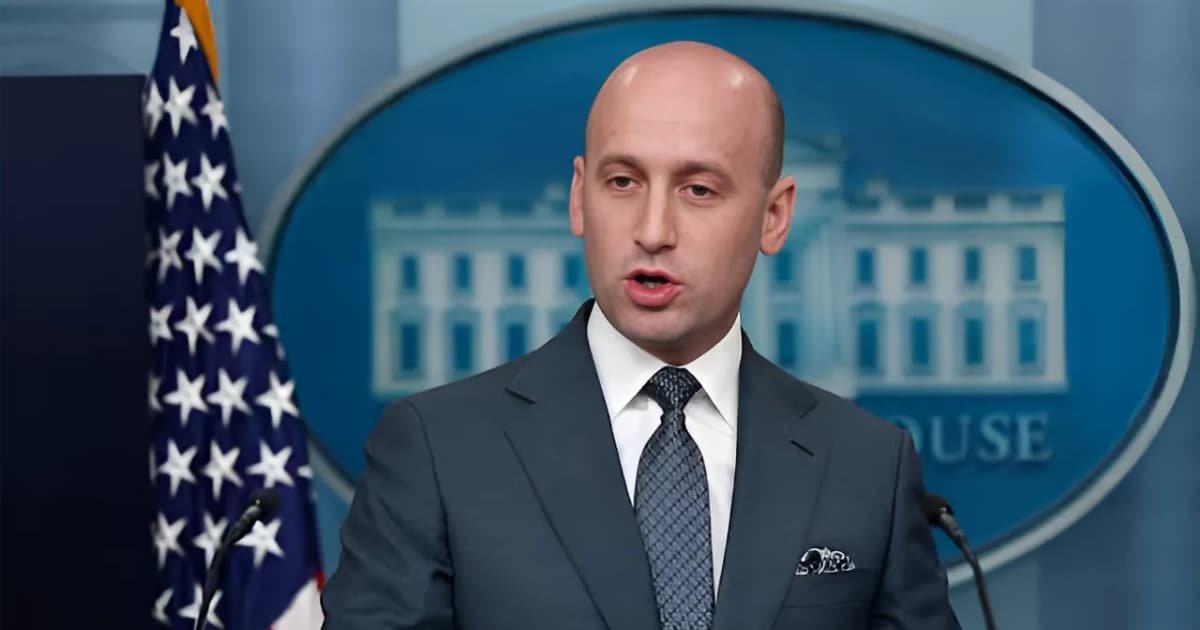


On August 3, 2025, former White House deputy chief of staff Stephen Miller, a close adviser to Republican front-runner Donald Trump, ignited a firestorm of international controversy. Appearing on Fox News, Miller directly accused India of “financing Russia’s war in Ukraine” by continuing to import large quantities of discounted Russian oil. In his words, India is now “basically tied with China” as one of the biggest enablers of the Kremlin’s wartime economy—an assertion that has escalated tensions between Washington and New Delhi at a moment of growing geopolitical strain. Miller told Fox News:
“What [Trump] said very clearly is that it is not acceptable for India to continue financing this war by purchasing the oil from Russia. He further said, that people would be shocked to learn that India is basically tied with China in purchasing Russian oil. That’s an astonishing fact.”
This accusation didn’t emerge in isolation. It builds on Donald Trump’s own decision last week to impose a 25% tariff on Indian goods, explicitly linking the move to New Delhi’s refusal to curtail oil imports from Moscow. Trump warned that unless India ends such purchases, he could escalate penalties up to 100% tariffs, aiming to cut off economic lifelines to the Kremlin.
India’s Response: Energy Security Over Political Ultimatums
India, for its part, has pushed back firmly. According to senior Indian government officials, New Delhi has no plans to alter its oil policy. Despite mounting diplomatic pressure, the country will continue to buy Russian crude as long as it serves India’s national interest, especially in terms of price and reliability. Officials emphasized that Indian refiners make purchasing decisions based on commercial viability—not foreign political mandates.
India’s imports from Russia now account for around 35% of its total crude needs, a dramatic increase since the start of the Ukraine war in 2022. This translated to roughly 1.75 million barrels per day in the first half of 2025, according to Reuters. Despite fluctuating global prices and logistical shifts, Russian oil remains among the most affordable options, especially given ongoing caps on Western supplies and regional instability in the Middle East.
You May Like To Read: Pakistan and Iran Chart a New Course: An Ambitious $10 Billion Trade Target
Interestingly, some Indian state-owned refiners have recently reduced their Russian purchases, citing narrower discounts and shipping complexities. However, private companies such as Reliance Industries and Nayara Energy have kept buying Russian crude, albeit under growing scrutiny. Nayara’s ties to Russian oil giant Rosneft have particularly drawn attention from European regulators wary of sanction circumvention.
Strategic Autonomy or Strategic Defiance?
India’s stance has reignited a broader debate about “strategic autonomy”—a long-standing principle in Indian foreign policy that seeks to avoid dependency on any one global power. Indian Prime Minister Narendra Modi has consistently defended the country’s energy policy as a matter of sovereignty, rejecting what officials describe as “coercive diplomacy” from Washington.
In a statement to Bloomberg, Indian energy officials confirmed they would “prioritize national interests” and rebuffed the suggestion that the country’s foreign policy should be shaped by U.S. threats or partisan rhetoric.
This is not the first time Modi’s government has locked horns with the West over its refusal to condemn Russia’s invasion of Ukraine or participate in sanctions. India has abstained from UN resolutions denouncing Russian aggression and has maintained strong diplomatic and economic ties with Moscow throughout the conflict.
U.S.-India Relations at a Crossroads
The current impasse could have far-reaching consequences for U.S.-India trade and diplomatic relations. Trump’s rhetorical escalation and tariff threats are not merely symbolic—they pose concrete risks to Indian exporters, particularly in the tech, textile, and pharmaceutical sectors. The Indian Ministry of Commerce is reportedly assessing potential retaliatory tariffs or legal recourse through the World Trade Organization if Trump’s trade war intensifies.
Meanwhile, the Biden administration—though also critical of India’s Russia ties—has been more measured, focusing on diplomacy and long-term alliance-building within the Indo-Pacific framework. Should Trump return to office, however, the more transactional, punitive approach he pioneered during his first term may resurface with renewed vigor.
This confrontation also exposes deep fault lines within the global energy market. As Western nations struggle to enforce oil price caps and reduce dependence on Russian fuel, India and China’s continued purchases are undermining these efforts, effectively financing Russia’s war machine. The stakes are not only economic but deeply geopolitical.
You May Like To Read: India to Maintain Russian Oil Imports Despite International Pressure
What’s Next?
If Trump wins the November election, his administration may go beyond tariffs—potentially targeting Indian firms with secondary sanctions or restricting access to U.S. financial markets. Such a move would mark an unprecedented rupture between two major democracies and could send shockwaves through global supply chains.
India, meanwhile, appears unwilling to bend. Its decision-makers argue that Russia remains a “trusted supplier” and note that Western oil is neither price-competitive nor reliably available in the volumes India requires. In their eyes, Trump’s pressure campaign is less about Ukraine and more about reasserting American dominance on the world stage.
As this high-stakes standoff unfolds, it reveals a broader truth: energy diplomacy is now at the heart of global power politics, with India’s defiance marking a critical test of how far middle powers can go in resisting U.S.-led pressure campaigns.