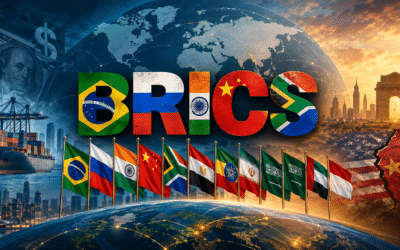





Over the past two years, “de-dollarization” has moved from slogan to operational reality in parts of global finance. Several countries are settling more trade in local currencies, central banks are adding gold, and the renminbi (RMB) is gaining limited but noticeable ground. For Pakistan, long vulnerable to dollar liquidity shocks, these shifts matter. They affect how we pay for energy, how exporters get paid, and how the State Bank of Pakistan (SBP) manages reserves. The question is not whether the dollar disappears (it won’t), but whether a more mixed currency world can give Pakistan more breathing room.
You May Like to Read: Debt, Development, and Dependency: Is Pakistan Trapped in the Global South’s Financial Cycle?
The Global Backdrop: A Thinner Dollar Dominance, a Bigger Role for RMB, and Gold
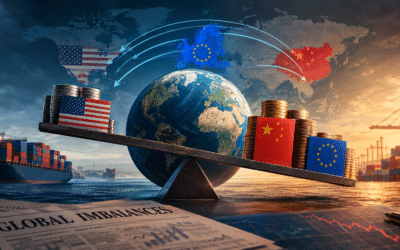
The dollar remains the primary reserve and invoicing currency, but its share in official reserves has slipped in recent years, while central banks, especially in Asia, have bought gold at a record clip. IMF updates for Q4-2024 and Q1-2025 show changes in the composition of global reserves, underscoring diversification momentum. Meanwhile, cross-border settlements in RMB continue to rise alongside China’s trade scale, adding practical channels to use the RMB in trade invoices and payments. None of this dethrones the dollar, but it does widen the menu of workable options.
Pakistan’s First Steps: RMB Clearing, Swap Lines, and Non-Dollar Oil
Pakistan is already participating. In late 2023, the Industrial and Commercial Bank of China’s Karachi branch was designated as Pakistan’s RMB clearing bank, cutting friction and time in RMB transactions. SBP regulations had earlier placed RMB “at par with other international currencies,” allowing local banks and firms to open L/Cs and settle trade in RMB. These plumbing upgrades matter. They reduce conversion costs and settlement risk for China-linked trade.
The currency swap with the People’s Bank of China, currently RMB 30 billion, provides short-term RMB liquidity to the banking system. Pakistan has requested an extra RMB 10 billion this year to deepen that cushion and is preparing a “Panda bond” (yuan-denominated bond) to diversify funding sources, a move that could lower dependence on dollar markets if priced well.
Energy imports offer a practical test. Pakistan’s first cargoes of discounted Russian crude in 2023 were paid in RMB through Chinese banks, proving that non-dollar settlement can clear for large-ticket, sanction-sensitive trades when channels exist. The volumes have not been game-changing, but the precedent is.
You May Like to Read: The ‘New Energy Policy:’ The Political and Economic Challenges of Importing Russian Oil and Gas
Trade Prospects where De-Dollarisation Could Help Most
Three areas stand out:
China-linked supply chains: With China already Pakistan’s largest goods partner, more invoicing in RMB could trim conversion spreads and make supplier credit easier (e.g., RMB L/Cs, RMB working capital). For sectors like machinery, electronics, and industrial inputs, where China dominates, RMB terms could speed procurement and reduce price volatility tied purely to the dollar index. The RMB clearing bank in Karachi lowers administrative hurdles for these flows.
Energy and commodities: Non-dollar settlement for specific cargoes, where counterparties accept RMB, can smooth payment when dollar liquidity is tight. This is not a universal fix (many sellers still prefer USD), but as more counterparties maintain RMB accounts and use China’s CIPS network, occasional RMB-priced deals become simpler to execute.
Regional workarounds and barter: Pakistan’s B2B Barter Trade Mechanism with Iran, Russia and Afghanistan is narrow and bureaucratic, but it gives sanctioned-exposed trades a legal path outside dollar clearing. Used judiciously, and transparently, it can keep certain export lines open while formal banking channels are constrained.
You May Like to Read: The Delicate Balance: Pakistan’s High-Stakes Diplomacy between China and the U.S
The constraints: liquidity, pricing power, and macro credibility
None of this eliminates the dollar risk. The dollar’s network effects, depth, liquidity, legal certainty, remain unmatched, and most of Pakistan’s external liabilities (Eurobonds, multilateral and bilateral loans) are USD-linked. Even where RMB settlement is possible, pricing power tends to sit with suppliers; if the dollar weakens, suppliers may tighten RMB terms to keep effective prices. RMB itself is not fully convertible, and access ultimately depends on swap capacity, Chinese bank limits, and Beijing’s capital account settings. These are manageable constraints, but they are real.
Macro credibility matters as much as currency choice. If domestic inflation expectations are unanchored, or the fiscal path is unclear, switching invoice currency will not fix borrowing costs. SBP’s current policy stance, double-digit rates and a more rules-based interbank, helps stability, but sustaining low inflation and predictable FX policy is what will ultimately bring down trade financing spreads, regardless of whether invoices read USD or RMB.
What would make de-dollarisation actually move the needle?
First, scale and reliability of RMB access: expanding the swap line and actively using the Karachi RMB clearing bank can mainstream RMB L/Cs for mid-tier importers and exporters, not just state giants. Second, credible issuance of a Panda bond would create a pricing benchmark for Pakistani risk in RMB markets, encouraging local banks to develop RMB trade finance products. Third, targeted sector pilots, textiles buying Chinese machinery in RMB; pharma importing inputs; IT firms billing some services to Chinese clients in RMB, can build muscle memory and data on costs versus USD.
Finally, the reserve strategy should match the trade map. As global reserve composition inches toward more diversification, some RMB, some gold, Pakistan can consider small, carefully hedged holdings that support real trade settlement rather than making speculative bets on currency shifts. The point is resilience, not ideology.
You May Like to Read: Pakistan and U.S. Finalize Trade Deal, Expected to Boost Pakistani Exports
Bottom line
De-dollarization will not rewrite Pakistan’s external accounts overnight. The dollar will remain central to our finance and trade for years. But a smarter, multi-currency toolkit, RMB settlement where efficient, limited barter where legal and useful, and diversified funding that includes Panda bonds, can reduce vulnerability to dollar squeezes and cut transaction costs in targeted lanes. If paired with fiscal discipline and export upgrading, these changes can modestly improve Pakistan’s trade resilience in 2025 and beyond. It’s not a silver bullet; it’s a set of pipes and protocols. Building them, carefully and transparently, is worth the effort.