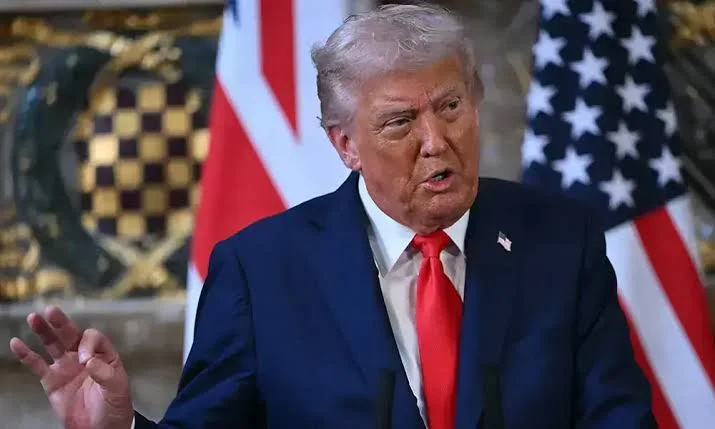

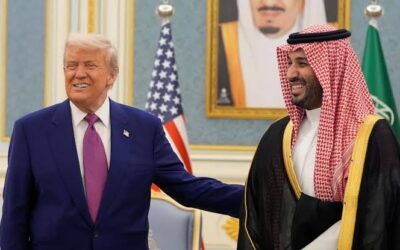



US President Donald Trump stated on Thursday that a newly signed, landmark agreement to establish a civilian nuclear energy program in Saudi Arabia is strictly conditional on Riyadh formally joining the Abraham Accords and normalizing diplomatic relations with Israel.
In a statement posted on Truth Social, Trump clarified that the bilateral deal focuses strictly on the civilian application of nuclear technology—drawing parallels to established programs in Iran and the UAE—while emphasizing that full execution remains “totally subject to Saudi Arabia joining the very respected and successful Abraham Accords”.
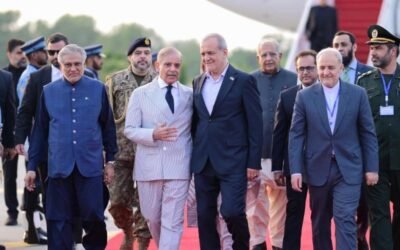
Video of the statement by the Deputy Prime Minister/Foreign Minister of Pakistan Senator Mohammad Ishaq Dar @MIshaqDar50 at the 33rd ASEAN Regional Forum (ARF) Ministerial Meeting, Manila, Philippines (23 July 2026) pic.twitter.com/DT2Ax8tcTT
— Ministry of Foreign Affairs – Pakistan (@ForeignOfficePk) July 23, 2026
Dual Framework Under Section 123
The announcement follows the formal signing of two foundational agreements—one governing “peaceful nuclear cooperation” and another establishing “bilateral safeguards”—by US Energy Secretary Chris Wright and Saudi Energy Minister Prince Abdulaziz bin Salman.
US-Saudi Civilian Nuclear Agreement Architecture:
- Legal Framework: Executed under Section 123 of the US Atomic Energy Act
- Strategic Mandate: Multi-billion dollar, multi-decade partnership in energy and technology
- Key Conditionality: Conditional on Riyadh’s formal entry into the Abraham Accords
- Legislative Path: Sent to the US Congress for standard review
According to the US Department of Energy, the dual framework creates the legal basis for a multi-billion dollar strategic partnership designed to enhance nuclear non-proliferation while deploying American technological capabilities.
Non-Proliferation Debates and Industrial Stakes
While the exact text of the agreement remains classified pending congressional review, reports suggest the potential inclusion of provisions allowing US enterprises to build a domestic uranium enrichment facility on Saudi soil.
The initiative has drawn mixed reactions from security analysts and nuclear policy experts:
-
Proliferation Concerns: Policy experts, including Matthew Kroenig of the Atlantic Council, warned against granting domestic enrichment capabilities, arguing that Washington must not compromise non-proliferation standards amidst broader regional instability.
-
Geopolitical Alignment: Conversely, Jennifer T. Gordon, director of the Atlantic Council’s Nuclear Energy Policy Initiative, framed the deal as a major strategic victory for Washington, preventing Saudi Arabia from turning to Russian or Chinese state enterprise alternatives.
-
Administration Reassurances: Energy Secretary Chris Wright dismissed proliferation anxieties, asserting that the pact upholds the highest global standards of nuclear safety, non-proliferation, and technical oversight.
Strategic Analysis: The Intersecting Dynamics of Middle East Diplomacy
The conditional coupling of a US-Saudi civilian nuclear agreement to Israeli normalization reflects a complex geopolitical strategy with significant regional implications:
Re-Anchoring the Abraham Accords Framework
By explicitly tying the transfer of civil nuclear technology to the Abraham Accords[cite: 1], Washington is attempting to reactivate its broader Middle Eastern diplomatic integration strategy. Despite public skepticism across parts of the region due to the ongoing Israeli-Palestinian conflict, the US administration seeks to secure a historic diplomatic breakthrough that binds Riyadh into a wider regional security and economic matrix.
Balancing Power in the Shadow of the US-Iran Conflict
The deal comes against the backdrop of an active military confrontation between the United States and Iran. By extending advanced civilian atomic technology and proposing a robust defense arrangement with Riyadh, Washington is seeking to construct a sustainable regional counterweight to Tehran’s nuclear capabilities. However, the prospect of fuel-cycle or enrichment technology on Saudi soil highlights ongoing concerns over a potential nuclear arms race across the Gulf.
Navigating Strategic Pacts and Regional Alignments
Saudi Arabia’s quest for nuclear technology unfolds within a rapidly shifting alliance network. With Islamabad and Riyadh having signed a mutual defense pact in September 2025, and Pakistan actively mediating backchannel diplomatic exchanges in the ongoing Gulf conflict, the integration of American nuclear technology into Saudi Arabia’s national power grid adds a major layer to the broader regional balance of power.