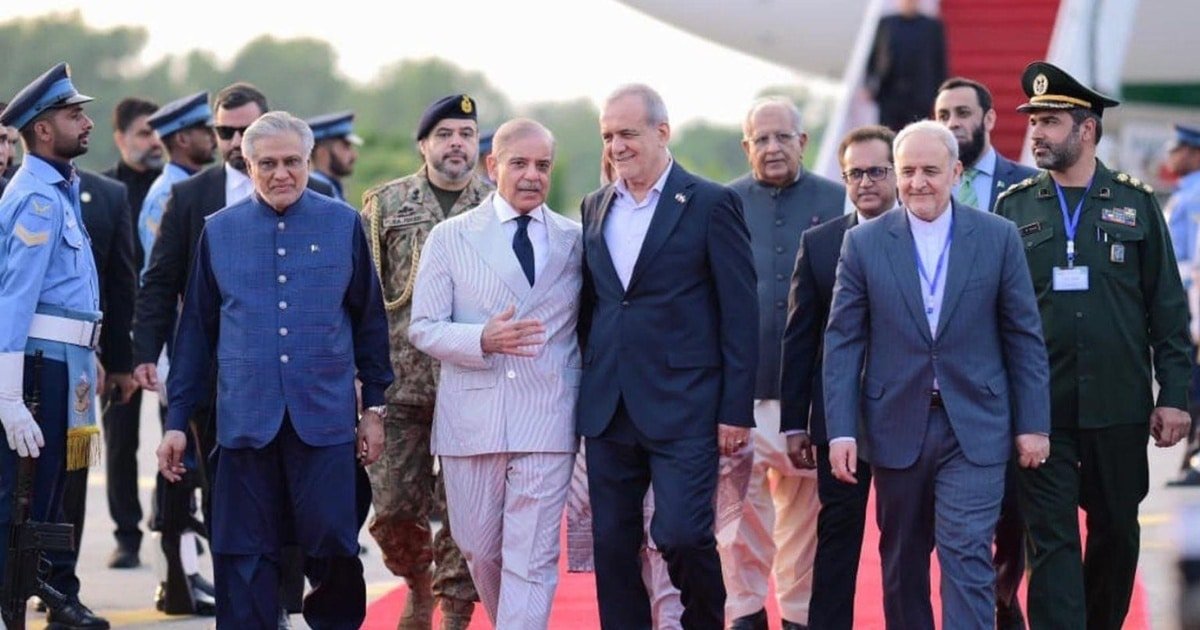





Iranian President Dr. Masoud Pezeshkian is set to arrive in Pakistan for a two-day state visit from August 2 to 3, 2025, marking his first foreign tour since assuming office and underscoring the growing importance of Islamabad–Tehran ties. The visit comes at the invitation of Prime Minister Shehbaz Sharif and is expected to be rich in symbolism and substance.
This marks the second consecutive visit by an Iranian president to Pakistan, following the late Ebrahim Raisi’s trip in April 2024. It also follows a series of high-level exchanges aimed at enhancing bilateral relations in a rapidly shifting regional landscape. As noted by Pakistan’s Foreign Office, the visit reflects both countries’ shared desire to advance regional peace, trade, and strategic cooperation.
Agenda and Diplomacy
Political, Economic, and Strategic Focus
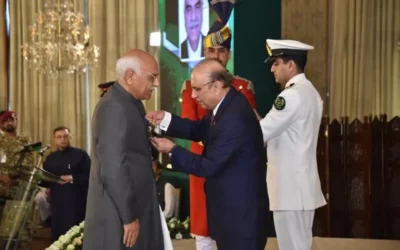
Dr. Pezeshkian’s itinerary includes meetings with President Asif Ali Zardari, Prime Minister Shehbaz Sharif, and other senior officials. The two sides are expected to hold in-depth discussions on a wide array of issues, including counterterrorism, trade, border management, and energy cooperation. According to official statements, the visit aims to consolidate existing frameworks and develop new avenues of cooperation.
The Iranian delegation will also interact with members of Pakistan’s business and cultural communities, indicating Tehran’s intent to promote people-to-people ties and build goodwill beyond official circles.
Historical Context and Regional Significance
From Conflict to Cooperation
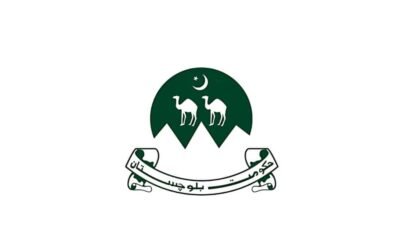
The backdrop to this visit is particularly significant. In January 2024, Iran and Pakistan endured a rare moment of direct military confrontation, involving cross-border airstrikes linked to militant groups operating in the Balochistan region. The episode was quickly diffused through diplomatic engagement, and both countries committed to improved border coordination. The Pezeshkian visit builds on this post-conflict diplomacy and affirms a commitment to regional de-escalation.
Moreover, this visit comes amid heightened instability in the Middle East, particularly in Gaza, where Iran has taken a firm anti-Israel stance. Islamabad has mirrored that position in recent months, calling for an end to the violence and voicing support for the Palestinian cause. This ideological alignment has provided fertile ground for Tehran and Islamabad to present a united front against what they both view as Western aggression in the Muslim world.
You May Like To Read: The Resurgence of the Two-State Solution: A Path to Peace or Political Maneuvering?
Economic Diplomacy and Trade Aspirations
From $3 Billion to $10 Billion in Trade
Currently, Iran and Pakistan engage in approximately $3 billion worth of bilateral trade annually, much of it informal due to sanctions and logistical hurdles. President Pezeshkian has publicly expressed a desire to raise that figure to $10 billion, citing untapped potential in energy exports, construction materials, textiles, and agriculture.
According to Iranian media, Tehran views Pakistan as a gateway to South Asia and the broader Belt and Road Initiative. Pakistan, meanwhile, is exploring the possibility of integrating Iran into the China–Pakistan Economic Corridor (CPEC), which could provide Tehran a much-needed economic lifeline amid continuing U.S. sanctions.
During this visit, the two countries are expected to finalize agreements to operationalize more border markets, simplify customs regulations, and establish a bilateral banking channel insulated from Western sanctions.
Cultural Diplomacy and Shared Heritage
The Symbolism of Iqbal
President Pezeshkian’s scheduled visit to the mausoleum of Allama Muhammad Iqbal in Lahore underscores the cultural depth of Iran–Pakistan relations. Iqbal, Pakistan’s national poet, wrote much of his work in Persian and is revered in Iranian literary circles. Pezeshkian’s visit to the tomb is both a symbolic tribute and a gesture of shared heritage.
The inclusion of cultural diplomacy in the official itinerary speaks to a broader effort to reinforce soft power ties, particularly among religious scholars, artists, and intellectuals from both nations. The Iranian president is scheduled to land at Lahore’s Allama Iqbal International Airport, where he will be received with full state honors. A 21-gun salute, ceremonial guard, and red carpet welcome await the visiting dignitary.
These ceremonial visuals are expected to dominate South Asian media coverage, reflecting the geopolitical weight of Pezeshkian’s arrival in a region increasingly polarized between Western and Eastern alliances.
You May Like To Read: A Polarized World Order and CPEC between Beijing and Washington
Geopolitical and Strategic Implications
Aligning Interests Amid Global Fragmentation
The Pezeshkian visit is not just bilateral—it is a signal to the wider world. It reflects a shift toward strategic autonomy by both Iran and Pakistan, two nations traditionally caught between competing global powers. With the West increasingly disengaged or adversarial, both countries are pivoting toward regionalism, asserting their roles in shaping South and West Asia’s future.
As reported by the Tehran Times, Pezeshkian sees Pakistan as a partner in resisting U.S. hegemony, particularly in light of events in Gaza, Lebanon, and Iraq. Joint statements may address Islamic unity, energy corridors, and regional connectivity projects that bypass traditional Western-dominated routes.
Energy Cooperation and Pipeline Diplomacy
The long-delayed Iran–Pakistan gas pipeline, often called the “Peace Pipeline,” is also likely to be discussed. The project, which has faced repeated delays due to U.S. pressure and funding issues, could now gain new momentum as Pakistan seeks to diversify energy sources amid soaring domestic demand.
As detailed in background sources, Iran has already completed its side of the pipeline, and Pakistani officials have signaled interest in reviving the project, possibly under a new financing model involving Chinese or Gulf investment.
Conclusion: From Symbolism to Substance
President Dr. Masoud Pezeshkian’s two-day visit to Pakistan is more than just a diplomatic formality. It reflects a deliberate attempt to restructure bilateral relations, deepen economic ties, and jointly navigate an increasingly multipolar world. With shared religious, cultural, and geopolitical stakes, the Tehran–Islamabad axis could become a cornerstone for regional realignment.
As the world watches, this visit may set the tone for a new chapter in Pakistan–Iran cooperation—grounded not in crisis management, but in long-term strategic partnership.