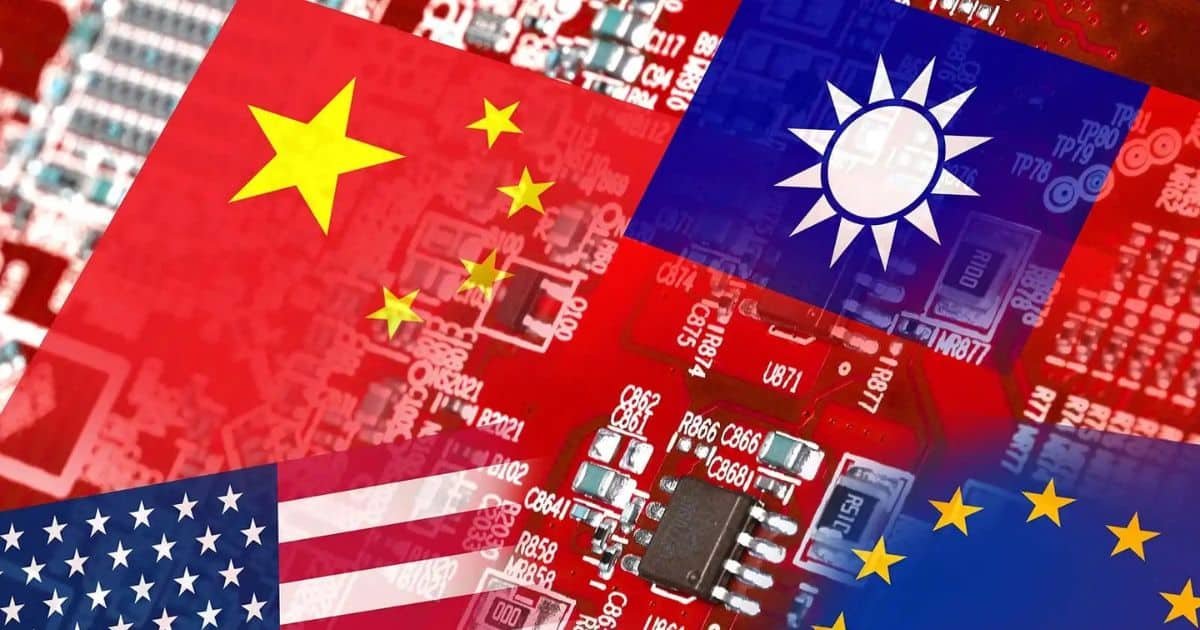





The idea of Taiwan falling under a blockade or military control is often discussed in strategic circles as a worst-case scenario. For ordinary people and businesses in Pakistan and worldwide, the consequences would be immediate, harsh and long-lasting. Taiwan sits at the heart of the modern electronics and shipping systems that power everything from smartphones to power plants. If those arteries are choked, the shock would ripple through every economy, not just advanced markets, but emerging ones too.
Taiwan’s outsized role in chips and why it matters
Taiwan’s semiconductor industry is not just big, it is dominant. Leading companies, especially TSMC, make the most advanced logic chips used in servers, AI accelerators, phones and cars. In 2025 TSMC’s share of the global contract foundry market rose to more than two-thirds, giving it extraordinary leverage over global supply. Any interruption in production or shipments would hit manufacturers who cannot instantly replace advanced Taiwanese capacity. That means higher prices, cancelled deliveries and halted production lines for items that Pakistan imports or manufactures with imported components.
A Blockade is More than a Military Move, it’s a Supply-Chain Weapon
A blockade across the Taiwan Strait or around the island would do two things at once. Stop physical shipments and seize control over a specialised industrial base. Even short disruptions in wafer output would cascade, foundries operate on just-in-time schedules for wafers, substrates and chemicals. Beyond the chips themselves, Taiwan’s skilled engineers and complex testing and packaging services are hard to transplant overnight. Over months, global industries that depend on advanced semiconductors, cloud providers, AI companies, automotive manufacturers and defence contractors, would find investment plans delayed, costs spiking and product roadmaps rewritten. Economic forecasts in 2025 already flagged semiconductor bottlenecks as a principal risk to the global technology cycle.
Shipping Chokepoints and the Wider Trade Shock
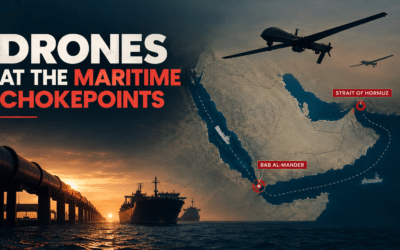
Geography amplifies the danger. The South China Sea and adjacent passages are among the world’s busiest maritime highways; 60% of Asian and global trade moves through waters connected to Taiwan. If naval tensions closed or militarised these routes, rerouting cargo would add days to voyages and steeply raise freight costs. Energy flows, container shipping and bulk commodity deliveries would feel the strain. For Pakistan, reliant on imported energy, industrial inputs and consumer goods, higher shipping and insurance costs would push up prices, squeeze import volumes and complicate trade with East Asia, our largest economic neighbourhood.
You May Like To Read: From Colonial Mandates to Modern Occupations: The Continuity of Global Power Structures
Financial Contagion and the Real Economy
Markets would react in real time. Equity indices tied to technology firms and global trade would plunge as investors price in production shortfalls and rising political risk. Currency markets would see safe-haven flows into dollars and gold, while emerging-market currencies could face pressure. Real effects would follow; slower exports where final goods contain advanced chips, higher import bills for alternatives, and delayed foreign investment as global firms reassess regional supply chains. Consultants and industry studies in 2025 estimated that serious disruption to Taiwan’s semiconductor exports could cost electronics manufacturers hundreds of billions in lost output and retooling costs. That isn’t abstract, it translates into lost jobs, delayed projects and higher consumer prices in countries like Pakistan.
Strategic Fallout: Trade, Technology, and Alliances
A blockade of Taiwan would force many nations into hard choices. Democracies with security ties to Taipei would grapple with whether to intervene or to accept a new status quo. Companies would accelerate relocation or diversification of critical supply lines. a costly, multi-year process. Governments would balance sanctions, export controls and incentives to bring chipmaking closer to home. While such shifts are already underway, a sudden crisis would speed them up dramatically, creating winners (countries able to offer secure, subsidised capacity) and losers (economies that cannot adapt quickly). Recent diplomatic signals from major regional powers show how fraught the political environment has become.
China deplores and firmly rejects the AIT’s statement that accuses the mainland of “intentionally mischaracterizing documents from the WWII era”.
The issue of Taiwan’s status was resolved once and for all in 1945 following the victory of the War of Resistance Against Japanese… pic.twitter.com/miEGzxZr14
— CHINA MFA Spokesperson 中国外交部发言人 (@MFA_China) September 15, 2025
What can Pakistan and Similar Economies Expect?
For Pakistan, the immediate priorities would be managing import price shocks, protecting critical industries and keeping energy and telecom networks running. Policymakers would need to shore up foreign exchange buffers, negotiate alternative supply routes, and fast-track diversification for any sectors that rely on advanced electronics. Over the medium term, Pakistan could seek partnerships to build resilient supply-chain nodes, in electronics assembly, testing and skills training, that are less dependent on a single geographic source. This is not easy or cheap, but the Taiwan scenario shows why such investments in industrial resilience make strategic sense.
You May Like To Read: Israel Deports Greta Thunberg, and 170 Gaza Aid Flotilla Activists
Conclusion: Not Inevitability, but Urgent Preparation
A blockaded Taiwan is not inevitable, but its possibility is a clear present danger for the global economy. The island’s semiconductor dominance and the strategic chokepoints around it mean that any large-scale disruption would be felt in factories, markets and ports from Silicon Valley to Karachi. The lesson for Pakistan and other emerging economies is practical: expect volatility, plan diversification, and invest in resilience. The world’s economic order is tightly knitted; a rupture at one node can quickly become a global wound. Preparing for that risk now is far cheaper than managing the fallout later.
You May Like To Read: Magnitude 8.8 Earthquake Strikes Off Russia’s East Coast, Tsunami Warnings Across Pacific