




In an era of escalating geopolitical tensions, the United Nations Security Council (UNSC) stands as a relic of post-World War II optimism, paralyzed by veto powers wielded by its permanent members. Recent years have seen a surge in vetoes, particularly from Russia and China, blocking resolutions on critical issues like the Gaza conflict and Sudan’s humanitarian crisis. In 2024 alone, eight vetoes were cast, underscoring the Council’s inability to act decisively. This gridlock has accelerated the shift toward ad hoc “coalitions of the willing”, flexible, issue-specific alliances bypassing multilateral institutions. Examples include NATO’s ongoing expansion amid heightened defense spending commitments and trilateral pacts like AUKUS, which deepen military ties among the US, UK, and Australia. While these mechanisms enable swift responses to threats, they raise profound questions for international law. This article analyzes the UNSC’s irrelevance, the proliferation of such coalitions, and their erosion of universal norms, potentially fragmenting global governance into a less accountable patchwork. By examining these dynamics, we uncover a transformative yet precarious evolution in how the world addresses collective challenges.
The Paralyzing Gridlock in the UN Security Council
Source: Al-Jazeera
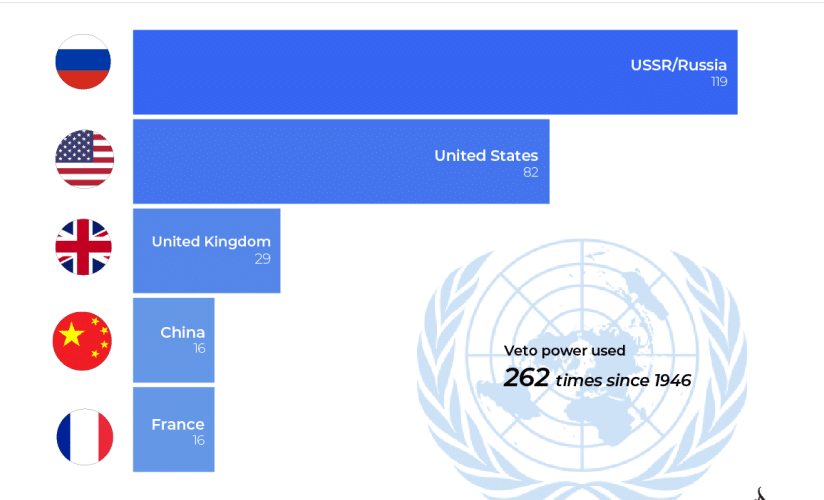
The UNSC’s foundational design, granting veto rights to five permanent members. the US, Russia, China, France, and the UK, aimed to ensure great-power consensus. Yet, this mechanism has devolved into a tool for obstruction, rendering the body increasingly irrelevant. In 2024, Russia vetoed four resolutions, including those on Ukraine and Gaza, while China joined in blocking a US-drafted ceasefire call for Gaza in March, citing insufficient condemnation of Israel. By November, another duo of vetoes, one on Sudan and one on Gaza,highlighted the P5’s divergent interests, with Russia and China prioritizing sovereignty over humanitarian imperatives.
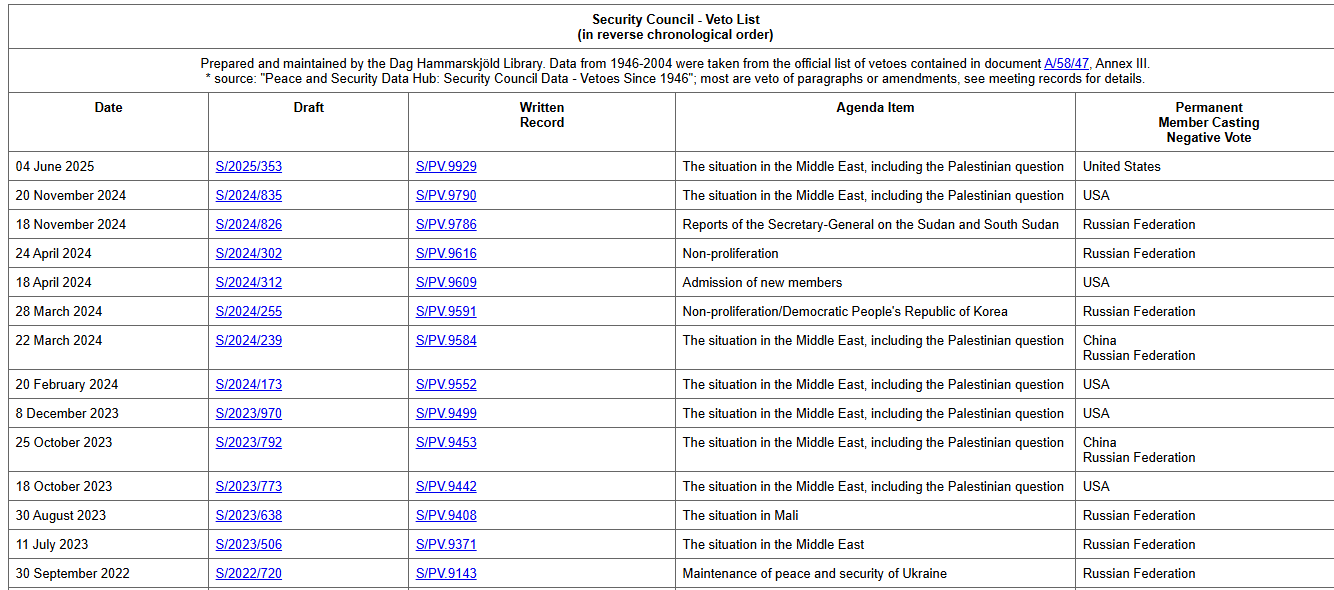
Source: UN.org.
This paralysis is not new; since 1946, over 300 vetoes have been cast, predominantly by the US (83) and Russia (121), but recent escalations reflect a multipolar world where rising powers like China assert influence more aggressively. The Council’s failure to adapt, despite calls for reform, such as expanding membership, exacerbates its obsolescence. As global crises proliferate, from climate disasters to cyber threats, states turn elsewhere for action, eroding the UN’s monopoly on legitimate authority. Theoretically, this gridlock challenges the liberal international order’s premise of inclusive multilateralism, fostering cynicism toward formalized institutions. Without reform, the UNSC risks becoming a diplomatic theater rather than a governance engine, pushing nations toward unilateral or selective partnerships.
The Emergence of Ad Hoc Coalitions and Regional Blocs
Faced with UNSC inertia, states are forging ad hoc coalitions,temporary, task-oriented alliances unbound by bureaucracy. These “coalitions of the willing” prioritize speed and alignment over universality, reshaping security architectures. NATO exemplifies this trend at its 2025 Hague Summit, with allies committed to 3.5% GDP defense spending by 2035, signaling expansion amid Russian aggression. Finland and Sweden’s 2023-2024 accessions, followed by intensified Eastern Flank reinforcements, underscore NATO’s pivot to collective deterrence without UNSC endorsement.
In the Indo-Pacific, trilateral pacts like AUKUS (Australia, UK, US) advance nuclear-powered submarines and AI integration, countering China’s assertiveness since its 2021 inception. The Quad (US, Japan, Australia, India) complements this, focusing on supply-chain resilience and maritime security, with 2025 joint exercises enhancing interoperability. Even under a potential Trump administration, these minilaterals persist, adapting to uncertainties like US policy shifts. Regionally, the EU’s “coalition of the willing” on Ukraine aid bypasses consensus hurdles, delivering swift support.
These formations thrive on shared interests, enabling rapid crisis response, think the 2022 Global Coalition Against Da’esh. Yet, their informality blurs lines between alliance and hegemony, as dominant powers dictate terms. This proliferation signals a “deformalized” global order, where efficacy trumps equity, but at the cost of sidelining smaller states.
Implications for International Law and Global Norms
The ascendancy of ad hoc coalitions profoundly disrupts international law’s universality, fostering fragmentation and diminished accountability. Traditional treaties like the UN Charter emphasize collective legitimacy, yet coalitions operate in legal gray zones, invoking “responsibility to protect” without broad consent. For instance, AUKUS’s tech transfers skirt non-proliferation norms, prompting French outrage over canceled contracts and raising proliferation fears. Similarly, NATO’s out-of-area operations, from Libya to Afghanistan, have been criticized for selective enforcement of humanitarian law, eroding jus ad bellum principles.
This shift promotes “informal international law”, soft norms via memoranda rather than binding treaties, accelerating governance fragmentation. Ad hoc groups, defined as short-notice, time-bound entities, excel in niche crises but risk “forum shopping,” where powerful actors cherry-pick venues to evade scrutiny. The Global South, often excluded, views this as neo-colonial, deepening North-South divides and weakening universal norms like sovereign equality. Accountability suffers too: Without UN oversight, violations,like alleged civilian harms in coalition strikes, face minimal repercussions, undermining the rule of law.
Theoretically, this heralds a “plurilateral” order, where overlapping blocs create a mosaic of rules, potentially innovating norms but heightening conflict risks through inconsistent application. To mitigate, hybrid models integrating coalitions with UN mechanisms could restore balance, preserving law’s normative force amid flux.
Conclusion
The trajectory from UNSC gridlock to ad hoc dominance marks a pivotal rupture in global governance, trading multilateral inclusivity for pragmatic agility. While coalitions like NATO and AUKUS deliver tangible security gains, bolstering deterrence and innovation, they imperil international law’s foundational tenets of universality and accountability. Fragmentation looms large where a world of bespoke alliances risks entrenching power asymmetries, diluting shared norms, and amplifying disputes, as seen in Indo-Pacific tensions.
Yet, this evolution need not spell doom. Reforming the UNSC, perhaps via veto limits or veto-nullifying General Assembly overrides could reinvigorate multilateralism, channeling coalitions’ energies constructively. Middle powers, through forums like the G20, might bridge divides, fostering inclusive plurilaterals. Ultimately, safeguarding a cohesive global order demands vigilance: Embracing ad hoc tools without forsaking law’s impartiality. As 2025 unfolds, with NATO summits and pact reviews on the horizon, the international community must navigate this hybrid landscape wisely, lest fragmentation yields not resilience, but rivalry.