

When analysts speak of 21st-century security hotspots, they usually point to the South China Sea, the Middle East, or Eastern Europe. Yet, quietly and steadily, the Arctic is transforming into a militarized frontier—a space where climate change, resource competition, and great-power rivalry intersect. Despite its faraway geography, the Arctic’s strategic shifts have profound global implications, including for countries in the Global South, where energy, trade, and climate security are increasingly interlinked.
Climate Change and the Opening of the Arctic
Rising temperatures are melting sea ice at unprecedented rates, making once-inaccessible areas navigable. The Northern Sea Route (NSR) along Russia’s Arctic coast could slash shipping time between Asia and Europe by nearly two weeks compared to the Suez Canal. Similarly, the Northwest Passage across Canada is becoming more viable.
These routes promise immense commercial benefits, but they also create a strategic chokepoint dilemma: whoever controls these waters will control global trade arteries of the future. This has already triggered competition among Arctic and non-Arctic states alike.
Russia’s Arctic Fortress
No state has invested more heavily in Arctic militarization than Russia. The Kremlin views the Arctic as both a treasure chest and a defensive frontier. The region holds an estimated 13% of the world’s undiscovered oil and 30% of its untapped natural gas.
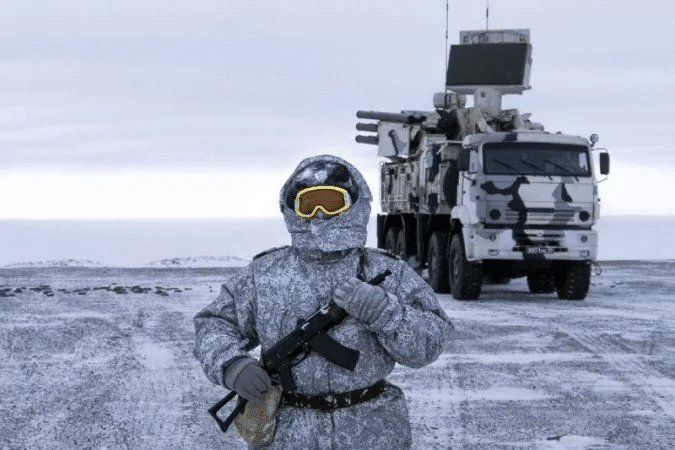
Moscow has revived Cold War-era bases, deployed S-400 missile systems, and expanded its fleet of nuclear-powered icebreakers. The Northern Fleet, headquartered in Murmansk, is tasked with defending these interests. In 2021, Russia even tested hypersonic missiles in the Arctic.
For President Vladimir Putin, the Arctic is not just about economic opportunity but strategic depth, ensuring that Russia retains military advantage against NATO’s northern flank.
You May Like To Read: Finance Minister Muhammad Aurangzeb Calls on Pakistani Business Leaders to Further Cement Pak-US Economic Ties
NATO and Western Countermoves
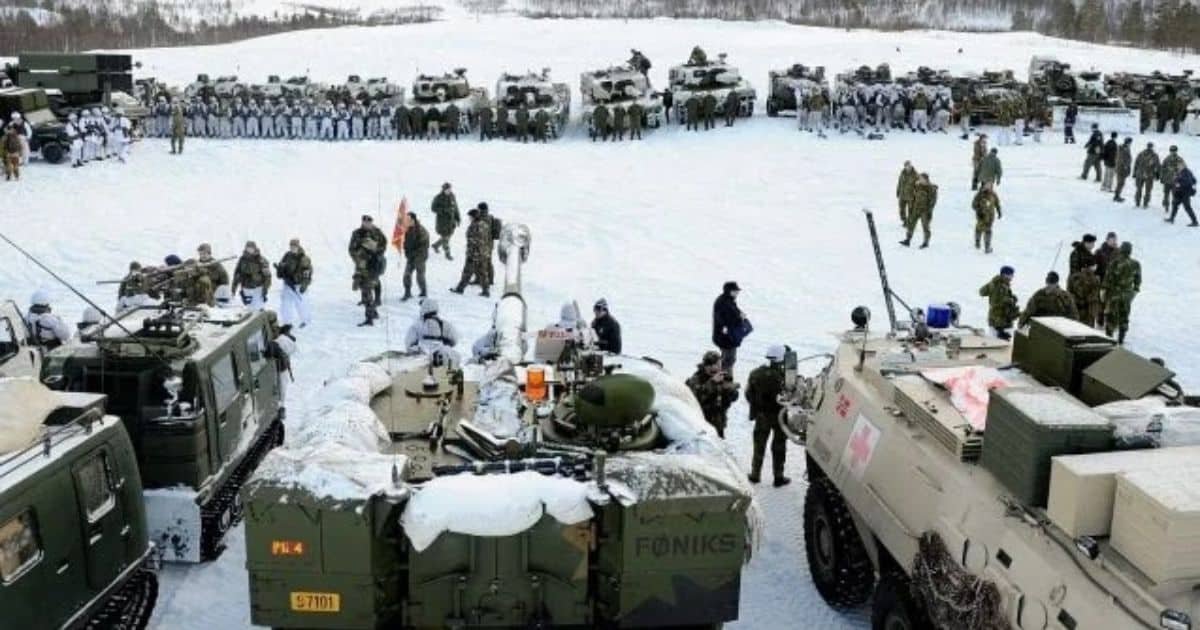
NATO, too, has begun to recalibrate. Norway, already hosting major NATO exercises in the High North, now plays a frontline role. Finland and Sweden’s accession to NATO has effectively turned the Baltic and Arctic into extended NATO frontiers.
The United States has increased patrols through Alaska, reopened its consulate in Nuuk, Greenland, and invested in icebreaker modernization. Canada has announced plans to upgrade its Arctic surveillance systems, wary of both Russian and Chinese activity.
This emerging Arctic NATO-Russia standoff is less visible than the Ukrainian battlefield but no less consequential. A miscalculation in contested waters could ignite a crisis far from the eyes of the Global South—yet one that could disrupt global trade and energy flows.
China: The “Near-Arctic” Power
While not an Arctic nation, China has declared itself a “near-Arctic state.” Through its Polar Silk Road initiative, Beijing has invested in Arctic research, shipping lanes, and energy projects. Chinese firms have stakes in Russia’s Yamal LNG project, and Chinese shipping companies have tested the NSR.
For Washington and NATO, this signals a troubling China-Russia Arctic convergence, extending their global strategic partnership to the polar front. If Arctic routes become viable for container shipping, China could reduce dependence on the U.S.-controlled chokepoints of the Malacca Strait and Suez Canal.
Why the Global South Should Care
For countries like Pakistan and others in the Global South, the Arctic may appear remote, but its militarization carries profound consequences. The most immediate impact lies in energy markets. Russia and China’s dominance over Arctic gas projects will influence global LNG pricing, shaping the affordability of energy imports in developing economies. For energy-dependent states already grappling with fiscal stress, volatility in Arctic supply chains could translate into higher domestic costs.
The second ripple effect involves trade routes. The opening of the Northern Sea Route (NSR) offers faster connections between Asia and Europe, potentially diverting traffic from the Suez Canal. Such a shift would alter the strategic relevance of maritime hubs like Pakistan’s Gwadar Port, forcing policymakers to rethink connectivity strategies under the China–Pakistan Economic Corridor (CPEC).
The climate fallout is even more severe. Accelerated Arctic melting is not a regional phenomenon but a planetary one, driving sea-level rise that directly threatens densely populated coastal zones across South Asia and Africa.
Finally, geopolitical alliances are tightening around Arctic access. As Western powers and a Sino-Russian bloc consolidate their positions, Global South states may face pressure to align. Ignoring the Arctic risks leaving developing nations blind to shifting global power dynamics.
The Arctic is no longer a frozen wilderness but a militarized frontier of 21st-century geopolitics. Russia is fortifying its northern bastion, NATO is pushing back, and China is carving a foothold in a region once considered beyond its reach.
For the Global South, the Arctic may seem like someone else’s battlefield, but in reality, it is a climate, trade, and energy nexus that will shape the contours of global security. The silence around it in Pakistani and other Global South outlets only underscores the need for deeper, more inclusive coverage of this overlooked theatre.
As ice melts, so too does the illusion of the Arctic as a neutral zone. What emerges instead is a polar chessboard—where great powers maneuver and the rest of the world, willingly or not, becomes a stakeholder.
You May Like To Read: UN Experts Estimate $70 Billion Needed for Gaza Reconstruction as Aid Efforts Struggle Post-Ceasefire