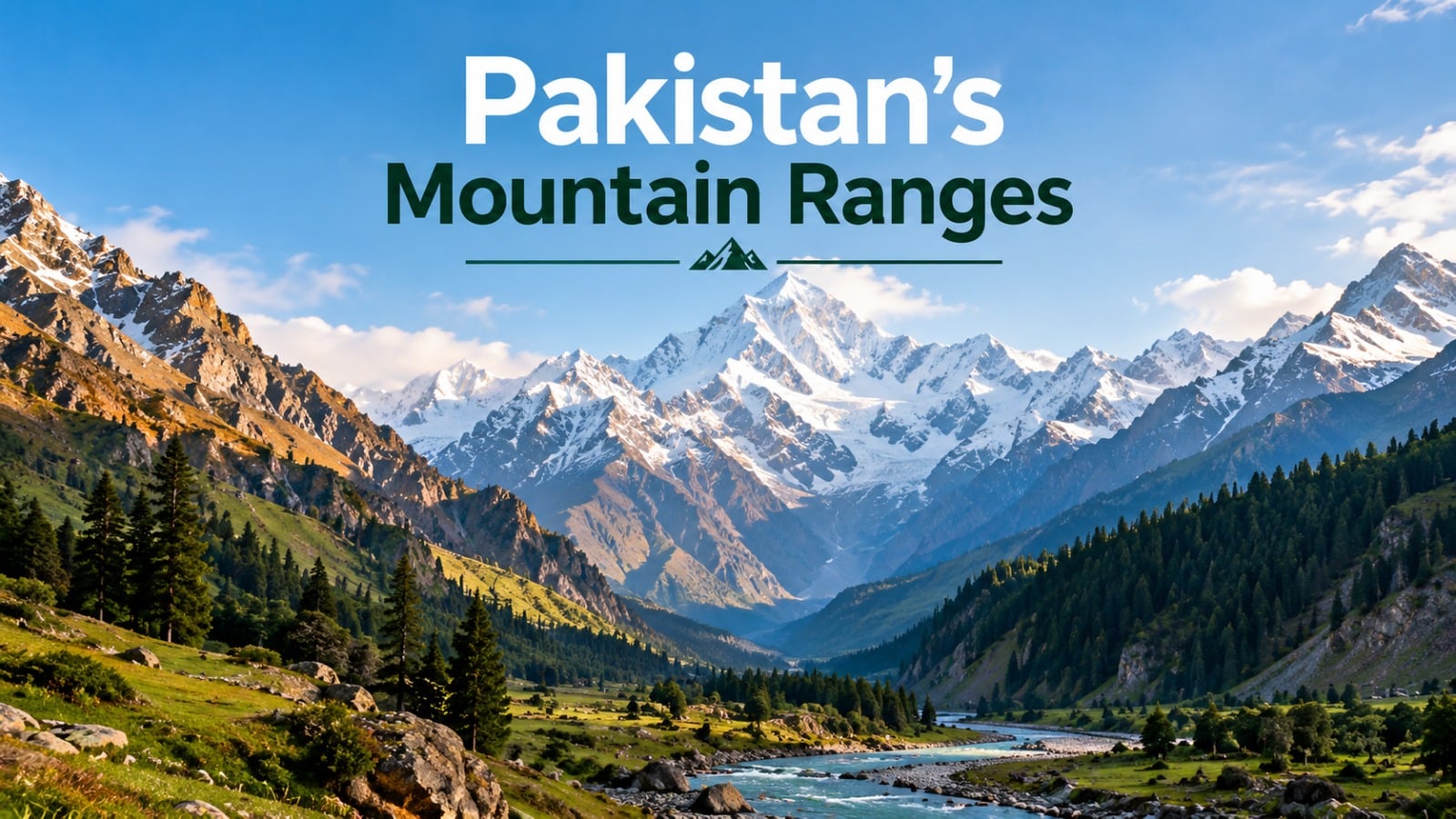





Few countries can claim a stretch of geography like northern Pakistan. Within a few hundred kilometres, three of the world’s greatest mountain systems — the Karakoram, the Himalayas and the Hindu Kush — converge, along with the Pamirs just across the border. Roughly 60 percent of Pakistan’s land is mountainous, and it is home to five of the world’s fourteen “eight-thousanders” — peaks above 8,000 metres — more than almost any other country. For travellers, that makes Pakistan one of the last great frontiers of high-altitude tourism. For the country itself, these mountains are quietly becoming one of its most effective tools of soft power.
The Karakoram: Home of K2
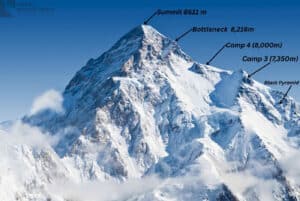
The Karakoram range stretches across Gilgit-Baltistan, shared with China and India, and holds more than sixty peaks above 7,000 metres. At its centre stands K2, at 8,611 metres the second-highest mountain on Earth and, by most climbers’ accounts, the most dangerous of the eight-thousanders — nicknamed the “Savage Mountain” for a fatality rate that has historically run near 20 percent among summiteers.
The Karakoram also hosts Gasherbrum I and II, Broad Peak, and the approach to Concordia — a natural amphitheatre where trekkers can view four 8,000-metre peaks at once, arguably the single most spectacular vantage point in world mountaineering. The Baltoro Glacier, one of the longest outside the polar regions at 62 kilometres, carries trekkers past the granite spires of the Trango Towers en route to K2 base camp.
The Himalayas: Nanga Parbat’s Western Wall
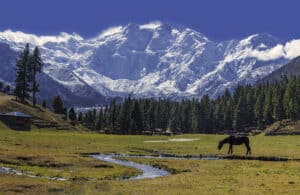
Pakistan holds the westernmost reach of the Himalayas, anchored by Nanga Parbat — at 8,126 metres, the ninth-highest mountain on the planet. Long called the “Killer Mountain,” it rises with one of the most dramatic vertical reliefs on Earth, its Rupal Face towering nearly 4,600 metres above the valley in a single unbroken sweep. It sits in Astore district, within reach of Fairy Meadows, a lush alpine plateau that has become one of Pakistan’s most photographed destinations for offering close views of an eight-thousander without technical climbing.
The Hindu Kush: Chitral’s Wild Frontier
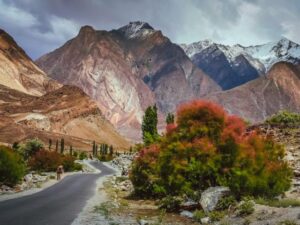
West of the Karakoram, the Hindu Kush runs along the Pakistan-Afghanistan border through Khyber Pakhtunkhwa’s Chitral region. Its highest point, Tirich Mir, rises to 7,708 metres — the highest peak outside the Karakoram-Himalaya system anywhere in the world. Less climbed than its eastern neighbours, it offers remote valleys, the Kalash people’s distinct culture near Chitral, and trekking routes that still feel genuinely undiscovered.
The Western Ranges: Beyond the Giants
Pakistan’s mountains aren’t confined to the north. The Sulaiman Mountains run through Balochistan and southern Khyber Pakhtunkhwa, topped by Takht-e-Sulaiman at 3,487 metres — lower in altitude but rich in history and local legend. Closer to the capital, the gentler Margalla Hills offer accessible day hikes overlooking Islamabad, while the Salt Range in Punjab, home to the Khewra Salt Mine, blends geology tourism with easy accessibility for domestic travellers.
Why These Mountains Matter for Pakistan’s Image
Beyond their scenic value, Pakistan’s mountains have become a genuine soft-power asset. International mountaineering expeditions, adventure documentaries and growing trekking tourism have put Gilgit-Baltistan and Chitral on global travel radars in a way few other aspects of the country’s image currently manage. Successful summit seasons on K2 and Nanga Parbat generate positive global coverage, while Hunza, Skardu and Fairy Meadows have built loyal followings among international trekkers and photographers, with scenery that competes with better-known destinations in Nepal or Switzerland.
For a country whose international narrative is too often shaped by security headlines, its mountains offer something rarer: an image built on natural wonder and hospitality.
Planning a Visit
The main trekking season runs June through September, when high-altitude passes clear of heavy snow. Skardu is the gateway to Karakoram and Concordia treks; Gilgit and Hunza open access to Nanga Parbat and the western Karakoram; Chitral is the entry point for Tirich Mir. Permits are required near restricted border zones, and agencies in Skardu and Gilgit arrange guides and logistics for routes ranging from day hikes to multi-week glacier expeditions.
Conclusion
Pakistan’s mountains are not a single attraction but an entire geography of superlatives — the world’s second-highest peak, its most dangerous eight-thousander, its longest non-polar glaciers, and some of its least-explored high-altitude valleys, all within one country. For travellers willing to go north, the reward is landscape on a scale few other destinations can match. For Pakistan, these ranges remain one of its most underused assets — proof that the country’s story is written as much in ice and granite as anywhere else.
You May Like To Read: SCO Comes to Islamabad: Pakistan’s Chairmanship and Regional Implications