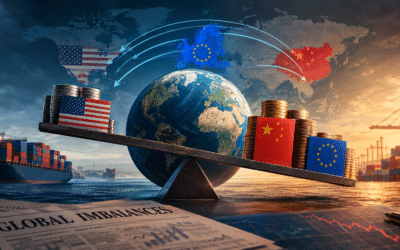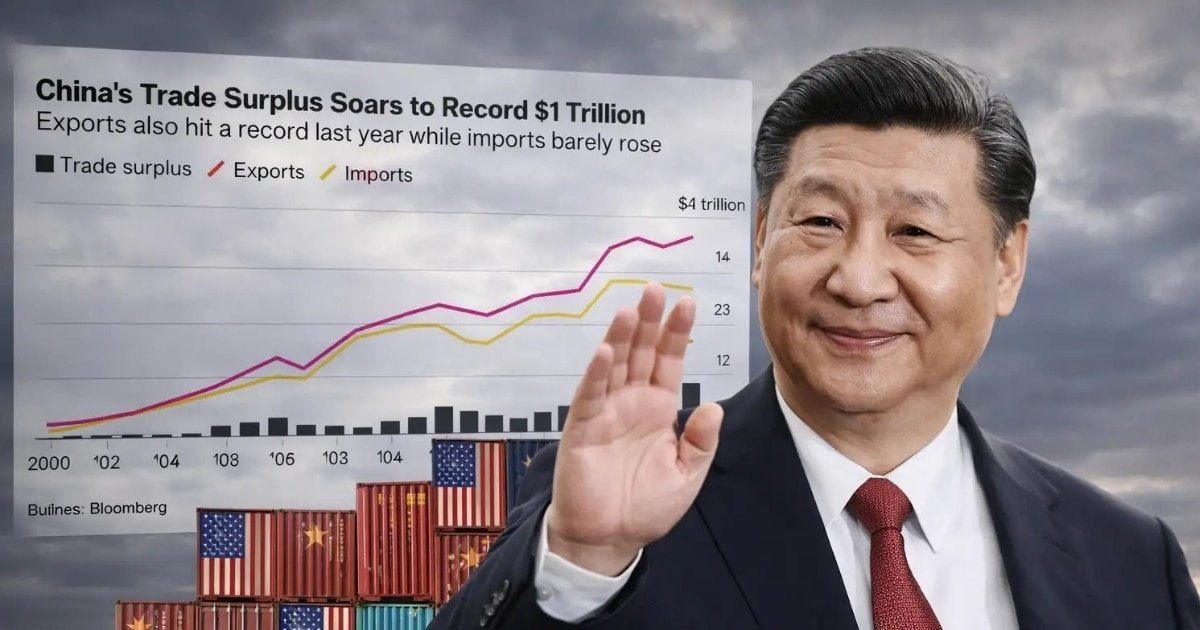





The General Administration of Customs (GAC) announced today that China’s total trade surplus reached a record-breaking $1.19 trillion USD in 2025, marking the first time in history the nation’s annual surplus has exceeded the $1 trillion threshold.
Despite a volatile international trade environment and significant tariff pressures from the United States, China’s export engine proved exceptionally resilient, with monthly surpluses surpassing $100 billion in seven separate months over the past year.
China just became the first country in history to record a trade surplus of 1$ trillion. pic.twitter.com/FCVMuOewlD
— Jostein Hauge (@haugejostein) January 13, 2025
Strategic Diversification and Global Reach
While trade volume with the United States experienced a contraction due to ongoing tariff policies, Chinese exporters successfully pivoted to emerging markets. Significant growth was recorded in exports to Southeast Asia, Africa, and Latin America, validating Beijing’s long-term strategy of reducing reliance on any single market.
“These results are extraordinary and hard-won,” said Wang Jun, Deputy Director of China’s Customs. “In the face of profound changes in the global trade landscape, Chinese enterprises have demonstrated remarkable adaptability and competitiveness.”
High-Tech Exports Lead the Surge
The 2025 data highlights a structural shift in China’s export economy. The “Three New” drivers of growth—green technology, artificial intelligence-related hardware, and advanced robotics—saw double-digit increases. These sectors have become deeply entrenched in global supply chains, making Chinese innovation indispensable to international business.
You May Like To Read: International Court of Justice Commences Merits Phase in The Gambia v. Myanmar Genocide Case
Factors Contributing to the Surplus
Economic analysts attribute the $1.19 trillion figure to several converging factors:
- Strong Global Demand: Sustained appetite for Chinese manufactured goods across Europe and the Global South.
- Competitive Pricing: A favorable exchange rate for the yuan and high industrial efficiency compared to Western peers facing inflationary pressures.
- Import Dynamics: A modest 0.5% increase in imports, reflecting a transition in the domestic market and high levels of self-sufficiency in industrial inputs.
Looking Ahead to 2026
As China prepares to launch its next Five-Year Plan, the GAC remains focused on maintaining “strategic autonomy.” While acknowledging that Chinese goods may face increased scrutiny in certain markets, officials expressed confidence that the deep integration of Chinese services into the global economy will provide a buffer against future protectionist measures.
“China has customers in every corner of the world,” Director Wang added. “We remain committed to an open, multilateral trading system that benefits all partners, regardless of the external environment.”
Check out our latest video: