




The digital asset landscape is undergoing a seismic shift, spearheaded by the recent passage of the Stablecoin Clarity and Regulation Act, colloquially known as the “Genius Act,” by the U.S. House of Representatives. This landmark legislative move, passed on July 17, 2025, arrives amidst a period of unprecedented activity in the cryptocurrency market, with Bitcoin recently soaring past the $120,000 mark, fueled by burgeoning optimism for regulatory clarity and adoption.
Far from a mere technical adjustment, the Genius Act represents a revolutionary attempt to embed stablecoins—digital currencies pegged to stable assets like the U.S. dollar—firmly within the traditional financial regulatory framework, promising profound implications for market stability, investor confidence, and the future of digital finance globally.
What is the Genius Act and When Was It Passed?
The Stablecoin Clarity and Regulation Act, or the “Genius Act,” is a comprehensive piece of legislation designed to establish a clear and robust regulatory environment for stablecoins in the United States. Its passage by the House of Representatives on July 17, 2025, marks a significant milestone after years of intense debate and various legislative proposals aimed at bringing order to the rapidly expanding digital asset sector.
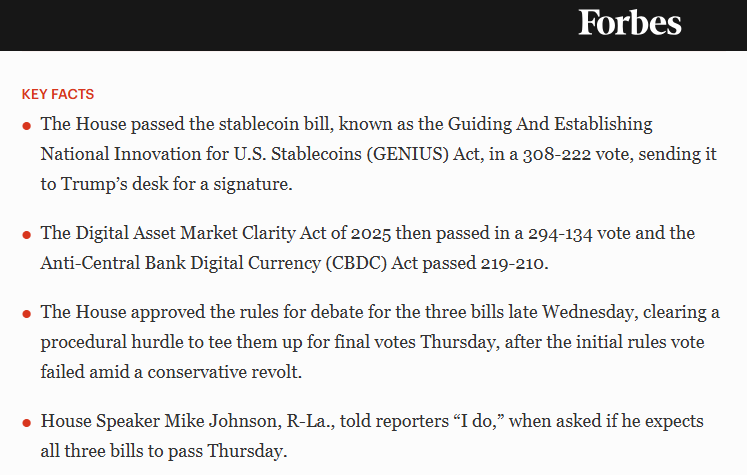
Source: Forbes
While earlier discussions and drafts may have circulated, this recent House vote signifies a concrete step towards federal oversight. The bill’s emergence is a direct response to the volatile nature of the crypto market, particularly the dramatic collapses of certain stablecoins in the past—such as the Terra/Luna ecosystem—which underscored the urgent need for consumer protection and financial stability.
Revolutionary Propositions and Core Entailments
The Genius Act introduces several groundbreaking provisions that redefine how stablecoins will operate and be regulated. Its core objective is to integrate stablecoins into the existing financial regulatory perimeter, treating them less like speculative digital tokens and more like regulated financial instruments.
- Mandatory Federal Licensing and Chartering: A cornerstone of the Act is the requirement for stablecoin issuers to either obtain a federal license or operate as a licensed state-chartered bank. The aim is to bring issuers under the direct purview of established financial regulators, ensuring they meet operational and capital requirements.
- Strict 1:1 Backing with High-Quality Liquid Assets: To prevent future collapses and ensure stability, the Genius Act mandates that stablecoins must be fully backed on a 1:1 basis. The reserves backing these stablecoins must be held in highly liquid, high-quality assets. This typically includes cash, cash equivalents, or short-term U.S. government securities.
- Prohibition of Unbacked Algorithmic Stablecoins: A direct lesson from past market turmoil, the Act explicitly prohibits algorithmic stablecoins unless they are fully collateralized. This means that stablecoins relying solely on complex algorithms and market incentives to maintain their peg, without tangible asset backing, will not be permitted under the new framework.
- Clear Redemption Rights for Holders: This means that individuals or entities holding regulated stablecoins will have a legally protected right to exchange their stablecoins for the underlying fiat currency (e.g., U.S. dollars) at par value. This provision is vital for consumer protection and maintaining trust in the stablecoin’s stability.
- Enhanced Regulatory Oversight: The Genius Act grants oversight authority to federal financial regulators, including the Federal Reserve and other relevant banking regulators. This will enable these bodies to monitor stablecoin issuers, enforce compliance with the new rules, and intervene if necessary to protect financial stability and consumers.
Potential Impact and Future Outlook
The passage of the Genius Act by the House is poised to have a multifaceted impact on the cryptocurrency market, the broader financial system, and even the United States’ position in global financial innovation.
- Market Stability and Consumer Protection: By imposing stringent backing requirements and regulatory oversight, the Act aims to enhance stability of the stablecoin market.
- Attracting Institutional Investment: Regulatory uncertainty has long been a major deterrent for traditional institutional investors looking to enter the digital asset space. Allowing institutional capital, as large financial firms, asset managers, and corporations to feel more comfortable engaging with regulated stablecoins.
- Maintaining U.S. Financial Leadership: The U.S. government views this legislation as a strategic move to maintain its leadership in financial innovation. The regulatory framework will ensure the development of digital currencies aligns with its financial stability goals and national interests.
- Global Implications: Given the U.S. dollar’s dominance in the global financial system, a clear regulatory framework for USD-backed stablecoins in the U.S. will undoubtedly have ripple effects worldwide. It could set a precedent for other nations considering stablecoin regulation, influence global adoption and trading of digital assets.
Industry Response and Challenges Ahead
While many in the crypto industry welcome the clarity, reactions are mixed. Some view it as a necessary step for mainstream adoption, while others express concerns about potential over-regulation that might stifle innovation, particularly for smaller players or novel stablecoins. The Act’s journey is also far from over; it now moves to the Senate for consideration, where its fate remains less certain. The Senate may propose amendments or even choose not to pass it, leading to further legislative iterations.
Conclusion
The Genius Act represents a pivotal moment in the evolution of digital finance. By bringing stablecoins under a comprehensive regulatory umbrella, it seeks to build a more secure, transparent, and stable digital economy. Its success will hinge on its ability to strike a delicate balance between fostering innovation and mitigating risks, ultimately shaping how digital currencies integrate with and transform the global financial landscape for years to come.