


Pakistan has long struggled with the devastating consequences of drug trafficking, originating from neighboring Afghanistan. As the world’s largest producer of opium and heroin, Afghanistan’s illicit drug trade spills across the permeable border into Pakistan –an estimation of UN office on drugs and crime (UNDOC) reveals around 40% of Afghan-produced heroin transits through Pakistan, fueling organized crime, corruption, and a growing public health disaster.
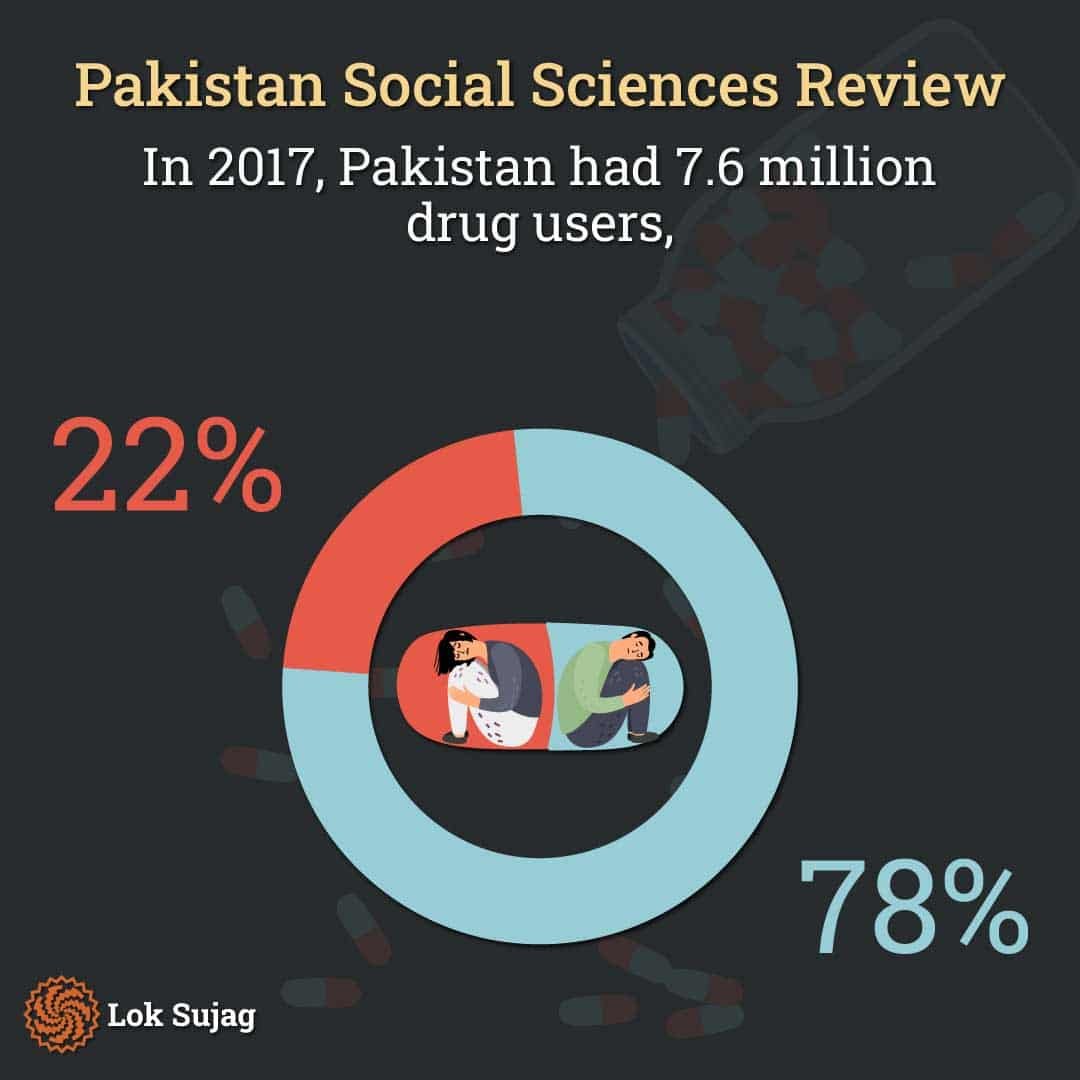
As a consequence the narcotics trade –destabilizes border regions, infiltrates state institutions, and pushes an alarming number of Pakistanis, especially the young generation into addiction. Despite efforts to restrain smuggling –absence of effective control, corruption, and regional instability allow the crisis to persist. As per the reports from Anti-Narcotics force (ANF) 53 percent former students for different schools and universities are exposed to drugs.
Source: Loksujag
The Afghan Drug Trade and Its Impact on Pakistan
Afghanistan supplies over 80 percent of the world’s heroin, much of which is smuggled into Pakistan through the rugged terrains of Khyber Pakhtunkhwa (KP) and Balochistan. These border regions, with their weak institutions and tribal networks, serve as key transit routes for drug cartels. The trade is worth billions, financing militant groups, corrupting officials, and flooding Pakistani cities with cheap narcotics.
Afghanistan’s drug trade has flooded Pakistan with cheap narcotics, creating a devastating addiction crisis that primarily targets youth. This epidemic has overwhelmed hospitals, broken families, fueled street crime, and strengthened terrorist networks that profit from drug trafficking.
The Taliban’s return to power in Afghanistan in 2021 initially raised hopes for a decline in opium production, given their past bans. However, reports suggest that drug cultivation has continued, if not expanded, as the Taliban now profit from the trade to sustain their regime. As per UN office on Drugs (UNDOC) and Crime report the poppy and opium production jumped from 80 to 90 percent since Taliban authorities came into power.
The point of concern is that: it is a direct threat to the future of Pakistan, as the production has direct repercussions for Pakistan, where Afghan heroin, methamphetamine (ice), and other synthetic drugs are smuggled in large quantities.
Destabilizing Pakistan’s Border Regions
Pakistan’s tribal belt, particularly former FATA (now merged with KP), has been a hotspot for drug trafficking. Criminal networks exploit weak law enforcement, tribal loyalties, and difficult terrain to move narcotics undetected. The illicit trade has turned border districts into hubs of organized crime, with armed groups protecting smuggling routes.
Similarly, the drug economy also fuels militancy. Proceeds from narcotics fund terrorist organizations as these groups engage in drug trafficking to finance weapons, recruit fighters, and sustain their insurgencies. As a result, Pakistan’s border regions remain volatile, with frequent clashes between security forces and armed traffickers.
Corruption: The Silent Enabler of Drug Trafficking
One of the biggest obstacles in combating drug trafficking is institutional corruption. Smugglers routinely bribe police, customs officials, and border guards to turn a blind eye to their operations. High-profile drug busts are rare, and when they occur, suspects often escape prosecution due to political influence or judicial delays.
Corruption extends beyond low-level officials. Some politicians and powerful elites are allegedly involved in the trade, using their influence to protect drug networks. This deep-rooted complicity makes it difficult for law enforcement agencies to dismantle trafficking syndicates effectively. Without systemic reforms, the drug trade will continue to thrive under the protection of corrupt power structures.
Pakistan’s Growing Addiction Epidemic
The influx of Afghan drugs has led to a severe addiction crisis in Pakistan. According to estimates, the country has over 8.9 million drug users, with heroin addiction surging in urban and rural areas alike. Cities like Karachi, Lahore, and Peshawar have seen a sharp rise in drug-related crimes, including theft, violence, and gang activity.
The public health consequences are dire. Intravenous drug use has contributed to HIV outbreaks, particularly in KP and Sindh. Many addicts share needles, accelerating the spread of deadly diseases. Despite the growing crisis, Pakistan’s healthcare system lacks sufficient rehabilitation centers. Most addicts rely on underfunded government facilities or unregulated private clinics, where treatment is often inadequate.
Young people are especially vulnerable. Unemployment and lack of education make them easy targets for drug peddlers. Many start with recreational use but quickly fall into addiction, destroying their futures and burdening their families. The social and economic costs of drug abuse are immense, yet the government’s response remains insufficient.
Pakistan’s Failed Counter-Narcotics Efforts
Pakistan has laws in place to combat drug trafficking, such as the Control of Narcotic Substances Act, but enforcement is weak. Border security measures, including fencing parts of the Afghan frontier, have had limited success. Smugglers adapt by using alternative routes, underground tunnels, and bribing officials.
The Anti-Narcotics Force (ANF), Pakistan’s primary drug enforcement agency, lacks resources and faces political interference. High-profile arrests are rare, and convictions even rarer. Additionally, Pakistan’s judicial system is slow, allowing drug lords to evade justice through legal loopholes or intimidation.
Another major challenge is the lack of cooperation with Afghanistan’s Taliban government. Both countries claim to oppose drug trafficking but mutual distrust and geopolitical tensions hinder joint efforts. The Taliban, despite pledging to curb opium production, have done little to stop it, as the trade remains a key revenue source and without regional collaboration, Pakistan’s efforts to stem the flow of drugs will remain ineffective.
A Path Forward: Combating Trafficking and Addiction
To address this crisis, Pakistan needs a comprehensive strategy that combines law enforcement, institutional reforms, and public health interventions.
- Strengthening Border Security as advanced surveillance technology, including drones and biometric systems, should be deployed to monitor smuggling routes. Intelligence-sharing between security agencies must improve to intercept drug shipments before they enter cities.
- Cracking Down on Corruption as a major purge of corrupt officials in law enforcement and border security is necessary. Independent oversight bodies should investigate and prosecute those involved in protecting drug networks.
- The government must invest in more rehabilitation centers and harm reduction programs. Medical treatment, counseling, and vocational training can help addicts reintegrate into society. Public awareness campaigns should educate youth on the dangers of drug abuse.
- Pakistan must engage Afghanistan, Iran, and global organizations like the UNODC to disrupt trafficking networks. Diplomatic pressure on the Taliban to enforce an opium ban is essential, though challenging given their reliance on drug revenues.
Final Thoughts
Afghanistan’s drug trade is a poison seeping into Pakistan, fueling crime, corruption, and a devastating addiction crisis. Without urgent action, the situation will worsen, destabilizing more communities and overwhelming an already strained healthcare system.
Pakistan must adopt a multi-pronged approach combating trafficking, rooting out corruption, and expanding treatment to break the cycle of addiction and violence. The stakes are too high to ignore.