Introduction:
In the environment of contemporary conflict, war has ceased to be limited to conventional military conflict; rather, it has expanded to a multidimensional combination of both kinetic and non-kinetic operations, often known as hybrid warfare. The strategy combines conventional military power with cyberattacks, economic pressure, political influence, and, most importantly, information warfare, which uses online platforms for narrative building, controlling people, creating divisions, and destabilizing societies without direct conflict.
In the case of Pakistan, this change comes with an ever-increasing security dilemma, with enemies taking advantage of its domestic vulnerabilities by using organized disinformation, cyber-attacks, and narrative control over its institutions and society. These more frequent and more advanced attacks are evidence of a transition to what experts are now calling Hybrid Warfare 2.0, a multi-domain environment that involves military action, network attacks, economic coercion such as sanctions, disinformation to mislead or polarize the population, and psychological attacks to instill fear or mistrust.
Information Warfare as a Fundamental Hybrid Manoeuvre:
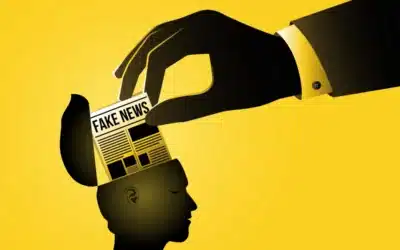
One element of hybrid warfare is information warfare. It refers to the use of misleading or distorted information to mislead people and manipulate their minds, and disrupt the unity of a nation. Popular instruments of information warfare are fake news, propaganda, deepfake videos, bot accounts, and media distortion. Such strategies are employed in order to plant lies or half-truths to alienate the people against their government or cause fear and suspicion in society. Pakistan has seen numerous such attacks over the past years in which anti-state material was circulated widely over the internet to divide the ethnic and religious groups.
Such attacks are not accidental but a planned hybrid warfare policy. They tend to facilitate other non-military methods, such as cyberattacks or an economic squeeze. As an example, a fake news campaign that accuses the government of failure can be used after a cyberattack. Or, bot networks can propagate fake stories to accuse the national institutions after a terrorist attack. These are highly organized attempts to hurt the confidence of people, demoralize the security agencies, and make Pakistan an isolated nation in the international arena.
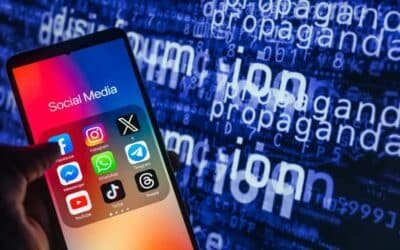
In this type of war, social media is very instrumental. False stories, emotional videos, or misleading images are shared on platforms such as Twitter (X), Facebook, YouTube, and TikTok at high speed and may go viral within a few minutes. These campaigns attempt to manipulate the thoughts, feelings, and choices of people. It is referred to as psychological and perceptual manipulation. Most of the time, these posts are done by false accounts or networks funded by foreign countries to deceive the people of Pakistan or cause confusion in the country in case of national events such as elections, protests, or military actions. This makes information warfare a silent yet extremely threatening war to the stability of Pakistan.
Pakistan’s Exposure to Hybrid Threats:
Pakistan is a nation that is severely threatened by hybrid threats, as it has a geopolitical position and exists in a state of conflict with such nations as India and Afghanistan. Such threats are not necessarily military; most of them are disinformation, cyberattacks, and psychological operations. Internal weaknesses are easy to exploit by enemies because of internal problems such as ethnic tensions, political instability, and insurgencies in Balochistan and Khyber Pakhtunkhwa. The position of Pakistan close to conflict areas and its international politics have made it a target of hybrid warfare strategies.
The recent ones are anti-state campaigns on social media where fabricated stories were circulated to discredit the image of the army and the government. Cyberattacks on government websites and institutions have also been witnessed, some of which have been linked to international networks. Such activities are meant to generate distrust between people and state institutions, civil-military relations, and damage national unity. Hybrid threats are also one of the greatest obstacles to the internal stability of Pakistan, as foreign-funded online activities attempt to influence the crowd of people during protests or other political events.
The role of Information Warfare in the Hybrid Threat Situation in Pakistan:
The practice of information warfare is applied to divide the Pakistani society based on sensitive topics such as ethnicity, religion, and politics. The enemies disseminate wrong or distorted information on social media to create more misunderstandings among various communities or provinces. As an example, sectarian violence or ethnic hate is frequently initiated through fake posts, during tense events, or in a national crisis. Such social fragmentation undermines cohesion and presents external forces with an opportunity to take advantage of internal differences.
The second grave effect of information warfare is the lack of faith in significant institutions by the population. Once fake news or propaganda against the military, government, or media is propagated, people start losing their credibility. As an example, social media campaigns have misled people into the thought that the army is behind political events or security failures, which leads to confusion and mistrust. This undermines national leadership over time, and it becomes difficult to deal with actual threats or emergencies in the country.
The other form of information warfare is manipulating elections and politics through the dissemination of foreign-affected narratives or falsehoods. This could be in the form of fake surveys, doctored videos, or rumors of political leaders in order to change how citizens vote or perceive political parties. Long-term, the enemy states develop strategic narratives to present Pakistan as a nation in a crisis, unstable, unsafe, or alienated from the world. All these are meant to tarnish the international image of Pakistan, cut off foreign investment, and destabilize its diplomatic relations. It demonstrates the strength and threat of information warfare by including it in the arsenal of hybrid threats.
Challenges and Way Forward
Pakistan is encountering numerous challenges in coping with a hybrid war. It has weak media regulation and low digital literacy, which provides fake news with a speedy way of propagating among the population. The lack of coordination of intelligence, military, and civilian institutions complicates the task of responding to hybrid threats.
To overcome these issues, Pakistan requires a definite national policy in the realm of hybrid warfare, improved cybersecurity and fact-checking mechanisms, and AI-powered tools to track and alert threats. Awareness campaigns in society are also a necessity so that individuals can be able to identify fake news and prevent its propagation. Lastly, Pakistan should collaborate with all regional and international partners to enhance cooperation and the sharing of intelligence. Such measures are needed to ensure not only the security of the borders of the country, but also the citizens, organizations, and the reputation of the nation are not attacked invisibly.