


At an emergency session of the UN Security Council, France issued a stern rebuke of Israel’s rapidly expanding ground offensive in Lebanon, labeling the military campaign a “major strategic mistake” that risks plunging the Middle East into permanent instability.
French Ambassador to the UN Jerome Bonnafont, who requested Monday’s urgent meeting, placed initial blame for the outbreak of hostilities squarely on Iran-backed Hezbollah for dragging the Lebanese people into a war that is not theirs. However, he declared that the scale and intensity of the current Israeli response has far exceeded the legitimate boundaries of self-defense.
France seeks emergency UN Security Council meeting over Israeli military operations in Lebanon
⚠️ Foreign Minister Jean-Noel Barrot calls Israel’s expanding presence in Lebanese territory ‘extremely concerning’ and describes it as a ‘major mistake’ https://t.co/MCZc9JyIHo pic.twitter.com/fw5Ao7bpWn
— Anadolu English (@anadoluagency) May 31, 2026
The emergency session followed a severe military escalation on Sunday, when Israeli Prime Minister Benjamin Netanyahu ordered forces to “deepen and expand” operations. Israeli troops pushed north of the Litani River and captured the historic Beaufort Castle. The highly symbolic raising of the Israeli flag over the fortress—a site synonymous with the 1982–2000 Israeli occupation—has triggered widespread international alarm.
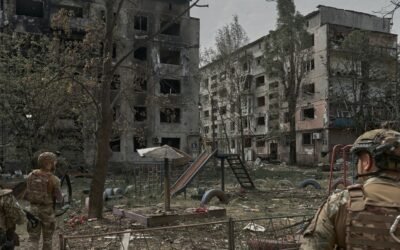
UN Assistant Secretary-General Martha Pobee briefed the 15-member Council, warning of a “dangerous and alarming escalation” on the ground. Pobee confirmed that the physical presence of Israeli ground troops north of the Blue Line directly violates UN Security Council Resolution 1701. Simultaneously, heavy Israeli airstrikes have flattened parts of the Beqaa Valley, the south, and the outskirts of Beirut, triggering massive civilian displacements and adding to a staggering death toll that has surpassed 3,400 people since March 2.
Critical Analysis: Myth of Tactical Buffer and Institutional Erosion
The diplomatic friction inside the Security Council underscores a stark divergence between tactical military gains and long-term strategic stability in the Levant. A critical analysis of the current escalations highlights several geopolitical realities:
The Paradox of the “Security through Occupation” Doctrine
Ambassador Bonnafont’s assertion that a new occupation will fuel instability rather than bring security strikes at the core flaw of Israel’s current strategy. The Israeli security establishment views a physical buffer zone north of the Blue Line as a necessity to shield northern communities from Hezbollah’s rocket fire.
However, French and UN analysts argue that this creates a self-defeating loop. The destruction of Lebanese civilian infrastructure, heavy casualties, and the degradation of the Lebanese state do not eliminate asymmetric threats. Instead, history indicates that a prolonged foreign occupation severely undermines moderate political actors in Beirut, weakens formal state institutions, and acts as a primary recruitment and radicalization engine for Hezbollah.
Resolution 1701 and the Structural Failure of the Blue Line
The UN’s briefing confirmed that the April 17 U.S.-brokered ceasefire has effectively collapsed. Both sides are now operating in total violation of historic international frameworks:
| Conflict Actor | Violations of UN Resolution 1701 & International Law |
| Israel | Advancing ground forces north of the Litani River; establishing a de facto military presence beyond the Blue Line; enforcing sweeping civilian evacuation orders south of the Zahrani River. |
| Hezbollah | Launching deep-tier rocket and drone attacks into civilian Israeli territory; refusing direct orders from the Lebanese government to disarm or withdraw south of the Litani. |
By treating the boundaries of Resolution 1701 as flexible guidelines rather than strict international borders, both actors have eroded the credibility of UNIFIL peacekeepers, six of whom have already been killed in the crossfire.
The Weaponization of Cultural and Civilian Heritage
France’s explicit defense of Lebanon’s territorial integrity included a sharp warning against the destruction of cultural heritage sites, specifically pointing to the ancient city of Tyre, a protected UNESCO World Heritage site.
The intentional or collateral destruction of ancient civilian hubs indicates that the conflict is transitioning from a localized border enforcement operation into high-intensity urban warfare. For France, a country with deep historical, cultural, and political ties to Lebanon, any structural alterations to Lebanon’s demographics or sovereign geography are entirely non-negotiable.
The June 2–3 Diplomatic Window: High-Stakes Transactionalism
Despite the active warfare, France and the UN are pointing toward U.S.-sponsored direct negotiations scheduled for this week as a decisive, final opportunity for peace. The French peace blueprint demands a comprehensive, grand bargain: the immediate disarmament of Hezbollah, the reassertion of sole sovereign force by the Lebanese Armed Forces (LAF), and the total withdrawal of Israeli troops.
However, because Hezbollah has publicly reiterated its refusal to surrender its arsenal, and Israel is entrenched at Beaufort Castle, Washington’s transactional approach faces an uphill battle. A diplomatic breakthrough is highly unlikely unless the U.S. applies significant leverage to restrain Netanyahu, while simultaneously pressuring Iran to cut off its forward resupply corridors to the Lebanese coast.