




The 2026 Crisis That Accelerated the New World Order
The geopolitical landscape of 2026 has rapidly moved beyond the assumptions of the post-Cold War era. The idea that the United States and its Western allies would remain the uncontested center of global power has steadily weakened over the last decade. The recent escalation of the Iran conflict has now accelerated that shift dramatically.
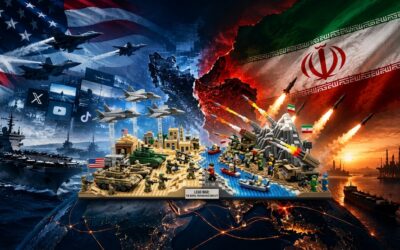
The crisis began after a joint military campaign by the United States and Israel against Iranian targets in late February 2026, triggering one of the most dangerous confrontations in the Persian Gulf in decades. Iran retaliated with missile and drone strikes across the region and imposed restrictions on maritime traffic in the Strait of Hormuz.
The consequences were immediate. Oil prices surged above $100 per barrel, global shipping routes were disrupted, and fears of a wider energy crisis spread across international markets.
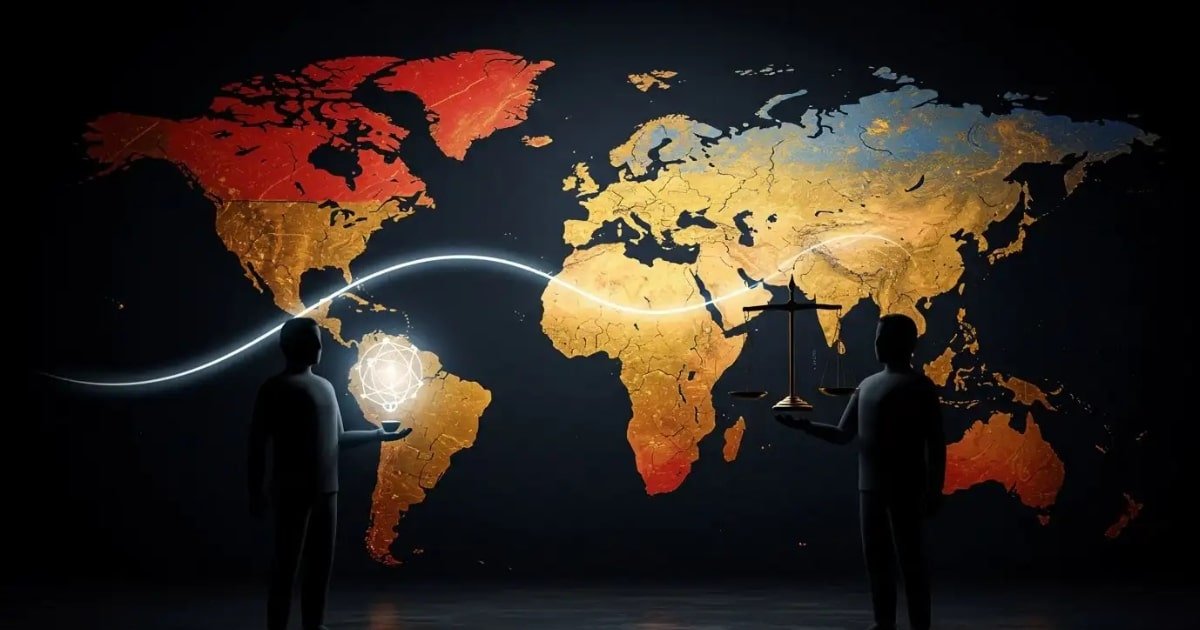
This crisis is not only a regional conflict. It has exposed the deeper transformation underway in international politics, a transition from a Western-dominated system toward a fragmented and competitive multipolar order.
Strait of Hormuz: The Chokepoint of Global Power Politics
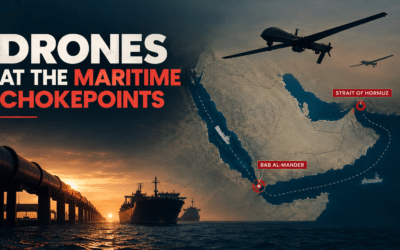
At the center of the current geopolitical crisis lies the Strait of Hormuz, the narrow maritime passage connecting the Persian Gulf to the Arabian Sea. Nearly one-fifth of the world’s oil shipments pass through this corridor, making it one of the most strategically significant waterways on the planet.
When Iran restricted shipping in response to US-Israeli strikes, the impact reverberated immediately through global energy markets. Tankers halted operations, several vessels were damaged, and insurance costs for maritime trade surged dramatically.
The crisis also revealed the limits of Western control over global sea routes. Washington has called on NATO allies and Asian powers to help secure the strait, but responses have been cautious and divided.
Iran, meanwhile, has used the crisis to demonstrate the strategic leverage it holds over global energy flows. Tehran has signaled that ships linked to countries hostile to Iran may face restrictions while others could receive safe passage. This selective approach reflects the increasingly transactional nature of modern geopolitics.
The Strategic Alignment of Iran, Russia, and China
Another major development reshaping the international system is the deepening strategic coordination among Iran, Russia, and China. While the three countries do not form a formal military alliance, their political and economic cooperation has intensified significantly in recent years.
Iran has strengthened its “Look East” strategy by expanding long-term partnerships with both Moscow and Beijing. A 20-year strategic partnership agreement with Russia and the ongoing 25-year cooperation framework with China reflect Tehran’s shift toward Eurasian partnerships in response to Western sanctions.
This convergence is also driven by shared geopolitical interests. Russia seeks partners to offset Western sanctions imposed after the Ukraine war. China depends heavily on Middle Eastern energy supplies and has strong incentives to maintain influence in the Gulf. Iran, under sustained economic pressure from the United States, has increasingly positioned itself within this Eurasian strategic framework.
Iran’s Foreign Minister Abbas Araghchi said Russia and China are providing Iran with military cooperation and strategic support during the ongoing conflict with the United States and Israel.
He stated the cooperation includes defense coordination and intelligence assistance, with both countries described as Iran’s long-standing strategic partners.
Araghchi also said Russia’s support for Iran “is not a secret,” while China continues its security cooperation with Tehran.
Russia has become the first country to send aid to Iran amid war, i.e. 13 tons of humanitarian aid, mainly medicines, under an operation ordered by Vladimir Putin.
The supplies were flown to Azerbaijan first and then transferred to Iranian authorities for distribution.
Iranian President Masoud Pezeshkian thanked Putin for the assistance during a phone call in March 2026, acknowledging Russia’s humanitarian support during the crisis.
The relationship is not a formal alliance in the traditional sense. Instead, it is a pragmatic convergence driven by overlapping interests. Russia seeks economic and diplomatic support as it confronts Western sanctions.
China wants secure energy supplies and stability along critical trade corridors. Iran, under heavy sanctions and facing regional confrontation, benefits from diplomatic backing and economic partnerships with major powers outside the Western sphere.
Diplomatic activity around the Hormuz crisis illustrates this dynamic. China has been engaged in negotiations with Iran to ensure safe passage for oil shipments destined for Asian markets, underscoring Beijing’s growing diplomatic role in Gulf security.
Together, these developments signal the gradual emergence of an alternative geopolitical axis that challenges Western dominance in global affairs.
The Global Energy Shock and Economic Realignment
The 2026 Gulf crisis has also exposed the fragility of the global energy system. Asian economies rely heavily on Middle Eastern oil, and any disruption in the Persian Gulf immediately affects global markets.
Since the escalation of the conflict, oil prices have surged sharply, reflecting fears of prolonged supply disruptions. Global shipping companies have also imposed additional war-risk charges on cargo passing through the Gulf region.
Oil prices rose to about $104 per barrel after the U.S. struck Iran’s Kharg Island, a major export hub handling roughly 90% of Iran’s oil exports.
The strike intensified fears of supply disruptions as the Strait of Hormuz, through which about 20% of global oil passes, remains largely closed.
Donald Trump urged allies to help secure the strait, but responses from countries like the UK and South Korea have been cautious.
The conflict has already pushed global fuel prices higher and raised concerns about a prolonged energy shock in international markets.
For many countries, the crisis has revived debates about energy independence and supply diversification. Governments are increasingly exploring alternative supply routes, strategic oil reserves, and renewable energy investments to reduce vulnerability to geopolitical shocks.
In this sense, the conflict has reinforced a broader trend toward economic fragmentation. Rather than relying on a single integrated global system, states are beginning to build regional energy and trade networks designed to withstand geopolitical pressure.
Trump Warns NATO of “Very Bad” Future Over Strait of Hormuz
Amid escalating tensions in the Persian Gulf following U.S. and Israeli strikes on Iranian targets, the Strait of Hormuz has emerged as the focal point of international concern. With Iran blocking shipping through the strait, energy markets have been thrown into volatility, and countries dependent on Gulf oil are closely watching developments.
In this context, Trump warns that NATO could face a “very bad” future if member states do not assist in keeping the strait open. He urged Europe and China, heavily reliant on Persian Gulf oil, to contribute naval support alongside the U.S. However, many countries have reportedly refused to allow the U.S. to use their military bases, and allied nations have offered only limited or symbolic support, leaving the U.S. largely isolated in its attempts to secure the waterway. Trump framed Iran’s efforts to disrupt shipping as a threat to the global economy, asserting that while U.S. forces had “destroyed 100% of Iran’s military capability,” the risk of drones, mines, and short-range missile attacks remained high, underscoring the need for international cooperation.
This episode highlights the shifting balance of global power, as the U.S. struggles to enforce control in a region where strategic chokepoints like Hormuz are increasingly influenced by regional actors such as Iran.
The reluctance of traditional allies to support Washington underscores the emergence of a multipolar world, where sovereignty and regional leverage are redefining how global powers project influence and manage security.
https://x.com/nypost/status/2033353539271995469
Pakistan’s Strategic Opportunity in the Hormuz Crisis
For Pakistan, the evolving geopolitical environment presents both risks and opportunities. The disruption of maritime routes in the Gulf has exposed Pakistan’s vulnerability as an energy-importing country. At the same time, it has highlighted the country’s strategic geographic position along the Arabian Sea.
Pakistan has secured alternative fuel supply routes bypassing the Strait of Hormuz, with several tankers delivering gasoline, gas oil, and LPG to Port Qasim and Karachi ports through the Arabian Sea.
The ports continued stable operations, offloading tens of thousands of metric tons of fuel while managing increased maritime traffic during the regional crisis.
The crisis has also strengthened the strategic relevance of Pakistan’s maritime infrastructure. Ports such as Karachi and Gwadar lie outside the immediate conflict zone, making them potential hubs for regional transshipment and logistics.
Pakistan is positioning Gwadar Port as a regional transshipment hub as disruptions in the Strait of Hormuz.
Maritime Affairs Minister Junaid Anwar Chaudhry said Pakistani ports have ‘significant untapped capacity’ to attract global shipping lines for cargo handling, refueling, and transshipment.
Officials are also reviewing regulatory changes to facilitate international shipping operations and leverage Gwadar’s strategic location under China-Pakistan Economic Corridor for regional trade connectivity.
In this context, the China-Pakistan Economic Corridor (CPEC) gains renewed importance. The corridor connects western China to the Arabian Sea, offering a potential overland alternative for trade flows that might otherwise depend entirely on vulnerable maritime chokepoints.
Pakistan’s Naval Response and Maritime Security
Recognizing the strategic importance of maritime security, Pakistan has taken active steps to protect its sea lines of communication. In March 2026, the Pakistan Navy launched Operation Muhafiz-ul-Bahr, a maritime security mission aimed at safeguarding shipping routes and ensuring the uninterrupted flow of energy supplies.
The operation involves naval escort missions, surveillance patrols, and coordination with the Pakistan National Shipping Corporation to protect commercial vessels operating under the Pakistani flag.
🇵🇰⚓️ Pakistan Navy has launched Operation Muhafiz-ul-Bahr near Gulf of Oman to counter evolving maritime threats and protect national shipping routes.
With nearly 90% of Pakistan’s trade moving by sea, the operation aims to secure Sea Lines of Communication (SLOCs) and ensure… pic.twitter.com/tyqw9OnW6F
— The Daily News (@DailyNewsJustIn) March 9, 2026
Such measures reflect a broader strategic shift in Islamabad’s defense posture. Rather than focusing solely on land-based security concerns, Pakistan is increasingly investing in maritime capabilities to secure its economic lifelines.
This development also highlights the growing importance of middle powers in maintaining regional stability. In a world where major powers are increasingly locked in confrontation, countries like Pakistan are often required to safeguard the practical functioning of global trade networks.
The Middle East: A Theater of Competing Narratives
The ongoing Iran war has also reshaped political narratives across the Muslim world and the Global South. For many countries, the confrontation is viewed not only as a regional military conflict but also as part of a broader struggle over sovereignty and geopolitical influence.
Iran’s ability to challenge Western military pressure despite decades of sanctions has elevated its standing among states seeking greater strategic independence. At the same time, the scale of the conflict has raised serious concerns about regional stability and the safety of global energy supplies.
The crisis has therefore become a defining test of the emerging multipolar order. It demonstrates how regional powers can influence global markets and strategic calculations far beyond their immediate borders.
Concluding: A Multipolar World Still Taking Shape
The events of 2026 illustrate that the transition to a new world order is already underway. The combination of great-power rivalry, regional conflicts, and economic fragmentation is steadily reshaping the international system.
For Pakistan, this transformation presents a complex strategic environment. The country must navigate relationships with major powers while protecting its own economic and security interests. Maritime security, regional connectivity, and diplomatic balance will remain critical elements of this strategy.
The emerging global order will not be defined solely by the competition between the United States and China. It will also be shaped by the decisions of regional powers positioned along key trade routes and geopolitical fault lines.
In this evolving landscape, strategic sovereignty, rather than ideological alignment, may ultimately determine which nations successfully navigate the turbulent politics of the twenty-first century.
You May Like To Read: From the Ring to the Rally: Trump Endorses Jake Paul for Political Office
Check out our latest video: