


A Rare Shock to Two Global Trade Corridors
In early March 2026, global trade experienced an unprecedented disruption when two of the world’s most critical maritime corridors, the Strait of Hormuz and the Red Sea route, became unstable at the same time. These waterways normally serve as the backbone of global commerce, carrying energy supplies and containerized goods between Asia, Europe, and the Middle East.
The crisis escalated after U.S. and Israeli military strikes on Iranian targets at the end of February 2026 triggered a sharp rise in regional tensions. Maritime attacks, insurance cancellations, and security warnings quickly caused shipping companies to halt operations through these corridors. Vessel tracking data shows that maritime traffic through the Strait of Hormuz collapsed dramatically within days of the escalation.
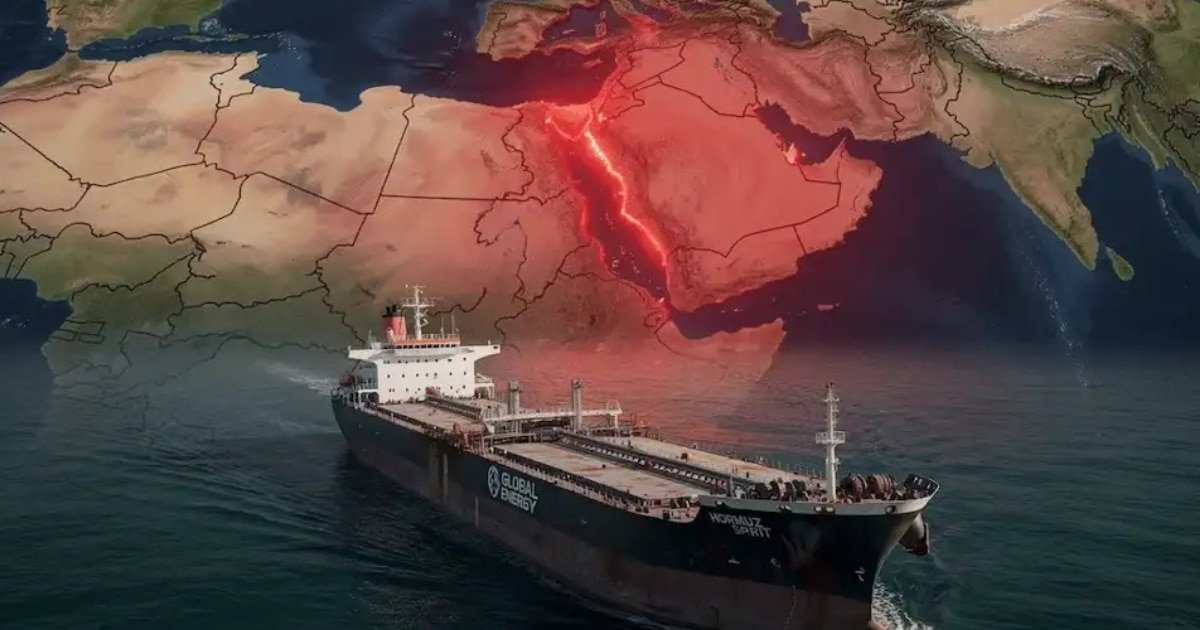
For the global economy, the simultaneous disruption of these two chokepoints has created a situation many analysts now call a “dual chokepoint crisis” , a rare scenario in which both the world’s main energy route and one of its busiest container routes are destabilized at the same time.
Strait of Hormuz: The World’s Most Important Energy Passage
The Strait of Hormuz is widely regarded as the most critical energy corridor in the global economy. Located between Iran and Oman, the narrow waterway connects the Persian Gulf with the Arabian Sea and serves as the export route for oil and gas from major producers such as Saudi Arabia, Iraq, Kuwait, Qatar, Iran, and the United Arab Emirates.
Under normal conditions, roughly 20 million barrels of oil per day pass through the strait, accounting for about one-quarter of global seaborne oil trade and roughly one-fifth of the world’s oil consumption.
This massive flow means that any disruption in the strait immediately affects global energy markets. On an average day in 2026, about 100 cargo vessels transit the strait, with around 60 to 70% of them being oil or gas carriers.
However, after the escalation of military tensions in late February 2026, traffic began to collapse rapidly. Data shows that on February 28 around 105 ships crossed the strait, already lower than usual levels. Within just a few days, traffic fell to 13 vessel transits per day, barely 8% of normal activity.
By early March, analysts reported that only 66 commercial vessels had passed through the strait over nine days, effectively placing the waterway under near-blockade conditions.
The scale of the disruption quickly alarmed global energy markets.
Oil Markets React to the Hormuz Disruption
The sharp drop in maritime traffic through Hormuz immediately pushed energy markets into volatility. Brent crude prices surged sharply in early March as traders began pricing in the possibility of long-term disruptions to Gulf exports.
Oil loading operations at Fujairah, a key UAE bunkering hub and crude export terminal, resumed on March 15, 2026 after a drone attack and fire, though sources say it is unclear if activity has fully normalized.
The facility exports over 1.7 million barrels per day, about 1.7% of global oil demand, making it one of the Middle East’s major energy hubs.
The wider U.S.–Iran conflict has already reduced Middle Eastern oil production by more than 7 million barrels per day, roughly 7% of global supply.
Following U.S. strikes on Iranian facilities, Iran warned of potential attacks on UAE ports including Jebel Ali, Khalifa Port, and Fujairah, escalating regional energy security concerns. Therefore energy infrastructure across the Gulf also began experiencing disruptions, with millions of barrels per day of production temporarily affected.
Because Asian economies depend heavily on Gulf energy exports, the impact has been particularly severe for countries such as China, India, Japan, and South Korea. In fact, nearly 90 percent of crude oil moving through the Strait of Hormuz is destined for Asian markets.
This makes the stability of the strait not only a regional issue but a central pillar of global economic security.
Iran Aims at Diplomatic Isolation of U.S. and Israel
Iran’s Islamic Revolutionary Guard Corps has offered unrestricted passage through the Strait of Hormuz to any Arab or European country that expels U.S. and Israeli ambassadors from its territory. The move is a strategic attempt to use the strait, through which about 20% of the world’s daily oil shipments pass, as diplomatic leverage against Washington and Tel Aviv.
Tehran’s proposal places governments in a difficult position between maintaining long-standing alliances and protecting their energy security and trade routes.
The announcement comes amid escalating tensions following the U.S.–Israeli strikes on Iranian targets and retaliatory attacks across the region, including drone strikes that forced shutdowns at major facilities such as the UAE’s Ruwais refinery.
While U.S. officials claim a resolution may be close, developments on the ground suggest the conflict is hardening, with Iran signaling a prolonged confrontation and using control of strategic maritime routes as a key pressure tool.
🇮🇷 Iran says that any Arab or European country that expels the ambassadors of Israel and the United States from its territory will, starting tomorrow, have full authority and freedom to pass through the Strait of Hormuz. pic.twitter.com/yiVe3IBlWS
— China in English (@New_tres) March 10, 2026
The Red Sea Crisis and the Collapse of the Suez Corridor
At the same time that the Hormuz crisis unfolded, the Red Sea shipping corridor was already experiencing severe disruptions. The route linking the Indian Ocean to the Mediterranean through the Bab-al-Mandab Strait and the Suez Canal is one of the busiest container shipping corridors in the world.
However, attacks on commercial vessels and growing regional tensions have forced many shipping companies to suspend operations in the Red Sea. Normally around 70 commercial vessels pass through the southern Red Sea each day, but the number has dropped sharply due to security risks.
Shipping data shows that major global carriers have diverted vessels away from the Suez Canal route and instead chosen to sail around Africa. Suez Canal container traffic continued to decline due to ongoing Red Sea security risks, with 150 container ship transits recorded in January 2026, the lowest January figure in a decade and a 16.7% year-over-year drop.
The biggest fall came from smaller vessels under 4,000 TEU, which saw a decline in January, while mid-size ships remained relatively stable.
Although some larger vessels have cautiously begun returning since mid-2025, traffic remains far below pre-crisis levels.
This has created serious delays in global container shipping, especially on the Asia-Europe trade routes.
The Return of the Cape of Good Hope Route
With both the Hormuz and Red Sea routes under pressure, major container lines like Maersk, Hapag-Lloyd, and CMA CGM have increasingly shifted toward the much longer route around Africa’s Cape of Good Hope.
This diversion adds 3,500 nautical miles and 10-15 days to Asia-Europe voyages, depending on speed and conditions.
For container shipping companies, the longer route creates multiple logistical challenges; cutting global container capacity by 15-20% and causing blank sailings. Ships burn significantly more fuel, crews spend longer at sea, and ports face delays as vessel schedules become unpredictable.
The diversion also reduces global shipping capacity because vessels take longer to complete each voyage. As a result, container shortages and port congestion have begun appearing across several international logistics hubs.
Maritime Insurance and Security Risks
One of the most immediate consequences of the crisis has been the collapse of maritime insurance coverage for vessels operating near the Strait of Hormuz.
By early March 2026, many maritime insurers had withdrawn protection and indemnity coverage for ships entering the strait due to the growing risk of missile or drone attacks.
Without insurance coverage, most commercial shipping companies cannot legally operate in high-risk waters. As a result, hundreds of vessels began anchoring outside the Gulf while awaiting security updates or military escorts.
At one point during the crisis, more than 150 ships were reportedly waiting outside the strait, creating a maritime traffic backlog across the Persian Gulf.
This sudden halt in maritime movement further intensified supply chain disruptions worldwide.
Iran’s Strategic Position in the Crisis
Iran’s geographical position gives it enormous strategic influence over the Strait of Hormuz. The country controls the northern side of the narrow channel and maintains significant naval and missile capabilities in the region.
During the current crisis, the Iranian foreign minister stated that the strait remains open for most countries but warned that vessels linked to hostile states may face restrictions. “It is only closed to the tankers and ships belong[ing] to our enemies, to those who are attacking us and their allies. Others are free to pass,” said Araghchi.
BREAKING:
Iran announces the Strait of Hormuz is open to all countries except the United States, Israel, and their allies. pic.twitter.com/hyV49YFPs7
— Globe Eye News (@GlobeEyeNews) March 14, 2026
Despite the tension, Iranian oil exports have continued through alternative shipping networks and so-called “shadow fleet” tankers, with millions of barrels of crude still reaching international markets during early March.
This demonstrates how geopolitical conflict and global energy trade have become deeply intertwined in the Gulf region.
Supply Chains Enter a New Era of Risk
The dual chokepoint crisis has exposed a fundamental weakness in the global trading system. Modern supply chains rely heavily on a small number of maritime corridors that connect production centers in Asia with markets in Europe and North America.
When even one of these routes becomes unstable, the effects spread rapidly across global logistics networks. When two major routes are disrupted simultaneously—as seen in early 2026—the consequences become far more severe.
For multinational corporations, the crisis is forcing a major rethink of supply chain strategies that have dominated global trade for decades.
From “Just-in-Time” to “Just-in-Case”
For more than thirty years, global companies have relied on “just-in-time” logistics systems designed to minimize inventory costs and maximize efficiency.
However, repeated disruptions, from the COVID-19 pandemic to current geopolitical tensions and maritime conflicts, have exposed the vulnerability of this model.
The current crisis is accelerating a shift toward “just-in-case” supply chains, where companies maintain larger inventories and diversify their transport routes. Businesses are also exploring alternatives such as rail corridors across Eurasia and regional manufacturing hubs closer to consumer markets.
Concluding: The Long-Term Impact on Global Trade
The events of March 2026 may ultimately mark a turning point in the structure of global trade. The simultaneous disruption of the Strait of Hormuz and the Red Sea corridor has shown how fragile the world’s logistics networks remain in the face of geopolitical conflict.
Even if tensions ease in the coming months, shipping companies and governments are unlikely to forget the lessons of this crisis. The emphasis on secure trade corridors, diversified supply chains, and regional manufacturing is likely to grow stronger in the years ahead.
You May Like To Read: Deputy PM Ishaq Dar Calls for Regional De-escalation in High-Level Talks with US and Türkiye
For many countries, especially energy-importing economies in Asia, the stability of maritime chokepoints will remain one of the defining strategic concerns of the global economy.
The dual chokepoint crisis has therefore become more than a temporary disruption. It is a warning about how geopolitical conflict can reshape the foundations of global trade.
Check out our latest video: