


The latest economic projections released by the International Monetary Fund (IMF), following its fresh $1.2 billion disbursement to Pakistan, confirm that the immediate risk of economic free fall has passed. However, the data paints a picture of a nation locked into a narrow stabilization path characterized by weak growth, a heavy debt burden, and limited relief for the population.
Latest disbursement brings total to $3.3 billion, with lender acknowledging significant progress in stabilizing the economyhttps://t.co/q0h224E11w
— The Standard (@PakStandard) December 9, 2025
Weak Growth Trajectory and Population Challenge
The IMF projects Pakistan’s economic growth (GDP) to inch up only modestly, from 2.6 per cent in FY2024 to 3.2pc by FY2026. This pace is barely sufficient to match the country’s high population growth rate (officially cited at 2.55pc), implying stagnation in living standards with a per capita income remaining low at $1,677. The trajectory suggests economic containment rather than robust recovery.
Labour market conditions reflect this slow growth, with unemployment projected to fall only modestly from 8.3pc in FY2024 to 7.5pc in FY2026, underscoring the weak job-creating capacity of the current economic path.
Inflation Turnaround: Striking but Fragile
The most striking turnaround has been in controlling inflation. Consumer price inflation is estimated to have fallen sharply from an average of 23.4pc in FY2024 to a projected 4.5pc in FY2025. This disinflation is a result of tight monetary policy and compressed demand under the IMF programme.
However, price stability remains fragile, with projections indicating a rebound in average inflation to 6.3pc in FY2026, and end-period inflation potentially climbing back to 8.9pc that year, suggesting that maintaining low inflation will be a persistent challenge.
Fiscal Tightening and Persistent Debt Burden
Pakistan has undertaken substantial fiscal adjustment, a central requirement of the IMF program:
- Fiscal Consolidation: Government revenue and grants are projected to rise significantly from 12.7pc of GDP in FY2024 to 16.3pc by FY2026. This adjustment is expected to narrow the budget deficit from -6.8pc to -4.0pc of GDP, while achieving a critical IMF benchmark of a primary surplus rising to 2.5pc of GDP.
- Debt: Despite the fiscal tightening, the public debt burden remains heavy. Total general government debt is projected to hover around 72–73pc of GDP, with government and guaranteed debt near 76pc. Domestic debt, accounting for nearly half of the GDP, keeps interest costs elevated—evidenced by the six-month treasury bill rate standing at 21.5pc in FY2024.
External Easing but Investment Stagnant
External pressures have eased, but vulnerability persists. Foreign exchange reserves are projected to rise from $9.4 billion to $17.8 billion by FY2026, boosting import cover from 1.6 months to 2.7 months. However, this level remains short of comfortable benchmarks.
Crucially, foreign direct investment (FDI) remains subdued, projected at a mere 0.5–0.6pc of GDP throughout the period, signaling persistent investor caution despite improved macro stability. Furthermore, the 15.4pc real effective appreciation of the rupee in FY2024, while signaling currency stability, carries risks for export competitiveness, especially for the dominant textile sector.
Prime Minister Sharif’s Reaction and Political Acknowledgment
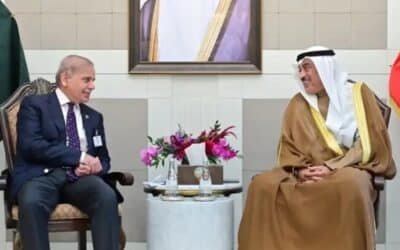
Prime Minister Shehbaz Sharif welcomed the IMF disbursement as “proof” of Pakistan’s progress toward economic stability. He acknowledged the hard work of Finance Minister Muhammad Aurangzeb and his team.
In a key political statement, the Prime Minister acknowledged the indispensable role of the military in the reform process:
“The PM also acknowledged that Chief of Defence Forces and Chief of Army Staff Field Marshal Syed Asim Munir played a key role in supporting the implementation of the reform agenda and paving the way for Pakistan’s economic development.”
PM Sharif stressed that steering the country away from default required “collective sacrifice” from political parties and the nation. While expressing satisfaction that stability had been achieved, he concluded with a clear mandate for the future: “more efforts are needed to move the economy toward growth,” expressing confidence in achieving economic self-sufficiency and freeing the country from foreign debt.
You May Like To Read: Japan Accuses China of ‘Dangerous’ Fire-Control Radar Lock Over International Waters