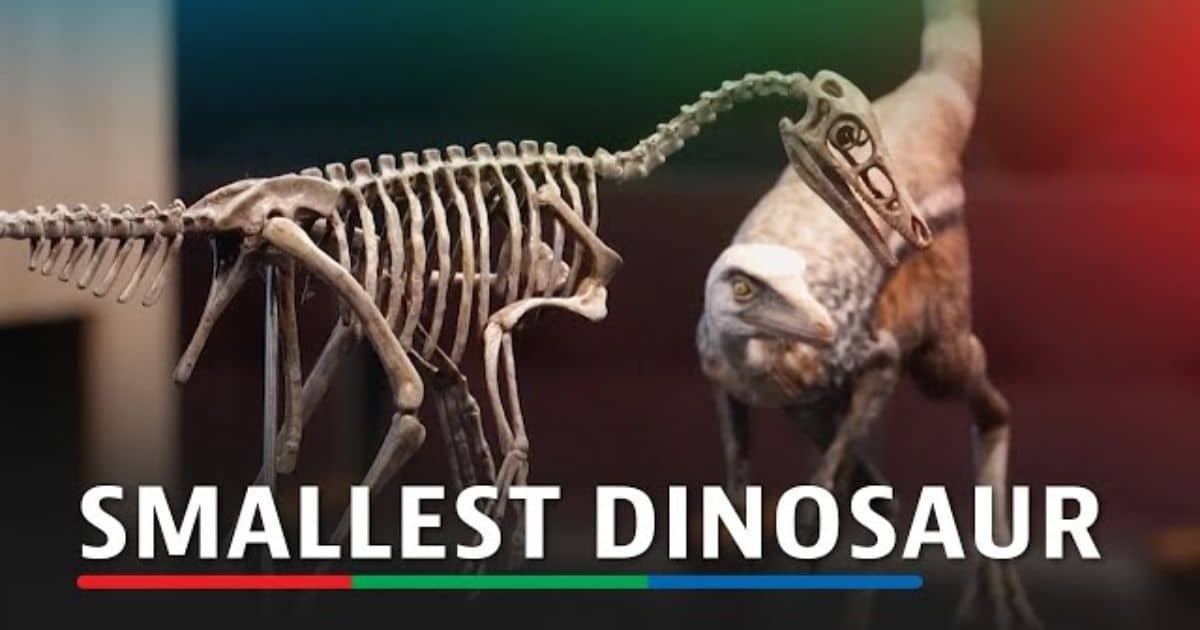





Researchers unveiled the “exquisite” fossil of Alnashetri cerropoliciensis, one of the smallest dinosaurs ever discovered. Found in the Patagonia region of Argentina, the nearly complete skeleton belongs to a creature about the size of a crow, weighing only 1.5 pounds (0.7 kg). This discovery challenges the popular image of the Cretaceous Period as exclusively a “land of giants,” proving that tiny predators thrived alongside massive beasts like the 70-ton Argentinosaurus.
The fossil, nicknamed “Alna,” was found in 95-million-year-old sandstone in Rio Negro Province. Scientists believe the small female dinosaur was roughly four years old and almost fully grown when she was buried by a sand dune. Despite her size, Alna was a formidable hunter, likely preying on lizards, mammals, and insects. While she belonged to the alvarezsaurs family, known for bird-like traits and feathers, she was only distantly related to modern birds and possessed sharp, Velociraptor-like teeth rather than the specialized digging claws seen in later relatives.
Researchers found a well-preserved and nearly complete skeleton of one of the world’s smallest-known dinosaurs, the Alnashetri cerropoliciensis, in Argentina’s Patagonia region, where massive species like Giganotosaurus once roamed 95 million years ago https://t.co/Em29rciwGe pic.twitter.com/NLKjltDmqe
— Reuters (@Reuters) February 26, 2026
This find is significant because it highlights the immense biodiversity of the ancient “Kokorkom” desert. Lead paleontologist Peter Makovicky noted that Alna would not even reach the knee height of an average adult. The discovery underscores that the evolution of small body sizes occurred multiple times within dinosaur lineages. It serves as a reminder that while the giants grab the headlines, the prehistoric ecosystem relied heavily on these small, agile creatures to maintain a balanced and diverse environment.
You May Like To Read: