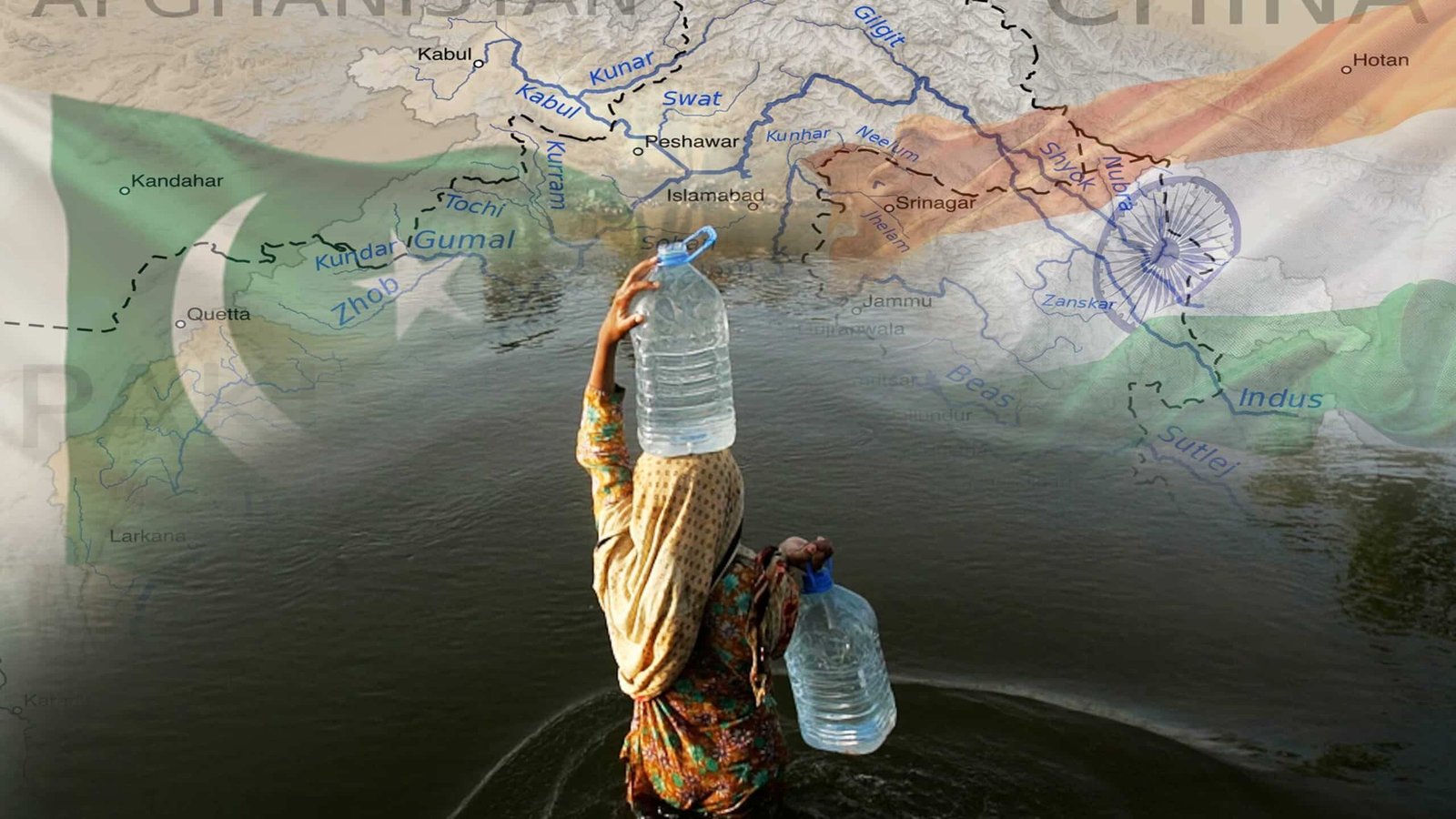





In April 2025, the PCA at The Hague ruled in favor of Pakistan’s objections to India’s Ratle hydroelectric project on the Chenab River, a legal victory that, however, failed to ease tensions. India immediately rejected the decision and suspended the 1960 Indus Waters Treaty (IWT) in response to a militant attack in Kashmir, raising fears that water politics could tilt toward future conflict.

Source: thesundaytimes
The Treaty Under Strain
The IWT, mediated by the World Bank, has long been hailed as a rare triumph in contentious Indo–Pak relations. Under its terms, the three eastern rivers (Ravi, Beas, Sutlej) fall under Indian control, while the western three (Indus, Jhelum, Chenab) largely serve Pakistan’s agricultural and hydropower needs. India is allowed limited hydropower projects, subject to treaty limits, unlike full sovereignty upstream. Yet a demographic explosion from a combined 530 million in 1960 to over 250 million in Pakistan’s Indus basin today means original treaty terms no longer secure either party’s future. Static allocations fail to reflect modern demands on water, food production, and energy.
Source: Al Jazeera
The Upper-Hand: India’s Control Over Headwaters
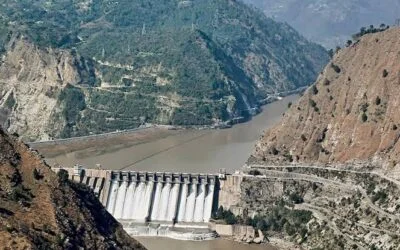
Post-Hague, India has accelerated construction of dams like Ratle and Shahpurkandi, enhancing its capacity to modulate water flows. Upstream reservoirs on the Chenab and Jhelum can hold water for upwards of 30–40 days, a significant tactical margin that could disrupt Pakistan’s irrigation schedules if misused. Pakistan faces real risk: agriculture accounts for nearly a quarter of GDP and employs over 65% of the labor force, with 75% of its irrigation relying on Indus system waters. A mere 10% decline in irrigated output might shave 1.5% off GDP growth annually, triggering severe economic and social stress.
Source: Global Agriculture
Weaponizing Water?
Globally, “water weaponization” is escalating: Peter Gleick notes a 50% rise in such incidents in 2023 alone. In South Asia, this threat has reemerged with serious implications. India’s unilateral move to suspend participation in the Indus Waters Treaty (IWT) following the 2025 Kashmir militant attack has raised alarms in Pakistan and among international observers.
While India cannot legally or technically cut off the Indus River system in one sweeping action, especially during the high-melt period between May and September, when glacier-fed flows surge downstream, it still retains significant upstream influence over key western rivers, particularly the Chenab and Jhelum. This influence includes control over water storage timing, sediment flushing from reservoirs, and daily release schedules from run-of-the-river hydroelectric projects.
These tools, although legally permissible under certain treaty clauses, can be used with geopolitical intent. For instance, delaying water releases by just a few days during the critical sowing period in Pakistan’s agricultural cycle can disrupt crop planning, reduce yields, and destabilize rural economies that rely heavily on Indus system irrigation.
Similarly, sudden releases or mismanaged sediment flushing during monsoon seasons could aggravate flood risks in downstream regions, amplifying both humanitarian and economic vulnerabilities. While India maintains that its hydropower infrastructure complies with treaty obligations, the absence of effective dispute resolution mechanisms and Delhi’s growing frustration with the treaty’s perceived constraints have raised fears that water flows could be manipulated as a lever of statecraft, particularly during times of diplomatic breakdown or military standoff. In this evolving context, water is not merely a resource, it is becoming a form of soft coercion and strategic influence.
The post-Hague environment in the Indus Basin has, therefore, made clear that the potential for water to be used as a geopolitical weapon is no longer speculative. It is a risk that must be addressed through robust institutional safeguards, updated treaty mechanisms, and regional trust-building measures before crisis turns into conflict.
A Precursor to Conflict
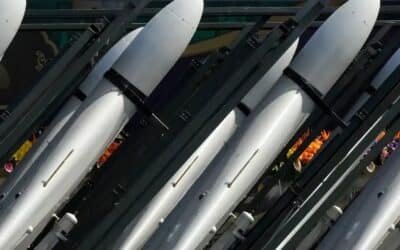
India’s move may be part of broader geostrategic pressure. As a senior Indian diplomat once told the Washington Post, pushing treaty renegotiation serves as leverage across military, political, and economic fronts. Pakistan’s response suspending its own commitments under Simla, expelling diplomats, heightening military alert brings the bilateral relationship closer to rupture. Analysts at USIP argue that hydro-diplomacy collapse could unravel ceasefire agreements on the Kashmir Line of Control, potentially reigniting broader conflict. With both nations nuclear-armed, such escalation, even if accidental, carries existential stakes.
Source: U.S. Institute of Peace
The Broader Diplomatic Fallout of Water Weaponization
Beyond India and Pakistan, the implications of weaponizing water carry weight far beyond South Asia. If transboundary rivers are increasingly treated as tools of geopolitical coercion, the precedent set in the Indus Basin could reverberate across the globe, especially in regions where water-sharing arrangements are already fragile. Downstream states such as Bangladesh, which depends heavily on the Brahmaputra River for agriculture and livelihoods, could face increased vulnerability if upstream actors decide to assert unilateral control during political disputes.
Similarly, Nile-dependent Egypt has long voiced alarm over upstream infrastructure projects like Ethiopia’s Grand Renaissance Dam, fearing the loss of vital water access. The erosion of established norms in the Indus context may embolden other riparian states to behave similarly, asserting control over shared rivers as leverage in regional or bilateral negotiations. China, with its upstream control of major river systems including the Yarlung Tsangpo (Brahmaputra), Mekong, and Salween, is increasingly viewed as a “hydro-hegemon” noted, vifindia.org.
If India, a regional power itself, is seen circumventing or disregarding treaty commitments, it risks validating similar behavior from Beijing, especially in regions like Southeast Asia where Chinese dam-building has already sparked tensions.
Additionally, any failure by India to uphold its obligations under the Indus Waters Treaty could damage its international standing as a reliable partner in multilateral water governance. This could undercut its broader strategic and economic ambitions, from Central Asia to the Mekong region where regional cooperation is essential for both connectivity and climate resilience. In this sense, the weaponization of water is not just a bilateral issue, it is a test case for global transboundary water diplomacy in an era of increasing climate stress and geopolitical volatility.
Source: Chathamhouse
Seeking Resolution and Future-Proofing
Experts at Chatham House advocate immediate mediation led by the World Bank to preserve data sharing and prevent treaty collapse. Conflicts over water, especially in shared basins, are intensifying due to climate variability; making adaptive, inclusive governance a necessity . Long-term treaty reform is also urgent: moving away from rigid allocations to responsive mechanisms that account for climate change, hydrological unpredictability, and demographic expansion. Pakistan has already appealed to arbitration over disputed projects like Kishenganga and Ratle, but sustained mediation could embed periodic reviews, independent monitoring, and environmental sensitivity.
The Path Ahead
Pakistan must pursue a twin-pronged strategy: urgent push for treaty restoration and reform via international arbitration, and on-the-ground resilience-building in agriculture and water efficiency. Meanwhile, India must recognize the broader implications, weaponizing water invites escalation, undermines regional stability, and invites global scrutiny. More than just a legal tussle, the Indus dispute encapsulates a larger existential challenge: can two nuclear neighbors retain peace when natural resources become bargaining chips? The answers will shape not just South Asia’s future, but the global norms around transboundary water cooperation in an increasingly thirsty world.