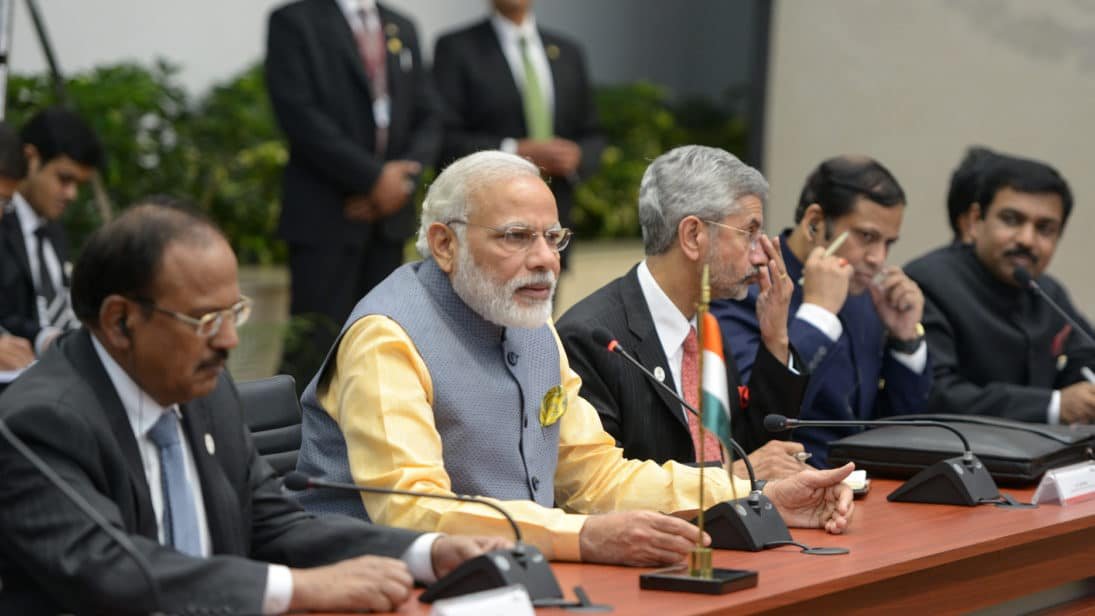





India’s foreign policy, particularly under the assertive guidance of National Security Advisor Ajit Doval and External Affairs Minister S. Jaishankar, has been characterized by a distinct departure from traditional non-alignment and a more muscular posture on regional and global issues.
However, recent developments, including the backlash over Operation Sindoor and the Pahalgam attack allegations have exposed the fragility of this doctrine. Rather than strengthening India’s global standing, their policies have led to diplomatic isolation, eroding trust among international partners and raising questions about the credibility of India’s claims. This incident, alongside other strong-arm tactics and unyielding stances, raises critical questions about the efficacy and long-term implications of India’s current foreign policy trajectory.
The Doval Doctrine
The foreign policy framework often associated with Ajit Doval, sometimes dubbed the “Doval Doctrine,” emphasizes a proactive and often pre-emptive approach to national security. Its core tenet is defensive offense, advocating for taking the fight to the enemy rather than merely reacting to threats. This translates into a willingness to conduct cross-border operations against non-state actors, a hardline stance against perceived adversaries, and a general disavowal of traditional diplomatic niceties in favor of a more direct, results-oriented strategy.
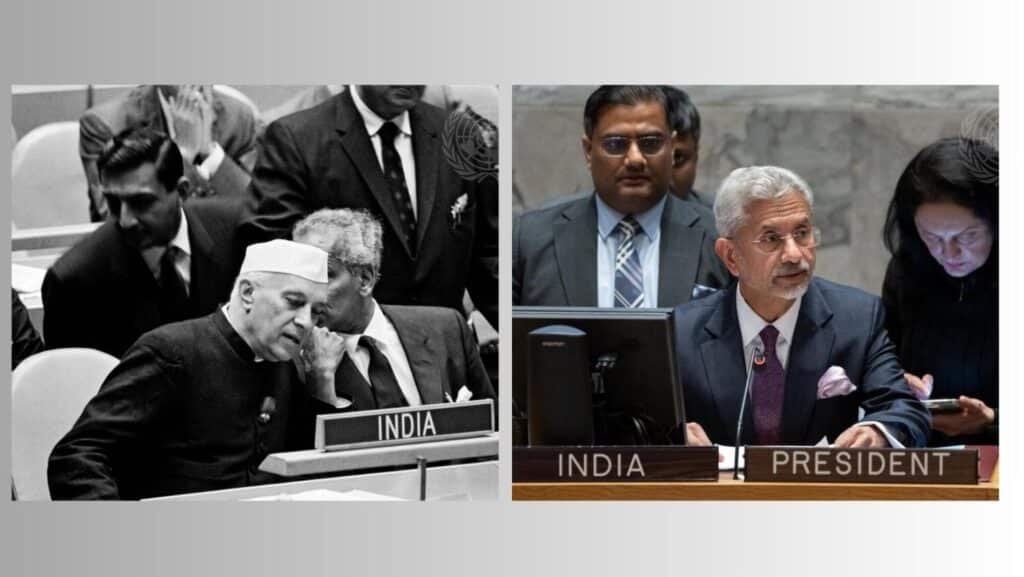
Source: Lowy Institute
This doctrine has found a formidable intellectual and diplomatic exponent in S. Jaishankar, whose tenure as External Affairs Minister has seen a pronounced emphasis on India’s strategic autonomy, a critique of “Western hypocrisy” on international norms, and an unwavering focus on national interest, often at the expense of multilateral consensus or perceived “moral” positions.
You May Like To Read: Tragic Crash: Soviet-Era Plane Claims 48 Lives in Russia’s Far East
This combined approach champions a new realism where India is seen as a major power that dictates terms rather than merely responding to them. The abrogation of Article 370 in Jammu and Kashmir, the Balakot airstrikes, and the firm stance on border disputes with China all reflect this assertive posture.
The narrative propagated is one of a confident, unyielding India, capable of safeguarding its interests through decisive action. However, the true test of any foreign policy doctrine lies not just in its articulation but in its reception and validation on the global stage.
Operation Sindoor: Credibility Crisis
The Pahalgam attack in Kashmir, and India’s subsequent “Operation Sindoor” with its swift blame of Pakistan, exemplifies the challenges inherent in this assertive doctrine. Immediately following the attack, India pointed fingers at Pakistan, alleging cross-border terrorism and launching targeted strikes.
While domestic rhetoric lauded the swift retaliation, the international community’s response was notably circumspect. Despite India’s efforts to brief global counterparts, including conversations between Jaishankar and foreign ministers from various countries, the explicit and widespread condemnation of Pakistan, as sought by India, did not materialize in the emphatic terms New Delhi might have hoped for.
Instead, the international reaction often focused on condemning terrorism in general, urging de-escalation, and emphasizing the need for dialogue. Crucially, there was a noticeable absence of outright endorsements of India’s claims of Pakistani state involvement, particularly concerning the specific evidence provided.
The lack of independently verifiable proof for Pakistan’s direct culpability in the Pahalgam attack, at least to the satisfaction of many international observers, led to questions regarding the operation’s credibility.
For a foreign policy built on decisive action and a demand for global recognition of its security imperatives, this lukewarm international reception highlights a significant chink in its armor. It suggests that while India can act unilaterally, its ability to shape the international narrative and garner unequivocal support, especially against a long-standing rival, is not always guaranteed.
Bulldozer Diplomacy
The incident surrounding Operation Sindoor is not an isolated case. India’s increasingly hardline foreign policy stances, often perceived as unilateral or dismissive of established multilateral norms, have contributed to a growing sense among some international observers of India’s diplomatic isolation.
You May Like To Read: Thailand-Cambodia Border Conflict Intensifies: Cambodia Proposes Ceasefire Amid Rising Death Toll and International Alarm
The criticism against the Citizenship Amendment Act (CAA), the handling of minority issues, and the perceived suppression of dissent within India have drawn concerns from human rights organizations and democratic governments, impacting India’s carefully cultivated image as the world’s largest democracy. Furthermore, India’s strained relationships with some of its immediate neighbors, beyond Pakistan, have also raised eyebrows. The push to assert regional dominance, combined with certain domestic policies that reverberate across borders, has complicated regional diplomacy.
While India has successfully cultivated strategic partnerships with countries like the United States, Japan, and Australia (e.g., through the Quad), these relationships are often driven by convergent interests concerning China, rather than an unreserved endorsement of all aspects of India’s foreign policy.
The criticism of India’s nuanced stance on the Russia-Ukraine conflict, prioritizing its energy and defense needs, while understandable from a national interest perspective, further illustrated a willingness to chart an independent course that sometimes diverges from the collective stance of major global powers. This constant balancing act, driven by a perceived “my way or the highway” approach, risks alienating potential partners and undermining its broader diplomatic objectives.
Reconciling Assertion with Global Engagement
The foreign policy of India under Ajit Doval and S. Jaishankar, characterized by assertive nationalism and a focus on hard power, has indeed redefined India’s engagement with the world. It has successfully projected an image of a nation unafraid to defend its interests.
However, the experience of Operation Sindoor, where the international community’s skepticism regarding proof of Pakistani involvement led to a questioning of the operation’s credibility, underscores a crucial point: assertiveness without commensurate, verifiable evidence and broader international buy-in can lead to diplomatic isolation rather than influence.
For all its emphasis on national interest and strategic autonomy, a truly effective foreign policy for a rising power like India must reconcile its assertive posture with the need for global legitimacy and effective multilateral engagement.
Diplomatic success is not solely measured by the force of one’s actions but also by the ability to build consensus, garner international trust, and persuade others of the validity of one’s claims. If India’s strong foreign policy stances continue to lead to questions about its credibility or perceived disregard for international norms, the vision of India as a leading global power, rather than just an emerging one, risks being undermined.
The challenge for New Delhi lies in ensuring that its pursuit of a powerful image does not inadvertently translate into a form of self-imposed diplomatic isolation, hindering its long-term strategic ambitions.