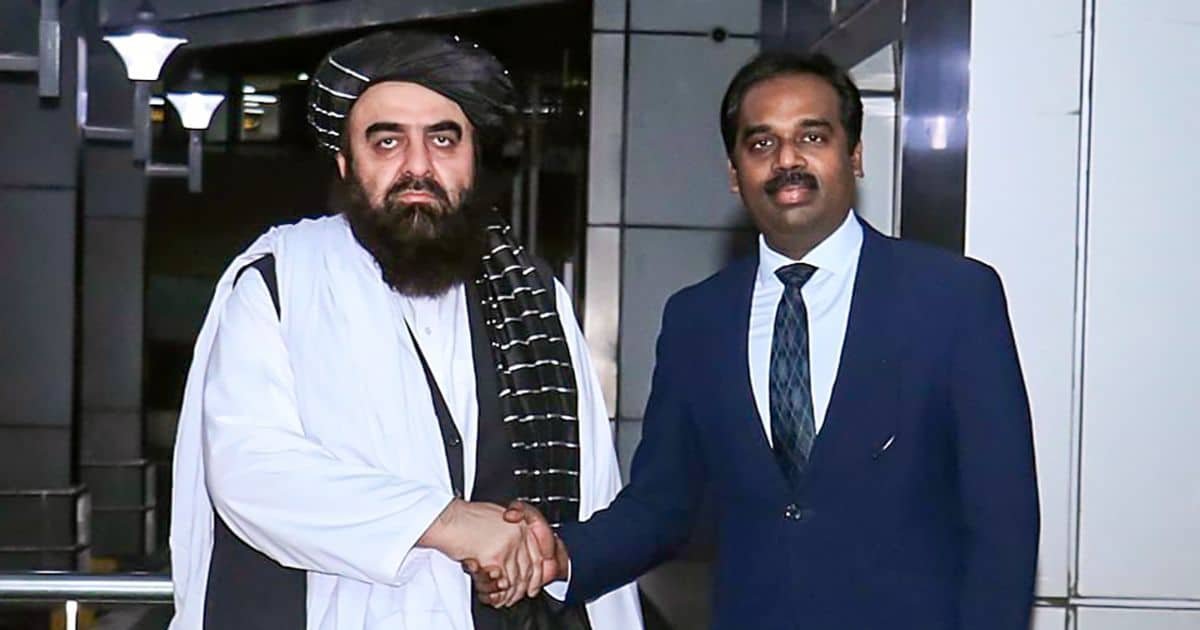



India and the Taliban-led government in Afghanistan continue to cautiously strengthen engagement, guided by mutual security interests and shared regional priorities.
India-Afghan meet: @JournoPranay decodes the agenda of the meeting between Indian EAM S. Jaishankar and Afghan FM Amir Muttaqi.#India #Afghanistan #Taliban #Diplomatic #ITVideo | @Suyeshasavant pic.twitter.com/uvMdTtUXXv
— IndiaToday (@IndiaToday) October 10, 2025
For New Delhi, security remains the central concern, particularly the threat posed by Islamic State (IS), al-Qaeda, and other India-focused militant groups operating in the region. In recent diplomatic exchanges, the Taliban leadership has reiterated assurances that Afghan soil will not be used to launch or support any terrorist activities against India.
Beyond counterterrorism, India’s outreach to the Taliban is driven by broader strategic considerations. New Delhi aims to enhance connectivity with Iran and Central Asia, establishing trade and transport corridors that can counterbalance Chinese and Pakistani influence in the wider region. Afghanistan, located at the heart of this geography, remains a critical link in those plans.
However, officials and analysts note that the relationship remains primarily tactical and pragmatic. Both sides continue to exercise restraint due to lingering mistrust from past events, domestic political sensitivities, and potential diplomatic repercussions from other global partners.
Taliban’s Tilt Toward India: A Strategic Gamble That Could Ignite New Tensions with Pakistan and China#Afghanistan #India #China #Pakistan pic.twitter.com/4oWUe7yqqg
— Today Stance (@TodayStance) October 9, 2025
Despite these challenges, the ongoing dialogue underscores India’s adaptive regional strategy—one that balances national security imperatives with the need for constructive engagement in post-conflict Afghanistan.
You May Like To Read: