




The establishment of the International Organization of Mediation (IOMed), which was created on the initiative of China, is a significant change in the manner in which international conflicts can be managed in the future. IOMed is presented as a prospective alternative to the established, Western-dominated institutions and positioned as a flexible, affordable, and inclusive platform, which should allow states, specifically those in the Global South, to be served. Pakistan, as well as other countries, has become a founding member, indicating that they were not content with the current structures and they are ready to participate in the increasing role of China in international governance.
The mechanisms such as the International Court of Justice (ICJ), the Permanent Court of Arbitration (PCA), and the World Trade Organization (WTO) have more or less dominated the international dispute resolution field over the decades. Though these institutions have been very useful, they are usually blamed for being slow, expensive, and biased towards influential countries. The developing countries often have to play second fiddle because they do not have the resources to drag the lengthy process of legal proceedings, as well as the political muscle to pull the strings. This has necessitated a need to have balanced platforms, which can lead to fair and timely solutions without subjecting them to heavy financial and procedural loads.
The IOMed of China has come about in this context. Through years of diplomatic overture, Beijing has convened a circle of original members, most of whom are located in Asia, Africa, and Latin America, who view the new organization as an opportunity to reform the conventions of international dispute resolution. The program is shown to be non-confrontational and neutral, which seeks to solve conflicts by articulating and mediating issues instead of going to court. In the case of China, IOMed has not only built its reputation as a responsible international leader but also has extended its influence by giving the Global South a mechanism that resonates with their interests and concerns. To member states, it promises increased voice, reduced expenditure, and a feeling of ownership in the process of international governance.
Global South, and IOMed
The question of the choice of many special states of the Global South to become members of the IOMed as the founding countries is based on the practical needs and strategic approach. On a practical level, the current international legal forums may need a lot of financial resources and a long time period, which is not as available to the developing nations. In comparison, IOMed offers a relatively cheap and adaptable structure within which conflicts could be resolved with the help of mediation instead of lengthy legal proceedings. The method is especially attractive to smaller states that are not able to equal the legal possibilities of all the richer countries but still need some equitable ways of resolving disputes.
The other significant motivating force behind membership is the pursuit of a more powerful voice in international governance. Several developing countries have always been sidelined in institutions where power is centralized in a few states. IOMed, through its design, puts itself as a more inclusive organization in which the views of the Global South are weighted. To them, it is not that they are joining IOMed to have their disputes settled, but expressing their willingness to be a multipolar order where their interests are listened to and considered.
Also, a strategic alignment with China is important. By joining IOMed, the member states will enjoy a closer relationship with an emerging power that is redefining the global order as Beijing presents itself as a hero of the Global South. In the case of nations like Pakistan, which already boasts of good economic and political ties with China due to some of the projects China has undertaken, including the Belt and Road Initiative, membership strengthens this alliance and gives it an extra avenue of cooperation. IOMed is viewed by other countries as an instrument of diversifying their diplomatic policies, where they no longer rely too heavily on Western institutions and instead enhance their ties with the new areas of influence.
You May Like To Read: The Energy Squeeze: How Sanctions on Russia Reshaped Europe’s Dependency Chains
Pakistan, and Other Key Members Case
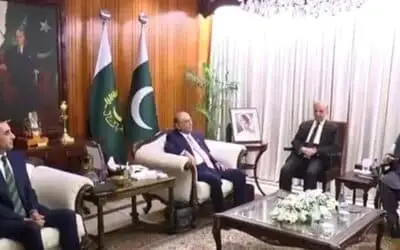
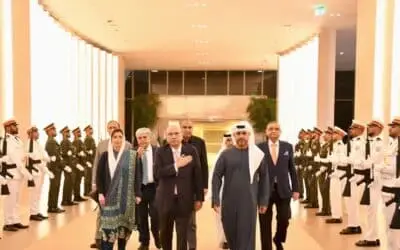
The fact that Pakistan joins IOMed as one of the founding members is an indicator of its practical needs and its general geopolitical orientation. With a significant interest in the Belt and Road Initiative as a country in the China-Pakistan Economic Corridor (CPEC), Pakistan is interested in making sure that the conflicts that arise due to the cross-border infrastructure and investment projects can be effectively addressed. When one is dealing with the International Court of Justice or the WTO, there is a tendency to encounter lengthy procedures and legalities that are not quite suitable when such cases need to be resolved urgently. With its focus on mediation and congruence, IOMed provides Pakistan with a platform that is more congruent with its economic and political realities.
Pakistan is also experiencing tensions with its neighbors (India and Afghanistan) as well as in the context of economics. Although IOMed is not meant to substitute political bargains or security talks, it may offer a level ground to resolve the conflicts involving trade, borders, or cross-border resources. In the case of Islamabad, the membership will be an indicator of its commitment to a peaceful resolution of the disputes as well as its intention to enhance its relationship with China in the development of new institutions of global governance.
The other founders of IOMed have the same motivations. The African countries consider the platform a means of resolving commercial and investment conflicts without the trap of expensive arbitration cases in Western cities. Latin American nations that have long complained about the lack of balance in the global governance frameworks find themselves with IOMed as a way to diversify their alternatives and no longer rely on the U.S.-led or the Europe-based systems. Smaller countries in Asia have also come on board after understanding that a more inclusive mediation platform would make them resolve such disputes with bigger powers on an even playing field.
These decisions are indicative of a collective will by the Global South countries not only to solve conflicts on more balanced grounds but also to be part of building up a governance structure that indicates their increasing influence in the international arena. The admission of Pakistan, notably, explains why states with strong economic and strategic alliances with China consider IOMed as an expedient instrument as well as a figurative move toward even more multipolarity of the world order.
You May Like To Read: The Weaponization of Human Rights: How Global Powers Selectively Invoke International Law Against Adversaries
Opportunities, and Future Challenges
The establishment of IOMed offers an opportunity as well as a challenge to the countries that have opted to promote the same. The site provides a more affordable, accessible, and encompassing model of dispute resolution, both on the positive side. To most Global South states, it offers a long-awaited alternative to regimes controlled by richer states, and also offers them a greater collective say in the structuring of the game of international interaction. In this respect, IOMed can be viewed not only as a legal device, but rather as a diplomatic one that enhances collaboration between the South and the South and enhances the concept of the multipolar world in which the regions will be able to engage in a more equal manner.
Meanwhile, there are still critical issues. It is doubtful that IOMed can ever fulfill its promise of neutrality, particularly when China is at the heart of its establishment. It is feared that the platform will be used by Beijing to exert its influence or influence the results in a way that will benefit them. Besides, the credibility of IOMed will be determined by whether it manages to establish itself with other countries outside its membership and achieve a history of amicable and effective dispute resolution. There may also be tensions in the case its ruling or mediation is inconsistent with the existing mechanisms, such as the International Court of Justice, WTO, or regional arbitration systems.
Nevertheless, with these uncertainties, the introduction of IOMed highlights a more general fact that the global order is changing, and the need for an institution that captures the insights of the Global South is becoming increasingly popular. To other countries, such as Pakistan and others that have been registered as founding members, the organization is the practical solution to the urgent demands and is the symbolic action towards reforming international governance. In case IOMed manages to demonstrate its credibility, it may turn into one of the hallmarks of the system of managing disputes in a world with more balanced power.