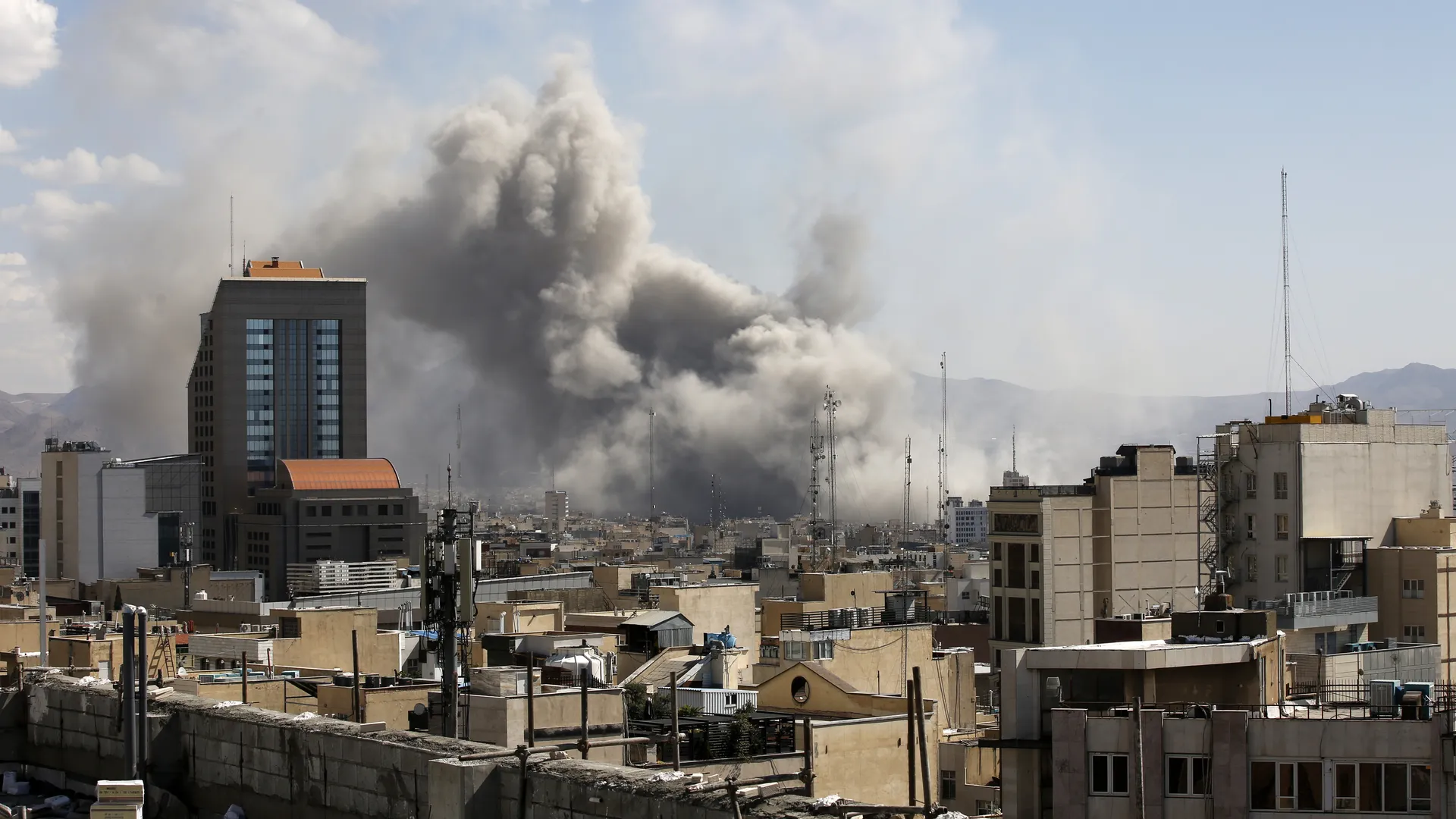





The volatile security architecture of the Middle East shattered overnight as Israel executed a wave of precision airstrikes and missile attacks targeting central and western Iran. Explosions rocked major urban and industrial centers—including Tehran, Tabriz, Karaj, and Isfahan—marking the most severe military confrontation between the two geopolitical rivals since a fragile, Pakistan-brokered ceasefire was established on April 8.
Overnight, Israel launched strikes against targets across Iran in response to the Iranian ballistic missile attack.
Israel attacked infrastructure, airports, and a petrochemical plant.Israel used ALBMs in its response. The missiles were launched by fighter jets over the… pic.twitter.com/aCBPrDcyiR
— VolgaLad (@cym27s) June 8, 2026
The direct confrontation began late Sunday evening after Iran launched a coordinated barrage of approximately 30 ballistic missiles from its home territory toward northern Israel. Tehran defended the missile strikes as a justified counter-response to an Israeli airstrike on Beirut’s southern suburbs earlier that day, which killed at least two people and wounded 20.
While Israeli defense networks intercepted most of the incoming Iranian missiles, the overnight retaliatory strikes inside Iran have severely damaged the regional truce framework, triggering emergency security alerts as far away as Saudi Arabia’s Al-Kharj governorate.
The Collapse of Dual Front Ceasefires and Transnational Strikes
The synchronized military exchanges across multiple borders have effectively connected the localized Israel-Hezbollah war with broader global security negotiations: The rapid breakdown of the diplomatic safeguards established in April highlights several critical developments:
-
The Dahiyeh Red Line: For months, Iran had warned that any Israeli attack on Beirut’s southern suburb of Dahiyeh would trigger direct retaliation from Iranian territory. By striking the capital on Sunday, Israel crossed this line, prompting Tehran to bypass its regional proxies and deploy its core missile force for direct coercion.
-
The Failed June 4 Separation Strategy: The escalation comes just days after the Trump administration announced a separate Israel-Lebanon ceasefire agreement on June 4. That arrangement required Hezbollah to withdraw north of the Litani River but lacked reciprocal guarantees regarding an Israeli military withdrawal from southern Lebanon, leading to its immediate rejection by Hezbollah command structures.
-
Expanding Regional Involvements: As the conflict deepened, Yemen-based Houthi forces launched supportive missile strikes into Israel on Monday morning. Simultaneously, the Saudi Civil Defence in Al-Kharj issued public emergency warnings, although Iranian state media later denied claims that regional airbases had been targeted.
Critical Analysis: Strategic Defiance, Deterrence Math, and the Washington-Jerusalem Fault Line
The rapid collapse of the ceasefire reveals deep structural rifts between the military objectives of Israel and the diplomatic priorities of the United States:
Growing Authority Gap Between Trump and Netanyahu
The immediate aftermath of the strikes reveals a sharp, public disagreement between U.S. President Donald Trump and Israeli Prime Minister Benjamin Netanyahu. Just hours before the Israeli Air Force targeted Iranian cities, President Trump asserted in an interview with the Financial Times that Netanyahu would have to accept Washington’s negotiated terms because the U.S. executive “calls all the shots.” Trump followed up on Monday with an explicit demand on Truth Social for both sides to immediately stop “shooting.”
By launching a major strike inside Iran despite clear messages of restraint from Washington, Israel has challenged the narrative of U.S. control. This independent action undermines the White House’s regional credibility, signaling to Tehran that the current American administration either cannot or will not restrain Israeli military operations.
A Shift in Iran’s Deterrence Calculus: Force Over Words
Iran’s decision to launch ballistic missiles directly from its own soil shows a significant change in how its security elites view deterrence. According to regional defense specialists, Tehran has concluded that diplomatic guarantees alone are insufficient to limit Israeli military expansions, particularly while Israeli forces occupy roughly 2,000 square kilometers (one-fifth) of Lebanese land.
As Israel’s daily operations thinned out Hezbollah’s forward capabilities in southern Lebanon, Iran’s security leadership chose to demonstrate its own strength directly. By showing that a strike on Beirut triggers a strike on Israel, Iran is using its core missile force as a primary diplomatic lever, operating on the belief that real negotiating leverage is built through military force rather than words.
🔴 BREAKING: Iran’s foreign ministry says Iran’s armed forces conducted “defensive strikes” against Israel
🔴 BREAKING: The strikes came following repeated violations of the ceasefire and actions by Israel against Lebanon, the ministry said
🔴 BREAKING: A ceasefire in Lebanon was… pic.twitter.com/j0NSl0VGik— Al Arabiya English (@AlArabiya_Eng) June 7, 2026
Conflicting Policy Signals from the United States
While the Trump administration continues to push for a broader diplomatic resolution to protect global oil corridors from market volatility, other U.S. institutions are sending very different signals. On Monday morning, U.S. Ambassador to Israel Mike Huckabee stated publicly that Iran’s ultimate strategic goal remains the destruction of both Israel and the United States.
This sharp contrast between the President’s public calls for an immediate ceasefire and the U.S. Ambassador’s strong language highlights a deep division within American foreign policy. This mixed messaging creates strategic ambiguity, allowing Israel to continue its campaign against the Iranian alliance while Washington attempts to manage the resulting economic fallout.
Calibrated Retaliation vs. All-Out War Escalation
Despite the seriousness of the overnight attacks, the exact choice of targets indicates that both sides are still trying to avoid sliding into a total regional war. Iran’s initial 30-missile strike was limited in scale and produced no reported civilian casualties, serving primarily as a strategic warning.
Similarly, the Islamic Revolutionary Guard Corps (IRGC) has stated that wider strikes against U.S. and Israeli regional infrastructure remain a contingency plan reserved for future violations. Because Iran has avoided targeting U.S. military bases in the Persian Gulf, it keeps an avenue open for negotiation, using the threat of wider conflict to pressure Washington into enforcing a genuine, multi-front ceasefire.