



Muazzama Hasan
July 11, 2025
Foreign Policy as an Economic Driver
Pakistan finds itself at a critical juncture where the objectives of its foreign policy must shift from a historically security centric approach toward a broader, more forward looking economic orientation. In an increasingly globalized and interdependent world, foreign relations are no longer solely about geopolitical alignment or defense strategy, they are essential tools for economic revival and long-term stability.
Encouragingly, Pakistan’s macroeconomic indicators have recently begun to reflect early signs of recovery, including a notable decline in inflation, a narrowing current account deficit, rising foreign exchange reserves, and a rebound in remittances from overseas Pakistanis. However, sustaining this fragile momentum requires more than internal policy corrections; it demands a proactive, strategic, and economically focused diplomacy. In this context, stable and constructive international relationships are important diplomatic milestones and foundational economic assets that can unlock foreign direct investment, secure favorable trade agreements, and foster resilience across key sectors of the national economy.
A Need for Geo-Economic Reorientation
Historically, Pakistan’s foreign policy was firmly rooted in Cold War-era geopolitics, first aligning closely with Western powers, then pivoting toward counter‑terrorism cooperation in the post‑9/11 world. These strategic alignments, while offering immediate security and military benefits, often overlooked long-term economic dividends. In view of the circumstances Pakistan must transition from geopolitics to geoeconomics, embedding economic diplomacy into its core strategy and focusing on trade, investment, and connectivity.
Source: The News
The intent is clear: diplomatic engagement should increasingly serve national economic objectives. This strategic shift has also been formally recognized in national policy. The National Security Policy 2022 explicitly reframes security to include economic resilience and global integration as vital components, a departure from traditional security constructs. The policy’s adoption marked a survival‑oriented pivot, prioritizing economic relationships with Africa, Southeast Asia, Europe, and regional neighbors, advancing infrastructure projects, and fostering trade ties that reinforce national stability.
Today, Pakistan is actively recalibrating its strategic priorities. Deputy Prime Minister Ishaq Dar emphasized Pakistan’s commitment to a geoeconomic approach at a June 2025 Institute of Strategic Studies Islamabad event, stating that foreign policy is now evaluated on its ability to support trade, attract investment, generate remittances, and facilitate technology inflows. The same month saw the launch of a trilateral cooperation mechanism with China and Bangladesh focused on “win‑win cooperation,” a diplomatic initiative grounded in economic reciprocity.
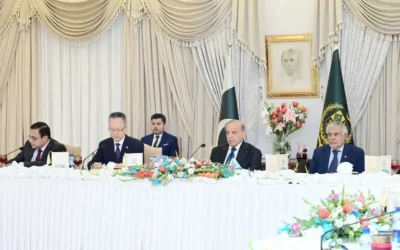
Recent diplomatic engagements further reflect this trajectory. High-level visits such as Turkey’s Foreign Minister Hakan Fidan in July 2025, focusing on deepening economic and defense collaboration highlight Pakistan’s intent to strengthen diversified geoeconomic ties.
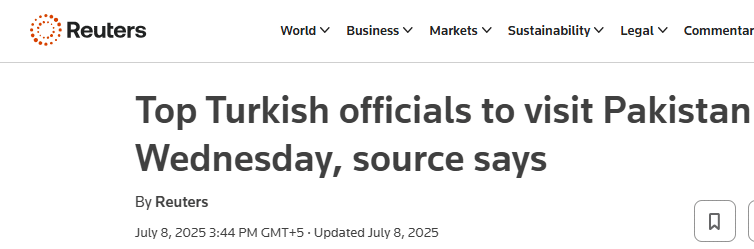
Source: Reuters
Simultaneously, Pakistan and Afghanistan have normalized ambassador-level ties in Beijing, facilitated by China, and agreed to integrate Afghanistan into CPEC efforts that advance regional peace while opening new trade corridors.
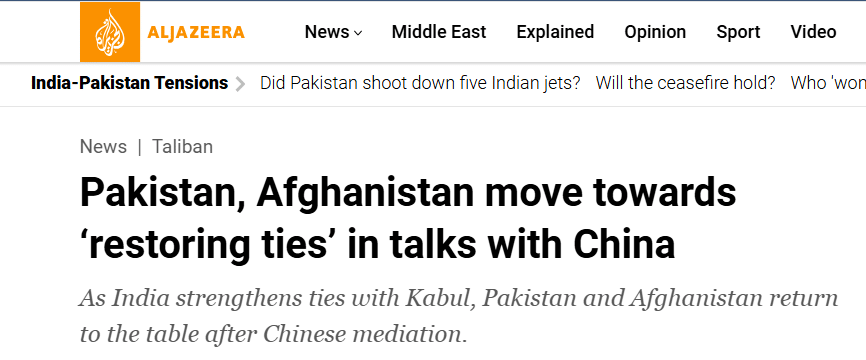
Source: Al Jazeera
These developments align with Pakistan’s strategic goal of transforming its geographic position from a Cold War strategic hindrance to a nexus of regional connectivity. By prioritizing geoeconomics, Pakistan aims to reframe foreign policy as a driver of sustainable development. As numerous researchers posit;
Diplomatic strategy must pivot from reactive alliance-building to proactive economic diplomacy, designed to secure Pakistan’s prosperity and standing in a competitive global order.
Strengthening Strategic Partnerships with the U.S. and China: Balancing Economic Ambitions and National Autonomy
Pakistan’s delicate balancing act between the United States and China remains a cornerstone of its economic diplomacy. Recent engagements with Washington including Pakistan Army Chief Syed Asim Munir’s high-level visit in July 2025; highlight a shift from tactical security partnerships to pragmatic collaborations aimed at areas like counter‑terrorism, energy, trade, and critical mineral access.
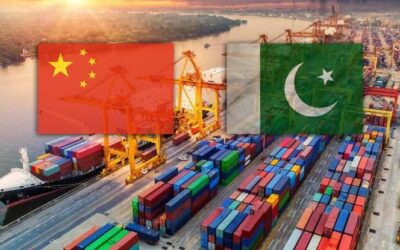
At the same time, Islamabad continues to rely heavily on China, especially through CPEC, which provides much-needed infrastructure financing. However, dependence on Chinese loans now estimated at nearly $69 billion threatens to limit Pakistan’s strategic flexibility. The challenge lies in leveraging both relationships to secure investment, technology transfers, and trade benefits while actively managing debt and preserving national policy autonomy.
Broadening Global Alliances: Deepening Economic Engagement with Gulf States, Turkey, Afghanistan, Iran, and Central Asia
Expanding its diplomatic horizons beyond global superpowers, Pakistan has actively strengthened ties with Gulf countries, Turkey, and Central Asia. In 2025, Islamabad signed MOUs worth around $15 billion with Saudi Arabia, the UAE, and Qatar focused on energy, infrastructure, and industrial development.
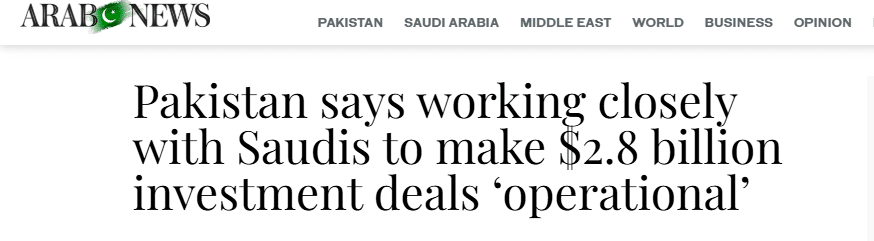
Source: Arab News
Similarly, initiatives like the Khyber Pass Economic Corridor with Afghanistan, along with revived ties under China‑brokered diplomacy in Beijing, demonstrate proactive regional connectivity efforts. Concurrently, partnerships with Iran and Central Asian republics through platforms like INSTC underscore Islamabad’s intent to transform its geography into a competitive asset. These moves reinforce Pakistan’s role as a trans‑regional trade hub bridging South, Central, and West Asia.
From Diplomatic Forums to Institutional Capacity: Empowering Pakistan’s Economic Diplomacy Through Governance and Incentives
While high‑level diplomacy helps open doors, the real challenge lies in converting these engagements into measurable economic impact. Pakistan’s establishment of institutions like the Economic Outreach Apex Committee (2020) and the Special Investment Facilitation Council (SIFC, 2023) show a concerted effort to align federal, provincial, and military stakeholders. Yet, enduring barriers such as regulatory uncertainty, persistent energy shortages, and weak legal protections continue to deter private and foreign investors.
To transform diplomatic opportunities into economic dividends, Pakistan must overhaul its business environment, streamlining dispute resolution, clarifying tax and customs systems, assuring power supply, and ensuring consistent rule of law so that inbound capital leads to long‑term growth rather than short‑term headline gains.
Rethinking CPEC Financing: Transitioning from Debt-Led Projects to Collaborative Equity and Public–Private Investment Models
China’s infrastructure investments under CPEC have been transformative but have also saddled Pakistan with unsustainable debt over $30 billion to China alone, largely in loan form. Though these projects brought roads, power plants, and SEZs, their funding structure risks undermining fiscal sovereignty. Facing a growing debt servicing burden estimated at $15 billion Pakistan must renegotiate future CPEC tranches toward equity and blended public–private funding models and embrace transparency in contracting . Doing so can reduce dependence on loans and embed revenue-sharing, local participation, and risk sharing into infrastructure development.
Ensuring Political Stability Fuels Economic Revival: Converting Macro Gains into Sustainable National Development
Pakistan’s economic diplomacy is anchored in homegrown stability. Disjointed governance, political fluctuations, and macroeconomic stress could unravel negotiated investments. Prime Minister Shehbaz Sharif and Finance Minister Aurangzeb have highlighted that diplomacy yields results only when underpinned by political consistency and credible implementation.
Recent economic indicators; such as inflation falling to 3.2%, foreign reserves rising to $14.5 billion, and a current account surplus demonstrate the domestic effects of steady fiscal reforms. Yet the task ahead lies in cementing these short‑term improvements into long‑term gains through structural reforms in governance, industry, education, and infrastructure, building the foundations that external investment can actually thrive upon.
Recommendations for a Geoeconomic Foreign Policy
Institutionalizing Economic Diplomacy
To convert foreign policy into a dynamic engine of economic growth, Pakistan must begin by institutionalizing economic diplomacy at the core of its diplomatic missions. Embassies should be transformed into proactive commercial outposts by appointing dedicated trade and investment counselors equipped to identify market opportunities, pitch Pakistan’s investment climate, support diaspora-led entrepreneurship, and facilitate export promotion.
This transition requires training diplomatic personnel in economic strategy, trade law, and sector-specific knowledge to allow embassies to function as extensions of the national economic strategy. Countries like South Korea and Turkey have successfully used their diplomatic missions to unlock trade deals and secure strategic investments models Pakistan can learn from. Leveraging the diaspora community through embassy support can serve as a catalyst for inflows of capital, expertise, and reputational credibility.
Broadening Strategic Partnerships
Equally critical is the need to diversify strategic alliances beyond Pakistan’s traditional bilateral relationships with China and the United States. While these ties remain important, they must be complemented by deepening engagement with the Gulf Cooperation Council (GCC) states, Central Asia, Africa, Southeast Asia, and the European Union. This diversification not only reduces dependence on a few power centers but also opens new trade corridors, technology partnerships, and funding streams.
Strategic agreements with Saudi Arabia, the UAE, and Qatar in 2025 already represent a step in this direction ranging from energy to industrial cooperation. Enhanced engagement with Central Asian countries through the Economic Cooperation Organization and the Central Asia Regional Economic Cooperation program can further solidify Pakistan’s geoeconomic integration into landlocked but resource-rich markets.
Reforming Foreign-Funded Projects: A Shift to Fiscal Prudence
Moreover, fiscal prudence must be woven into the fabric of foreign-funded development projects, especially in the case of China-Pakistan Economic Corridor (CPEC). While CPEC has brought substantial infrastructure investment, the overwhelming reliance on sovereign debt has raised concerns over repayment capacity and long-term fiscal sustainability. Pakistan must now renegotiate and reframe future project financing structures from debt-heavy models toward equity-based partnerships and public-private investment schemes.
This shift would limit undue pressure on the public exchequer while attracting capital that shares risk and aligns with local development needs. Transparent project selection, third-party audits, and improved procurement practices will further reassure international partners and investors of Pakistan’s fiscal responsibility and governance maturity.
Underpinning Foreign Policy with Domestic Stability
A robust foreign policy must also be underpinned by strong domestic foundations. Without a stable regulatory environment, efficient legal systems, reliable energy supplies, and a skilled workforce, diplomatic efforts to attract investment will fail to produce tangible outcomes. Improving the ease of doing business, streamlining tax codes, reforming the judicial process for commercial disputes, and investing in human capital are indispensable prerequisites for transforming diplomatic outreach into economic dividends.
If the domestic economy is not structurally sound, foreign capital and trade agreements may yield limited long-term impact. Institutional capacity building, digitization of public services, and incentives for industrial modernization will enhance the credibility of Pakistan’s external engagements and reduce reliance on aid-driven diplomacy.
Leveraging Soft Power and Cultural Diplomacy
In parallel, Pakistan must elevate its use of soft power diplomacy by actively promoting its cultural richness, educational institutions, media outreach, and global diaspora. Nations that lead in cultural diplomacy such as Japan through its creative industries or the UK through education and media demonstrate how national branding can expand trade relationships, increase tourism, and attract foreign students and professionals. Pakistan’s soft power potential remains vastly underutilized. Coordinated efforts involving cultural exchange programs, overseas Pakistani networks, international scholarships, digital storytelling, and Urdu media broadcasts could greatly enhance the country’s global image, dispel negative perceptions, and support commercial outreach.
Harnessing Regional Connectivity Initiatives
Finally, leveraging regional connectivity initiatives must remain central to Pakistan’s geoeconomic vision. Geostrategically located at the crossroads of South Asia, Central Asia, and the Middle East, Pakistan is uniquely positioned to act as a transit and trade hub—if it can integrate effectively into cross-border infrastructure projects. Accelerating implementation of projects like the Khyber Pass Economic Corridor, the International North-South Transport Corridor, the Turkmenistan–Afghanistan–Pakistan–India gas pipeline, and trans-Afghan railway routes can significantly reduce transport costs, open new markets, and anchor Pakistan in regional supply chains. These initiatives not only drive domestic economic growth but also strengthen political relationships through shared economic interests, creating a virtuous cycle of peace and prosperity.
A Roadmap for Geoeconomic Transformation
These interlinked policy shifts from diplomatic restructuring and alliance diversification to fiscal discipline and regional integration represent a viable roadmap for transforming Pakistan’s foreign policy into a potent economic driver. Success depends on political will, institutional coherence, and the ability to pursue long-term strategies above short-term optics.
Conclusion
In the 21st century, foreign policy is not just about influence, it’s about building the economic pillars of a stable, prosperous Pakistan. Pakistan’s foreign policy is at a critical inflection point. No longer can diplomatic effort be confined to reactive security demands and ad-hoc alliances. Instead, Pakistan must champion geoeconomics; a diplomacy guided by national economic goals and long-term development.
By balancing strategic partnerships, institutionalizing economic engagement, mitigating financial risks, and strengthening its domestic foundation, Pakistan can transform its foreign policy into a formidable engine of national prosperity. The window of opportunity is open. Macroeconomic indicators are improving, global interest in South Asia is rising, and the country’s geostrategic assets are more valuable than ever. Success will depend on policymakers’ ability to integrate diplomacy with economic strategy, to diversify alliances, and to build a fair, transparent, and investor-friendly internal environment.