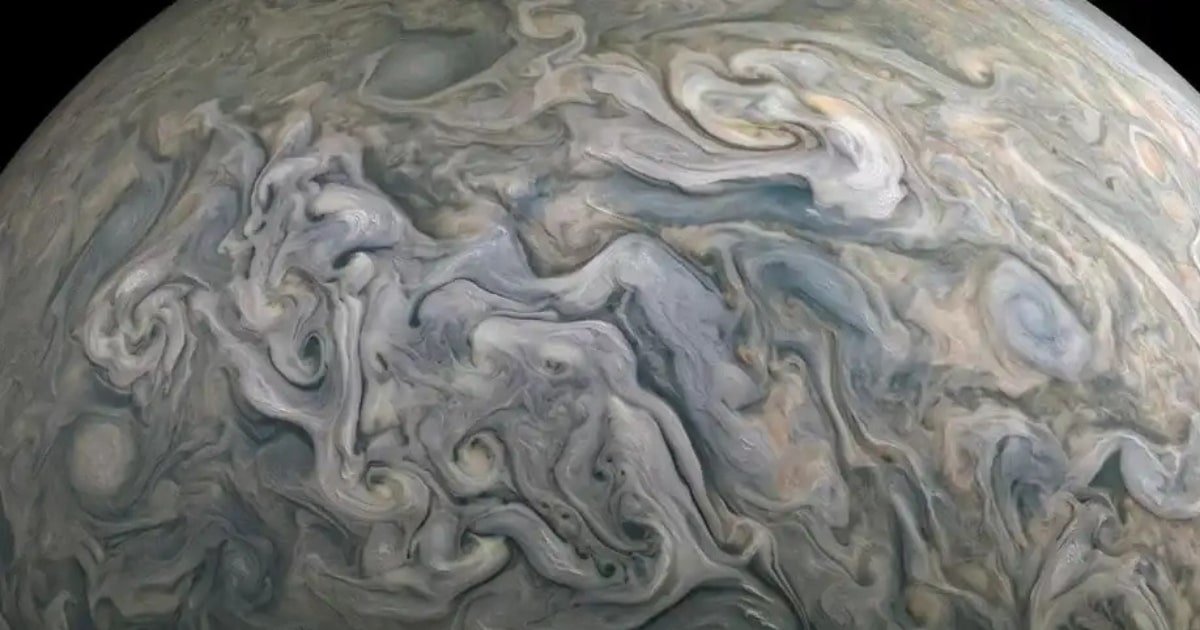





A groundbreaking study published in The Planetary Science Journal revealed that Jupiter holds about 1.5 times more oxygen than the Sun. Lead author Jeehyun Yang, a postdoctoral researcher at the University of Chicago, used advanced computer simulations to peer beneath the gas giant’s dense cloud tops. For decades, scientists have debated the planet’s chemical makeup, as oxygen is mostly locked away in water deep within the atmosphere, far beyond the reach of direct observation by spacecraft like Juno.
Science News: Jupiter has more oxygen than the sun, new simulations reveal https://t.co/GSHbaMbRuD https://t.co/72sh7DGYhG
— Species_X 🌍☄️ (@species_x) January 16, 2026
The researchers combined atmospheric chemistry with hydrodynamics to create the most detailed model of Jupiter’s interior to date. This approach allowed them to track how water vapor and chemical reactions interact as gases circulate between layers. The finding of “supersolar” oxygen levels supports theories that Jupiter formed by accreting icy material near or beyond the “snow line” the region of the early solar system where water ice was abundant. This suggests that the gas giant naturally incorporated more frozen, oxygen-rich material than the Sun itself during its formation.
You May Like To Read: Yoon Suk Yeol Sentenced to Five Years in First Martial Law Ruling
Another surprising discovery from the simulation is that Jupiter’s deep atmospheric circulation is much slower than previously assumed. Gases take weeks, rather than hours, to move between layers. “It really shows how much we still have to learn about planets, even in our own solar system,” Yang stated. Understanding Jupiter’s chemical “fingerprint” not only solves a long-standing mystery about its origins but also helps scientists refine the search for habitable worlds in other star systems by establishing a baseline for how giant planets evolve.
Check out our latest video: