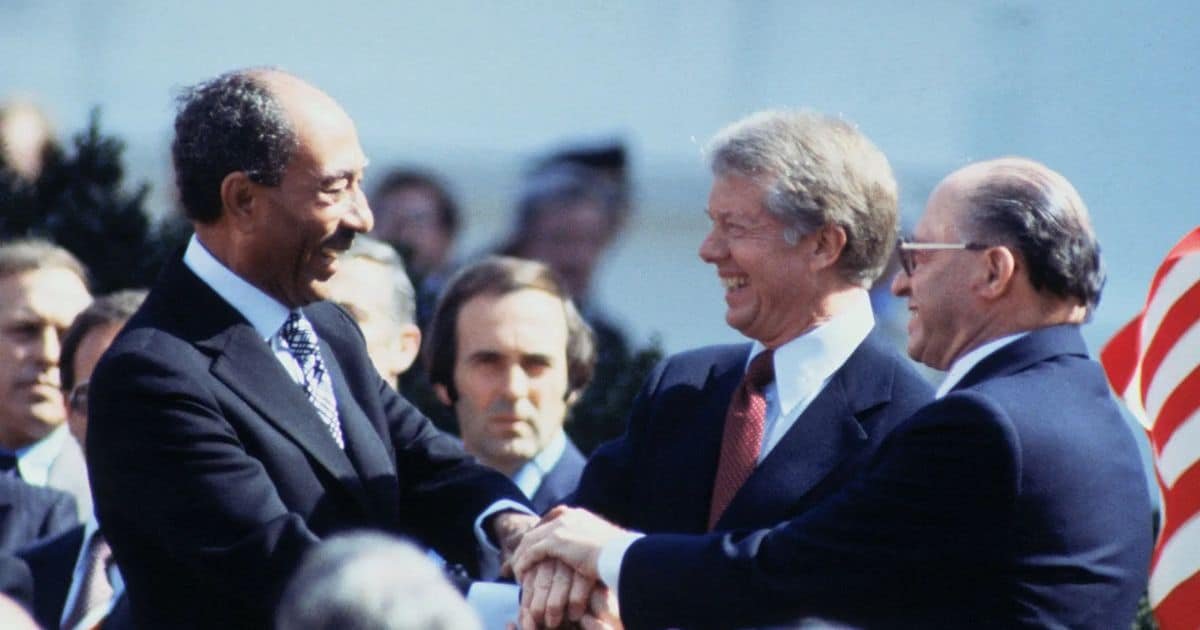





One of the most fateful events in the history of the contemporary Middle East is the Camp David Accords of September 1978. It was the first time that an Arab nation, Egypt, entered into a direct negotiation framework with Israel to agree on a peace structure after three decades of hostility had been the order of the day, which had led to numerous wars. The negotiations took place in a remote U.S. presidential retreat at Camp David in Maryland and were arranged by President Jimmy Carter between Egyptian President Anwar Sadat and the Israeli Prime Minister Menachem Begin, its first move towards formal recognition between Israel and an Arab neighbor as a precedent to future negotiations.
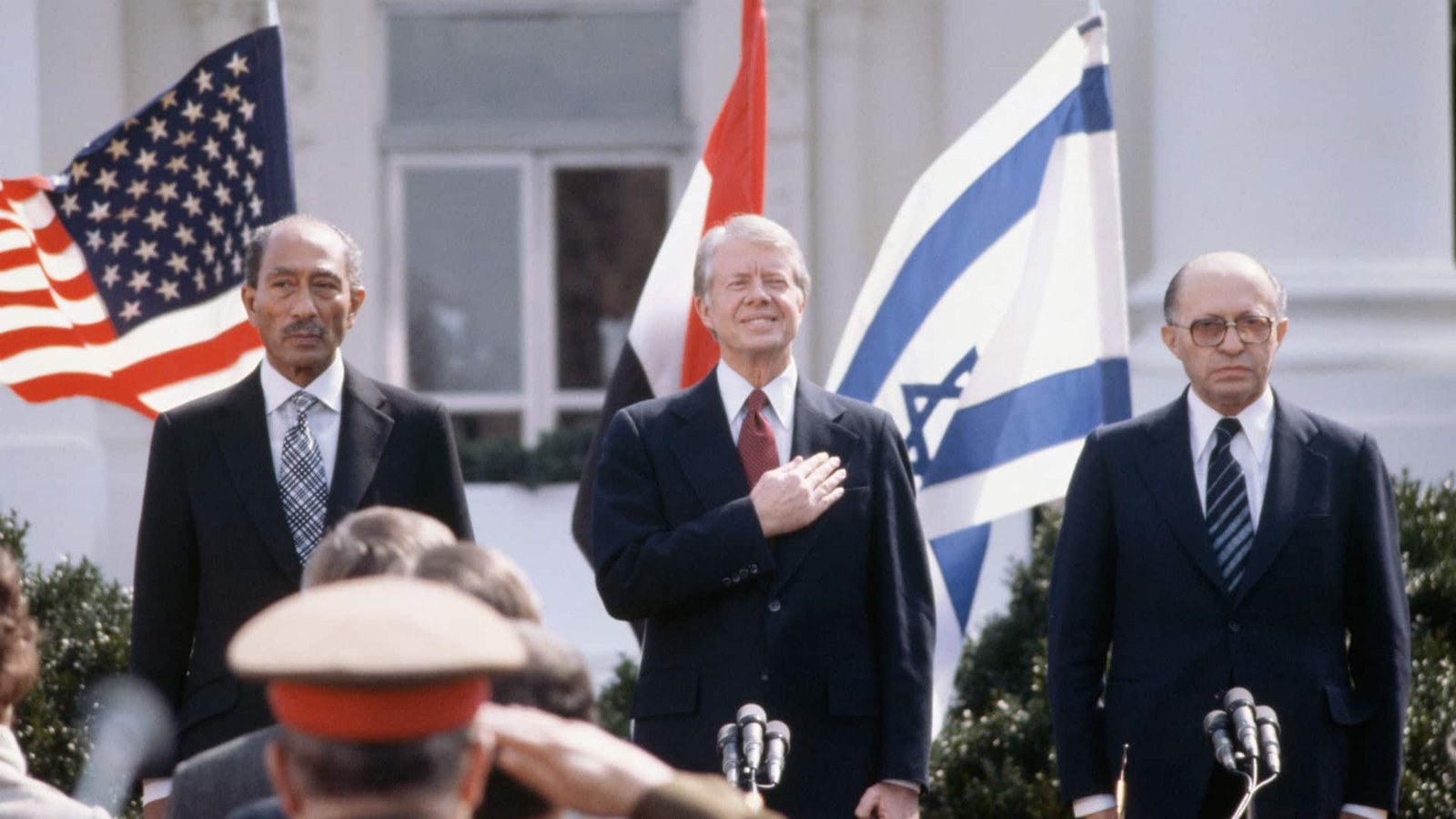
Background: Years of War and Suspicion
The Arab-Israeli war has characterized the Middle East politics since the establishment of Israel in 1948. Gamal Abdel Nasser was an Egyptian leader at the forefront of Arab aggression against Israel and spearheaded the struggle against Israel in the 1948 Arab-Israeli War as well as subsequent wars.
A turning point was reached in 1967 in the Six-Day War: Israel took over the Sinai Peninsula of Egypt, as well as the West Bank, Gaza Strip, East Jerusalem, and the Golan Heights. This abrupt growth of Israeli land increased the hatred of Arabs and left Egypt, which was resolved to take Sinai back. Egypt and Syria attacked Israel, surprising it in 1973 in Yom Kippur. Even though Israel eventually repelled the attack, the war made the Arabs regain some confidence, and Egyptian President Anwar Sadat believed that a military resolution would never be able to bring lasting peace.
The attempts of diplomacy in the successive years proved unsuccessful. The UN Resolution 242 of 1967, which demanded Israeli withdrawal of occupied territories in exchange for recognition, was stuck. The tensions in the entire region continued, and Palestinians insisted on self-determination, and Arab nations were torn on how to respond to Israel. At the end of the 1970s, Egypt and Israel were stuck in a vicious circle of hostility; however, the historic visit of Sadat to Jerusalem in 1977 was an indication of a readiness to try another way. Such an unprecedented gesture was the prelude to the Camp David summit, where the test of peace would at last be put.
You May Like To Read: French PM Sébastien Lecornu Survives Two No-Confidence Votes Amid Deep Political Divisions
The Camp David Negotiations
In the month of September 1978, U.S. President Jimmy Carter identified the secluded Camp David presidential retreat as the place to be visited by Egyptian President Anwar Sadat and Israeli Prime Minister Menachem Begin. The summit was a 13-tense day, which was characterized by intense debates, constant threat of walkout, and personal differences. Sadat, a charismatic and bold leader, advocated the rights of the Arabs and the complete restoration of Sinai, and Begin was cautious and rigid, and opposed the compromise of Palestinian autonomy and the security assurances. Carter, who was the mediator and guarantor, was a hard-working individual who used to now and then walk up and down drafting between the two leaders when they could not even sit in the same room.
Negotiations almost collapsed at a number of points. Sadat had contemplated the departure on more than one occasion because he was infuriated by the lack of compromise by Israel, and Begin was indignant at suggestions that he reckoned undermined the security of Israel. At the close of almost two weeks, the three men were able to come up with a breakthrough in the form of two frameworks that would be the foundation of the Camp David Accords. Albeit controversial and unfinished, these agreements proved that even the direct dialogue between known enemies can give hope of peace in the Middle East.
You May Like To Read: French Government Confirmed and Ready to Proceed with 2026 Budget Deliberations
The Accords: Terms and Commitments
The Camp David summit came up with two peace frameworks, which touched on essential points of the Arab-Israeli conflict. The former was centered on the Sinai Peninsula, which Israel had been having control since the 1967 Six-Day War. In the accord, Israel would withdraw completely from Sinai, and Egypt was the first Arab nation to formally acknowledge the right of Israel to exist. Israel, in its turn, was guaranteed security through the demilitarized zones and international inspection against possible hostilities in the future.
The second framework was concerned with the larger Palestinian problem, the future of the West Bank and Gaza. It suggested a five-year transition phase of Palestinian self-government where negotiations of the final status of the territories would be held. Although the plan acknowledged Palestinian rights to autonomy, it did not go further to grant statehood, which rendered the accords very controversial and incomplete.
Washington committed to providing Egypt and Israel with a lot of economic and military assistance, effectively underwriting the peace. To Carter, the accords were a diplomatic victory; to Sadat and Begin, a history-book of the month gambit which involved passionate enmity in exchange for what was a wobbly peace settlement that put decades of political orthodoxy in the Arab world to the test.
The Legacy of Accords
The Camp David Accords transformed politics in the Middle East in a contradictory and yet fundamental manner. Egypt was the first Arab state to recognize Israel, as a formal peace treaty was signed between Egypt and Israel in the year 1979. Not only did this terminate 30 years of enmity between the two nations, but it also provided a precedent for future establishments, including the Oslo Accords (1993) and the Jordan-Israel Peace Treaty (1994). To Israel, the fact that it would have peace with the largest and most powerful Arab neighbor helped to ease tensions on security issues, and to Egypt, the Sinai border helped Egypt regain national pride.
However, the legacy itself was also full of expenses and unanswered questions. The move by Egypt to veer off the Arab line saw it cast out of the Arab League, and the daring diplomacy of Sadat only served to cost him his life later when he was assassinated in 1981. The Palestinian problem, which was partially discussed at Camp David, was the most specific conflict in the region that caused additional wars and uprisings. The accords remain today a source of inspiration and a lesson learned: it is possible to achieve peace by using negotiations, but it is also an example that partial solutions may leave more profound conflicts unresolved.
Almost half a century later, the Camp David Accords are still a landmark in the history of Arab-Israeli relations, a point at which dialogue won out, at least temporarily, over decades of conflict. They emphasize the strength of the leadership, compromise, and U.S mediation, but also emphasize the constraints of the diplomacy in situations when fundamental complaints are not addressed. The legacy of the accords still resonates in all efforts of Arab-Israeli peace since.