




In Pakistan, instability is often analyzed through the lens of political turmoil, security challenges, or economic volatility. However, a less conspicuous but deeply entrenched contributor to the country’s systemic fragility is its bureaucratic dysfunction. From abrupt policy reversals with every political transition to chronic administrative inertia, the very machinery tasked with governance has become a persistent obstacle to continuity and development.
Institutional Memory in Crisis
The absence of institutional memory is perhaps the most glaring symptom of Pakistan’s bureaucratic disarray. With each incoming administration, policies—no matter how strategic—are often shelved, diluted, or outright discarded. For instance, energy sector reforms initiated during one tenure may be mothballed in the next, with little regard for the sunk cost or strategic coherence. This practice not only wastes resources but undermines investor confidence and international partnerships.
“Every time a new government takes over, it wants to reinvent the wheel. That’s not governance—it’s administrative amnesia.” — Former Planning Commission official
This policy volatility is exacerbated by weak documentation practices, frequent reshuffling of bureaucrats, and a culture that discourages innovation or dissent. Without a stable bureaucratic core to safeguard institutional knowledge, long-term planning becomes elusive.
The High Cost of Inertia
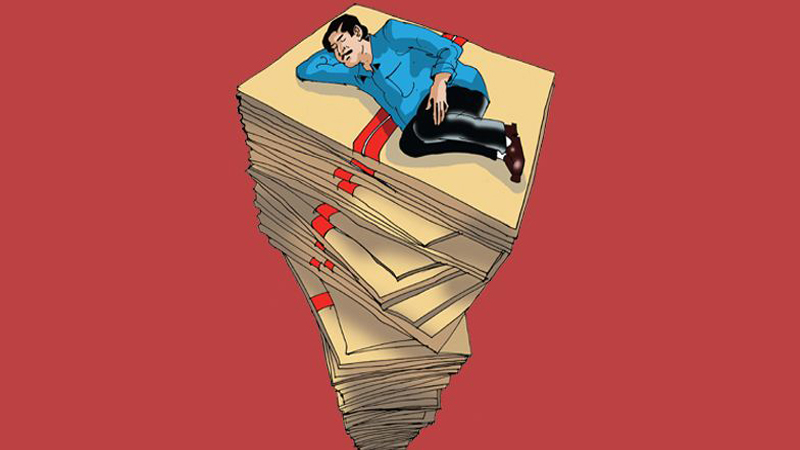
Pakistan’s bureaucratic apparatus is characterized by excessive red tape, siloed departments, and outdated rules of business. Regulatory approvals, even for routine matters, often span months—sometimes years—due to archaic protocols and overlapping jurisdictions. According to the World Bank’s Ease of Doing Business Index (2020), Pakistan ranked 108th, with regulatory inefficiency identified as a key barrier.
You May Like To Read: Manufacturing Hate: The Digital Blueprint for Afghan Deportations
This dysfunction has real economic consequences. Multinational corporations report delays in project clearances, land acquisition, and license approvals. Domestic entrepreneurs face similar hurdles, which leads to capital flight, underinvestment, and missed opportunities in sectors like renewable energy, tech innovation, and manufacturing.
Frequent Policy Reversals: A Recipe for Instability
Policy inconsistency has become a hallmark of Pakistan’s governance. Changes in tax regimes, import-export policies, or investment incentives are common with each political change. This not only disorients stakeholders but creates an unpredictable business climate.
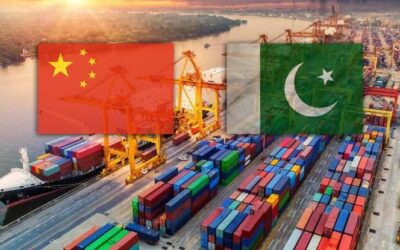
For example, the CPEC Special Economic Zones (SEZs) faced repeated delays and shifting priorities under successive governments. This inconsistency strained relations with China and undermined investor expectations around long-term returns.
“Pakistan cannot hope to attract long-term FDI while regulatory frameworks change every 2 years. Investors seek predictability, not chaos.” — @shazbkhanzdaGEO, 2024
Administrative Capture and Political Interference
Beyond inefficiency, the bureaucracy is increasingly seen as being subject to political capture. Promotions, postings, and even tenures are frequently influenced by partisan interests, diluting meritocracy and disincentivizing professional integrity.
A Transparency International Pakistan report (2023) warned of a “decline in bureaucratic neutrality,” highlighting how civil servants often face retribution or forced transfers when perceived as not aligning with the ruling party’s narrative. Such politicization further erodes trust in institutions and contributes to a governance model driven more by survival than strategy.
Reform Attempts and Missed Opportunities
Several reform attempts—most notably the Civil Service Reforms endeavoured by various governments—sought to restructure service rules, performance evaluation, and recruitment standards. However, the implementation remained patchy due to inter-departmental resistance, lack of political consensus, and judicial interventions.
Even digital governance tools such as e-filing systems and NADRA integration in public services have faced setbacks due to limited adoption by bureaucrats unwilling to relinquish discretionary power.
You May Like To Read: The Economic Roots of Rising Crime: Desperation, Inflation, and Livelihoods
The Strategic Consequences
The strategic cost of bureaucratic instability is often underappreciated. Without reliable governance, Pakistan struggles to maintain momentum on long-term goals—be it climate adaptation, educational reform, or defense modernization. Additionally, donors and international development agencies find it increasingly difficult to engage with a state apparatus that lacks continuity and strategic coherence.
As the global investment environment becomes more competitive, Pakistan’s governance architecture needs more than electoral legitimacy—it needs institutional maturity.
Bureaucratic inefficiency and policy reversals are not merely internal management failures; they are structural weaknesses that perpetuate instability. For Pakistan to break free from its cycles of economic and political uncertainty, reforming its bureaucratic machinery is not optional—it is existential.