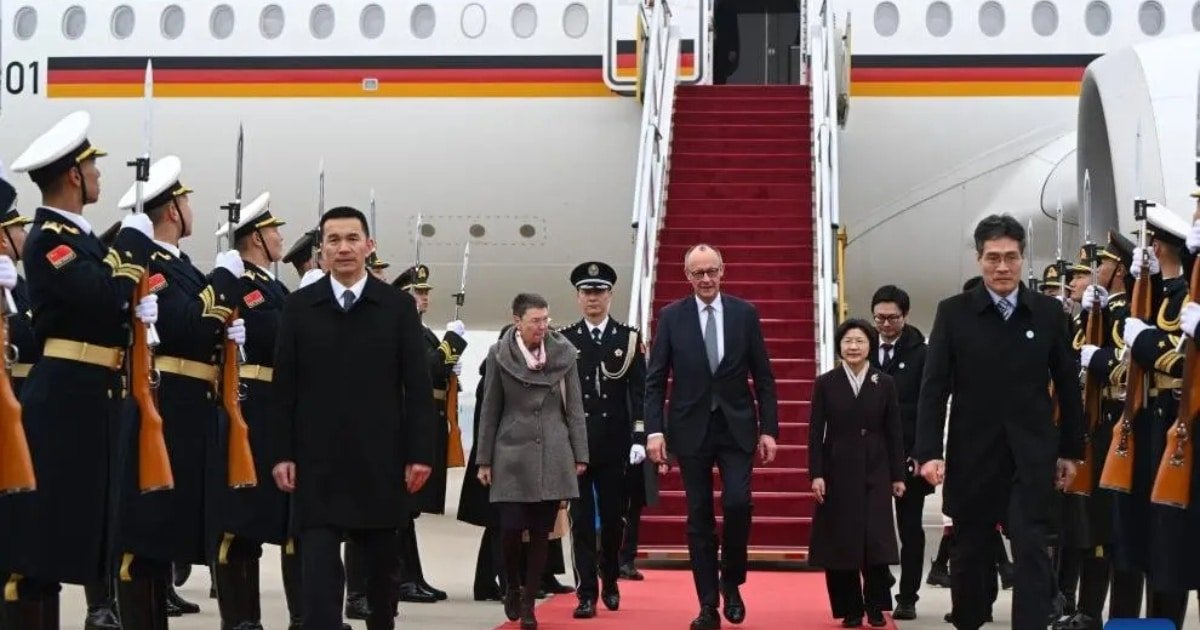





German Chancellor Friedrich Merz touched down in Beijing today for his inaugural state visit, carrying a clear mandate to address a “stark and worrying” trade imbalance that is eroding the foundation of Europe’s largest economy. As China supplants the United States as Germany’s top trading partner for 2025, the Chancellor faces intense pressure from domestic industry leaders to secure “balanced, reliable, and fair” competitive conditions.
China and Germany want to deepen cooperation, German Chancellor Friedrich Merz and Chinese Premier Li Qiang said in Beijing, as Merz began a visit aimed at resetting ties against the backdrop of a widening trade imbalance https://t.co/SRChYornDw
— Reuters (@Reuters) February 25, 2026
The “China Shock” by the Numbers
Newly released federal statistics for 2025 reveal a widening chasm in the bilateral economic relationship:
-
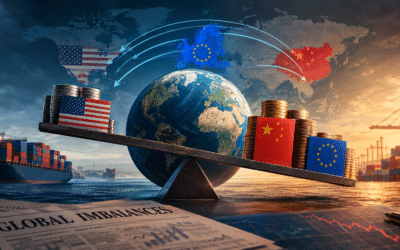
The Deficit: Germany’s trade gap with China has surged, with imports from China reaching €170.6 billion (an 8.8% increase) while German exports plummeted by 9.7% to €81.3 billion.
-
Industrial Erosion: Experts at the German Economic Institute (IW) warn that massive Chinese subsidies and currency undervaluation are hollow out the “core” of German industry—specifically the automotive, machinery, and chemical sectors.
-
The EV Threat: Germany’s once-dominant car industry is currently shedding jobs as it struggles with the transition to electric vehicles, a sector currently dominated by low-cost Chinese imports fueled by domestic manufacturing overcapacity.
Strategic Objectives: Trade, Tensions, and Ukraine
Chancellor Merz, accompanied by a high-powered business delegation, is expected to pivot between economic grievances and geopolitical exigencies:
-
Leveling the Playing Field: Merz will address “distortions” in competition and push for the relaxation of export controls on critical rare earths, which are vital for Germany’s green energy transition.
-
The “Two-Front” Trade War: With U.S. President Donald Trump escalating tariff policies against Europe, Merz is navigating a precarious path. “No one in Europe wants a two-front trade war with the world’s two superpowers,” noted analysts from the German Marshall Fund.
-
Leverage on Moscow: The Chancellor is slated to press Beijing to utilize its influence with the Kremlin to bring an end to the war in Ukraine, framing regional stability as a prerequisite for continued economic cooperation.
From “Change Through Trade” to “De-Risking”
The visit marks a formal departure from the era of former Chancellor Angela Merkel. While Merz has dismissed the idea of “decoupling”—calling it a strategic mistake—he has doubled down on a policy of “de-risking.”
-
The French Divide: Within the EU, Merz faces a split; while France pushes a more protectionist agenda, Germany remains skeptical of broad tariffs, preferring targeted anti-dumping cases and a “floating exchange rate” dialogue.
-
Restoring Fairness: The Federation of German Industries (BDI) and the German Engineering Federation (VDMA) have urged the Chancellor to send a “clear signal” that Europe will act to restore fair competitive conditions if Beijing does not address its subsidy-driven price advantages.
You May Like To Read: Pakistan Senate Unanimously Condemns Netanyahu’s Vision of a New Geopolitical Axis
Check out our latest video: