




Navigating the complex landscape of great power rivalry between the United States and China is the central challenge for Pakistan’s foreign policy. As its all-weather strategic partner, China has become a vital economic lifeline, particularly through the China-Pakistan Economic Corridor (CPEC).
Simultaneously, Pakistan is working to redefine and stabilize its historically volatile relationship with the U.S., especially under a new administration. This balancing act is not a zero-sum game but rather a high-stakes effort to leverage both relationships for national interests. It aims to secure much-needed investment and diplomatic support while avoiding being forced to choose sides, a decision that could have severe economic and security consequences.
You May Like To Read: Escalation Across Distances: Israel’s Strike on Sanaa, and the Widening War
The Pillar of the Dragon: China, and CPEC
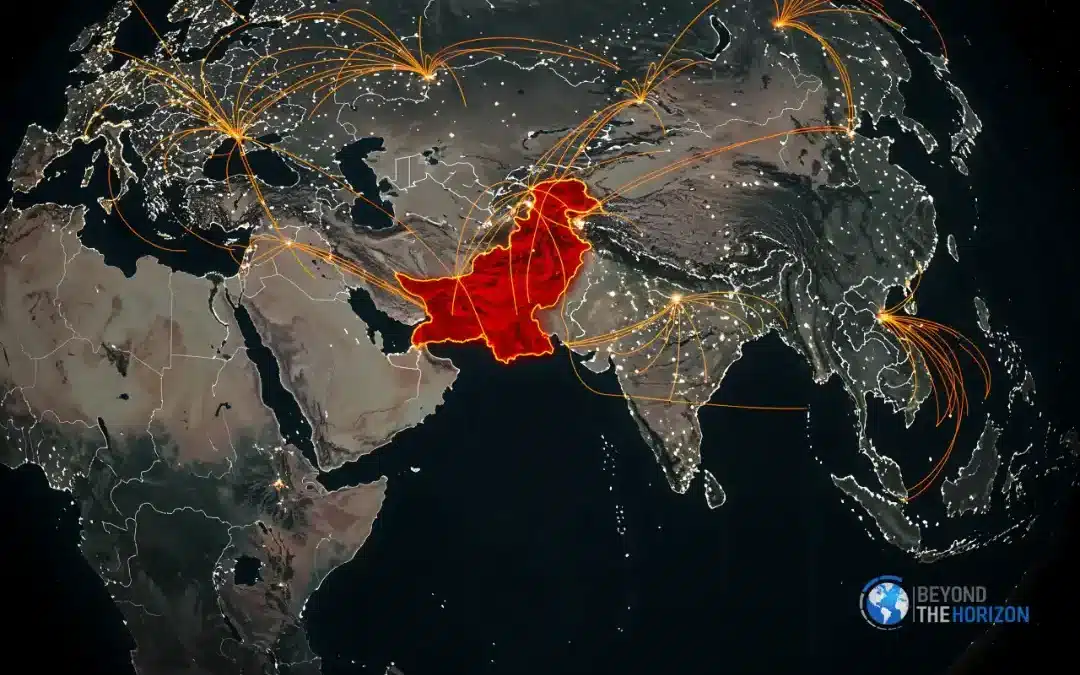
The China-Pakistan Economic Corridor (CPEC) stands as the most visible manifestation of the deep strategic partnership between Beijing and Islamabad. As a flagship project of China’s Belt and Road Initiative (BRI), CPEC has seen China invest billions of dollars in Pakistan’s infrastructure, including power plants, highways, railways, and the strategic Gwadar Port. For Pakistan, CPEC is an economic lifeline that has helped alleviate chronic energy shortages and improve connectivity. The recent launch of CPEC Phase II, which is set to expand cooperation into new sectors like agriculture, mining, and green energy, underscores the deepening of this relationship.
For China, CPEC provides a crucial overland trade route to the Arabian Sea, bypassing the Strait of Malacca and enhancing its energy security. The project is a cornerstone of China’s regional strategy, designed to foster economic interdependence and project its influence. However, this partnership is not without its challenges. Security risks, with frequent attacks on Chinese personnel, and concerns over Pakistan’s growing debt burden have created complexities. Nonetheless, China’s commitment remains firm, viewing Pakistan as an indispensable partner in its broader regional ambitions.
A New Chapter with a New Administration: Redefining U.S. Relations
Pakistan’s relationship with the United States has often been transactional, shifting from a Cold War alliance to a partnership in the “War on Terror,” and then to a period of estrangement, particularly following the U.S. withdrawal from Afghanistan. With a new U.S. administration, Pakistan is actively seeking to recalibrate this relationship, moving beyond a narrow security focus.
The U.S. is now showing renewed interest in Pakistan, driven by two key factors: a desire to counter China’s growing influence and a strategic interest in Pakistan’s untapped reserves of rare earth minerals. These minerals are vital for green technologies and defense industries, and the U.S. is seeking to diversify its supply chains away from China. This has led to a recent surge in high-level engagements, including a visit by a senior Pakistani military official to the White House. This renewed interest, however, remains largely transactional. The U.S. is offering access to its markets and potential high-tech investments, but it has not committed to the long-term, comprehensive partnership that China offers.
The Balancing Act: Challenges, and Opportunities
Pakistan’s foreign policy is now a delicate balancing act. On one hand, it cannot afford to alienate China, its most reliable strategic ally and largest source of investment. The success of CPEC is intertwined with Pakistan’s own economic future, and the partnership provides crucial diplomatic backing, especially on issues like Kashmir. On the other hand, Pakistan needs to maintain a working relationship with the U.S. for access to Western financial institutions, global markets, and diplomatic leverage. The U.S remains Pakistan’s largest export market, and its support is essential for securing loans from international bodies like the IMF.
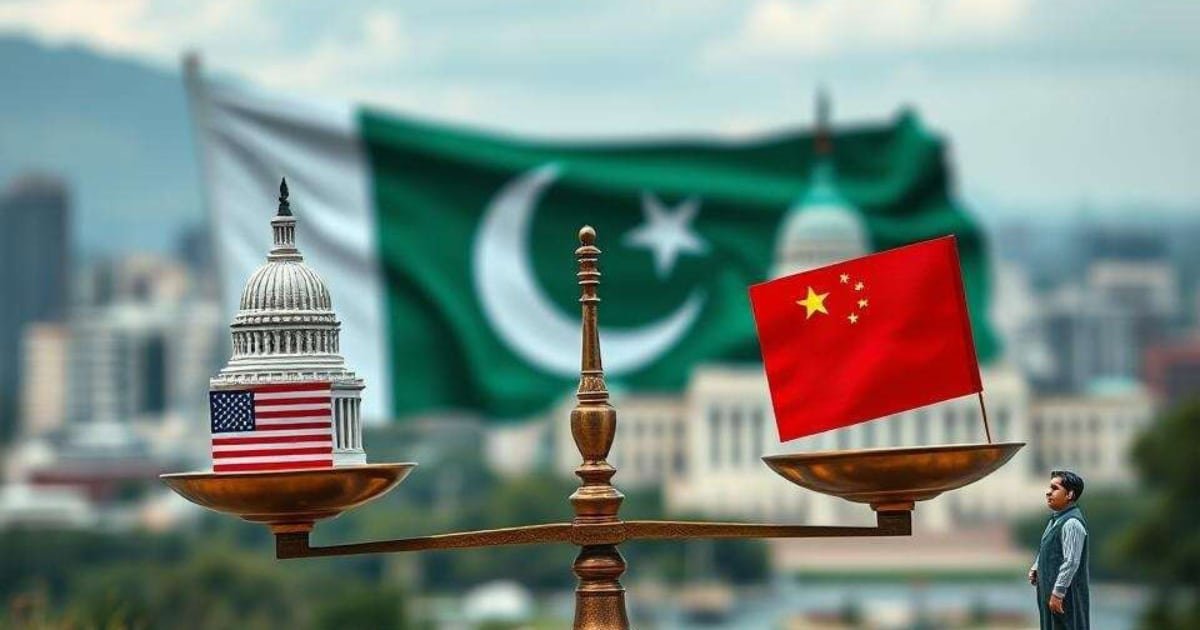
The primary challenge is to manage the expectations of both superpowers. The U.S. wants Pakistan to limit its engagement with China, while China expects unwavering support for its regional and global initiatives. Pakistan’s strategy is to avoid taking sides and to frame its foreign policy as a non-zero-sum game.
Pakistani officials have publicly stated that their relationship with the U.S. will not come at the expense of their partnership with China. This “hedging strategy” seeks to turn the great power rivalry into a source of opportunity, leveraging each relationship to secure its own interests. The risk, however, is that this strategy could backfire, leaving Pakistan vulnerable to pressure from both sides if a more direct confrontation between the U.S. and China were to occur.
This new geopolitical reality compels Pakistan to adopt a more pragmatic and economically focused foreign policy, prioritizing its own development and stability while navigating the complexities of a bipolar world.
You May Like To Read: Global Outrage After Israeli Strike on Gaza’s Nasser Hospital Kills 20, Including Five Journalists