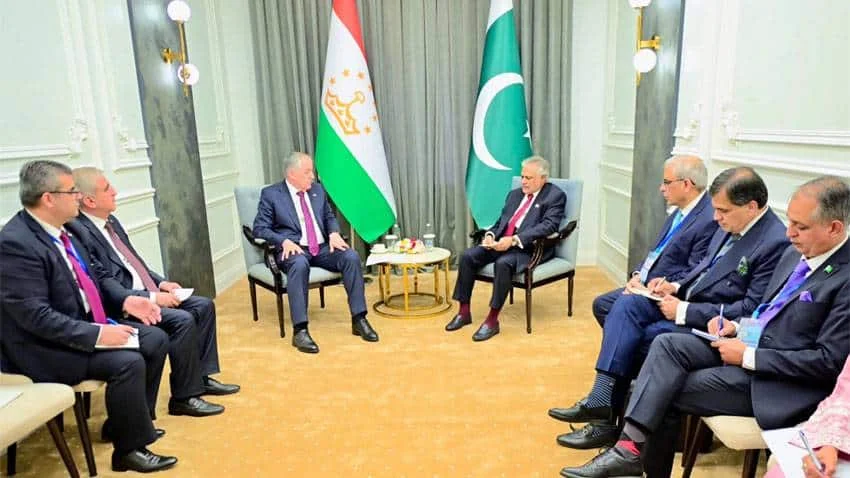




Pakistan and Tajikistan reaffirmed their commitment to deepening bilateral cooperation across trade, investment, energy, regional connectivity, and cultural exchange during a high-level meeting in Cholpon-Ata, Kyrgyzstan.
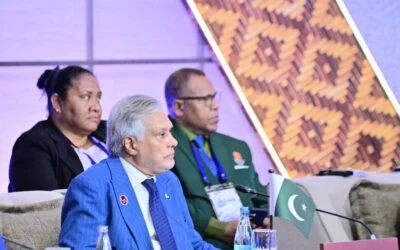
The bilateral engagement took place on the sidelines of the Shanghai Cooperation Organisation (SCO) Council of Foreign Ministers (CFM) meeting, where Pakistan’s Deputy Prime Minister and Foreign Minister Senator Mohammad Ishaq Dar met with Tajik Foreign Minister Sirojiddin Muhriddin. Both leaders underscored the strategic necessity of sustained high-level contacts to strengthen long-standing brotherly ties between Islamabad and Dushanbe.
Expanding Bilateral and Multilateral Horizons
The talks focused on transforming historical goodwill into concrete economic and regional security collaboration:
-
Pillars of Engagement: Both foreign ministers pledged to expand institutional ties across six priority sectors—trade, direct investment, transport connectivity, energy projects, cultural promotion, and people-to-people exchanges.
-
Endorsement of Regional Stability Efforts: Foreign Minister Sirojiddin Muhriddin expressed Tajikistan’s support for Pakistan’s ongoing diplomatic initiatives aimed at promoting regional peace, counter-terrorism, and the peaceful resolution of regional disputes.
-
Multilateral Coordination: The two sides exchanged views on pressing global and Eurasian security developments, stressing the importance of close coordination at multilateral bodies—such as the SCO and the United Nations—to advance regional stability and economic integration.
-
Sustained Engagement Mechanism: The leaders highlighted the need for regular institutional exchanges, high-level visits, and B2B linkages to capitalize on emerging trade and transit opportunities connecting South and Central Asia.
Strategic Analysis: The Geopolitical Calculus of Pakistan-Tajikistan Ties
The meeting between Dar and Muhriddin in Cholpon-Ata carries significant geopolitical and economic implications for the South-Central Asian nexus:
Operationalizing South-Central Asian Energy and Connectivity
As Pakistan seeks to diversify its energy supply and position itself as a transit hub, Tajikistan serves as a critical gateway to Central Asia. A primary pillar of this relationship is energy architecture—most notably the CASA-1000 project, designed to transmit surplus hydroelectric power from Tajikistan and the Kyrgyz Republic to South Asia. Reaffirming cooperation in energy and infrastructure signals both nations’ resolve to overcome regional security hurdles and complete cross-border energy corridors.
Shared Security Imperatives Regarding Afghanistan
Positioned directly on Afghanistan’s northern and eastern borders, both Tajikistan and Pakistan face immediate security spillover risks from cross-border militancy, drug trafficking, and regional instability. While Islamabad and Dushanbe have historically held distinct diplomatic approaches toward Kabul, their shared vulnerability makes bilateral intelligence and diplomatic synchronization essential. Tajikistan’s explicit backing of Pakistan’s regional peace efforts demonstrates a growing consensus among neighboring states that permanent Eurasian stability requires a unified, non-zero-sum approach to counter-terrorism.
SCO Leadership Transition and Eurasian Integration
With Pakistan preparing to assume the Chair of the SCO for 2026–2027, securing strong bilateral buy-in from Central Asian republics like Tajikistan is vital for Islamabad’s leadership agenda. By anchoring its SCO priorities in trade, energy transit, and regional connectivity, Pakistan is reinforcing its position as a bridge connecting Central Asian landlocked economies to maritime export outlets via Arabian Sea ports.