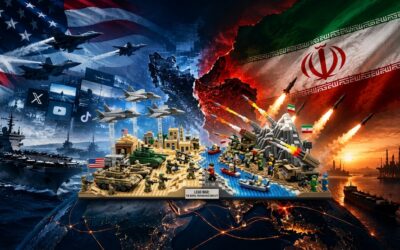
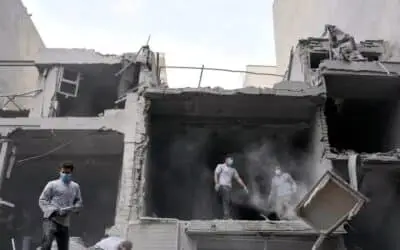
The world seems engulfed in chaos. Trade wars, shifting alliances, and disregard for international law define the geopolitical landscape. United States and Israel preemptively attacked Iran; Tehran retaliated; what unfolded was global energy supply disruptions, skyrocketing energy costs, loss of human lives, instability, and an ensuing conflict—which remains unresolved to date. This is just one example. Foreign policy analysts call it the New Normal of Disorder.
What makes this situation worse is that it is not a phase that will pass in a year and then settle down. One may wish it was the case, but international experts opine that the current global instability, from Washington to Beijing to Gaza, is now becoming the new norm, or the permanent operating condition of world politics. Temporariness is out of the question; perhaps this is the new normal, or the New World Disorder, deviating from the previously established New World Order.
This article attempts to break down what the old world is dismantling, what its replacement is, and how it concerns everyone, not just diplomats, generals, and think tanks.
What Does “New Normal of Disorder” Mean?
Since the end of World War II, global politics has operated with predictability for 75 years. The powerful countries worked through shared institutions like the United Nations, the World Trade Organization, and multilateral alliances like NATO. Even in disagreement, international law was respected.
Now the system is cracking. According to analysts, this era is defined by major structural differences, with instability as the baseline. The world shifted from a bipolar to a multipolar order, with new rising powers and numerous middle powers. No single country is the hegemon now; old rulebooks are being ignored, and the new power centers are competing to write the rulebooks to govern the world.
The five major factors contributing to the shifting world order are analyzed below.
New Battleground: Geopolitics and Geoeconomics
Today, armies, violence, tanks, and aircraft do not drive instability alone; technology, trade, and economic leverage supplement them. Regions like the Indo-Pacific, the Middle East, North America, and Africa have become the arenas of contention between major powers. Geopolitical rivalries play out through tariffs, chip export bans, sanctions, supply chain battles, and even proxy wars, but not through confrontation or open war.
The most prominent example of the tech-trade rivalry is between the United States and China, and their allies, of course. The US-led Western allies are competing with the loosely referred-to coalition of CIRN—China, Iran, Russia, North Korea. This CIRN is not a formal alliance but a group of countries with ideological affinity and a dislike of Western economic and technological dominance.
The question arises: how does this concern a layperson? The answer is simple: when countries form blocs and fight through trade and technology instead of diplomacy, ordinary businesses, supply chains, and consumers suffer; they absorb the shock in the form of higher prices, disrupted industries, and market volatility.
Dismantling of the Old Order
It is normal for one era of history to end and another to begin. However, under current circumstances, the transition is not smooth; it is instead a structural collapse. The international multilateral organizations—the United Nations, the UN Security Council, the Bretton Woods Financial System—that anchored the world through the Cold War are now losing credibility and influence. There is an evident breakdown of trust in the unified global system. As a result, a power vacuum has emerged, and no one has stepped in to fill it or provide a replacement for the crumbling order.
The rising countries and middle powers are building their own parallel institutions, regional banks, alternative payment systems, and trade blocs, reflecting different ideologies, values, and priorities rather than unthinkingly following the global consensus. This shift stems from concerns that global institutions can no longer protect smaller countries’ interests against major powers.
Cracking Multilateralism
Multilateralism means different countries working together through shared institutions. However, this trend is breaking down and being replaced by two rising trends.
Unilateralism
Major powers once championed international laws, global order, and shared rules; however, they now act in complete disregard of the rules they once championed. Powerful countries do not relent from sidelining bodies like the UN Security Council. United States and Russia, in complete disregard of international laws and conventions, attacked and violated the sovereignty of nations like Iran and Ukraine, respectively.
Mini-lateralism
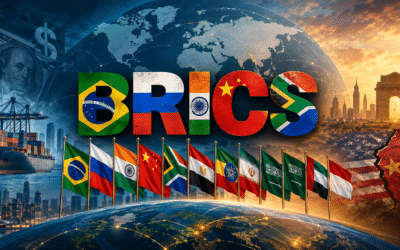
Mini-lateralism is on the rise. Countries are now forming exclusive blocs for trade, tech, and security rather than joining or creating inclusive global cooperation advancing their shared narrow interests—which do not necessarily align with the world. Alliances like AUKUS—Australia, UK, US—QUAD—US, Japan, Australia, India—and even BRICS—Brazil, Russia, India, China, South Africa—are perfect examples of powerful, selective, issue-specific alliances formed between nations with similar goals and ideologies.
Similarly, countries are signing security cooperation agreements amid rising violence and global security volatility. The Makkah Joint Defense Agreement—formed by the Kingdom of Saudi Arabia, Pakistan, Turkiye—is one such example. Ironically, the rise of new powers like China proves multilateralism still matters; however, it operates on very different, more contested terms than before.

Disregard for International Law
The most unsettling reality of the prevailing disorder is the blatant disregard of international law by the powerful states. Analysts point to Gaza, Iran, and the Middle East region to elucidate how military force, violence, and human losses are unfolding despite an existing international legal framework. The underlying message is simple: the rules apply to everyone except the strong, or, in the words of George Orwell from his famous novel Animal Farm, “All animals are equal, but some animals are more equal than others.”

Animal Farm by George Orwell written in 1945 is a satirical, allegorical, dystopian novella. Mistreated animals at the Manor rebel against their master to create a utopian society.
The precedent that major powers have set, “might makes right,” does not only affect the countries that are being subjected to mistreatment. It also erodes global trust in international law and institutions. Under such circumstances, the possibility of de-escalating a conflict peacefully diminishes; the countries no longer believe in the institutions that once stood for peace and justice.
Diplomacy After Damage
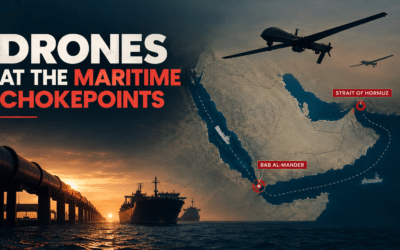
Historically, diplomacy was supposed to be preventive; negotiations took place to prevent conflict and violence. Now it is the opposite: negotiations follow attacks. Diplomats engage after the conflict has already erupted and escalated. Diplomats now negotiate against the backdrop of missiles and threats. Consider the conflict between the United States and Iran. Tehran was attacked first, and months later the conflicting parties started negotiating for a peaceful settlement in Islamabad. Even the Islamabad Memorandum of Understanding was signed after a series of delays caused by continued attacks on Iran, conflict in the Strait of Hormuz, and threats issued by US President Donald Trump on social media platforms.
Destruction now precedes diplomacy. Unfortunately, diplomacy comes into play when the human and material costs have become undeniable, and in some cases they continue even after the conflicts are resolved—refer to the situation in Gaza, where Israel continues to bomb despite the resolution of the conflict through the creation of the Board of Peace. The “react first, talk later” approach, or reactive diplomacy, has made the world more dangerous. The small conflicts are not stopped until they become major crises.
Bottom Line
This article does not intend to initiate an abstract debate in the diplomatic or policy discourse. The impacts of the ensuing “global disorder” make every individual and collective vulnerable. Tariff wars and sanctions inflate the costs of everyday goods and harm industrial production. Smaller countries become battlegrounds for major powers; maintaining neutrality and forming alliances becomes a weakness rather than a strength. Businesses, investors, and individuals planning to travel, build careers, or expand businesses must account for geopolitical risks. Understanding and adapting to geopolitical shifts is not optional; it is an imperative, which is why countries need to proactively reshape their economic policy, foreign relations, and regional security choices. All of these factors compound and give rise to polarity, which has never proved beneficial for global peace.
The new normal, or the prevailing global disorder, is not a rough patch; it is now unfolding into a long-term structural condition. The dismantling of the multilateral framework piece by piece prophesies a world with no international law, selective enforcement of laws, and chaos. Global leaders must now decide whether to build a more stable system or let the chaos continue until it engulfs the globe and a new order takes hold.
FAQs
Q1: What does “the new normal of disorder” mean?
It refers to global instability, fractured alliances, disregard for international law, and weakened United Nations institutions.
Q2: What is Mini-lateralism?
Countries are forming exclusive blocs for trade, tech, and security rather than joining or creating inclusive global cooperation that advances their narrow, self-interested agendas.
Q3: What is the CIRN coalition?
CIRN—China, Iran, Russia, North Korea—is not a formal alliance but a group of countries with ideological affinity and a shared opposition to Western economic and technological dominance.
Q4: Why is multilateralism declining?
Multilateralism is breaking down because: First, major powers are acting in complete disregard of the rules they once championed. Powerful countries refuse to stop sidelining bodies like the UN Security Council. Second, countries are now forming exclusive blocs for trade, tech, and security rather than joining or creating inclusive global cooperation that advances their shared narrow interests.