Development of Pakistan-China Defense
Strong defense ties have characterised the relations between Pakistan and China for decades, based on strategic interests and trust. They have been cooperating since the 1960s, although that has intensified in the past few years because of the changing regional dynamics and increasing geopolitical volatility. The two countries have, over the years, increased their military cooperation at land, sea, and air levels.
The most prominent example was the annual series of joint air exercises, the Shaheen, which started in 2011 and has since become a staple in bilateral defence cooperation. These collaborative efforts are aimed at enhancing the coordination of combat, training of pilots, and technical interoperability between the Pakistan Air Force (PAF) and the People’s Liberation Army Air Force (PLAAF) of China.
Pakistan and China also carry out joint naval and counterterrorism drills, besides air drills, a sign of an all-inclusive security cooperation. Institutional cooperation has also been enhanced by regular defense dialogue, most recently the Pakistan-China Strategic Dialogue in Beijing in July 2023, which focuses on areas of intelligence sharing, defense production, and strategic planning. By the middle of 2025, this defense relationship remains in a state of expansion, as both nations reiterate their devotion to peace, stability, and mutual military readiness of the region.
Shaheen-XI Exercise: Increasing Cooperation and Combat Preparedness
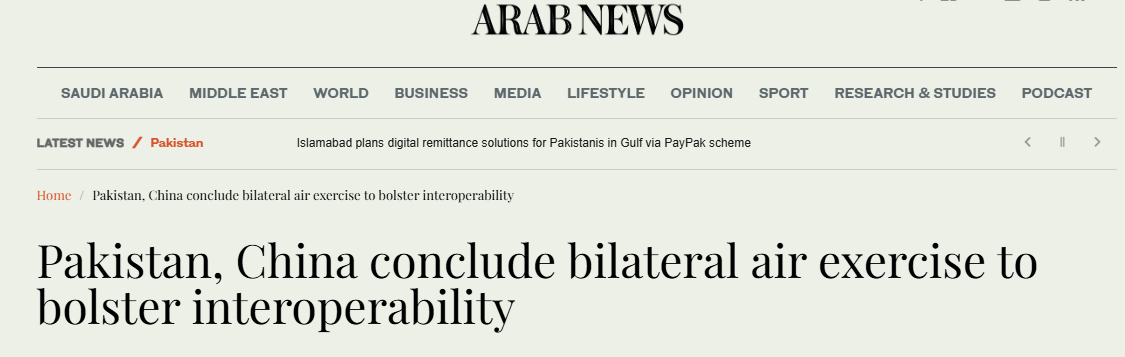
A new phase of Pakistan-China military cooperation was reached with the Shaheen-XI joint air exercise in November 2024 at a forward airbase in Pakistan. The drill involved the latest aircraft, such as JF-17 Thunder, J-10C, AWACS systems, and was designed to simulate actual combat operations, such as dogfights, precision attacks, nighttime operations, and electronic warfare.
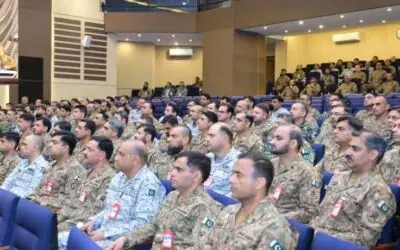
Source: Arab News
The exercises gave both air forces a chance to train in complex environments in which they practiced, combined planning of missions, communication, and response to threats. The official sources said the drill was intended to enhance preparedness and coordination in the conditions of a high-stress battlefield.
More to the point, Shaheen-XI was crucial in the improvement of the interoperability of operations between the Pakistan Air Force (PAF) and the People’s Liberation Army Air Force (PLAAF) of China. On the one hand, pilots and crews trained together and learned how to perform combined operations with synchronized command-and-control systems. This involved radar evasion training, combined air patrols, and multi-role strike coordination.
Furthermore, this kind of interoperability, demonstrated by Pakistan-China, will enable both air forces to be able to support each other in real scenarios. In the case of the PAF, it also implies borrowing the combat tactics of the Chinese and incorporating the lessons in training and strategies. The ability to combine forces in these experiences is not only creating capability, but also trust and strategic alignment between the two forces.
Exposure to Technology and Development
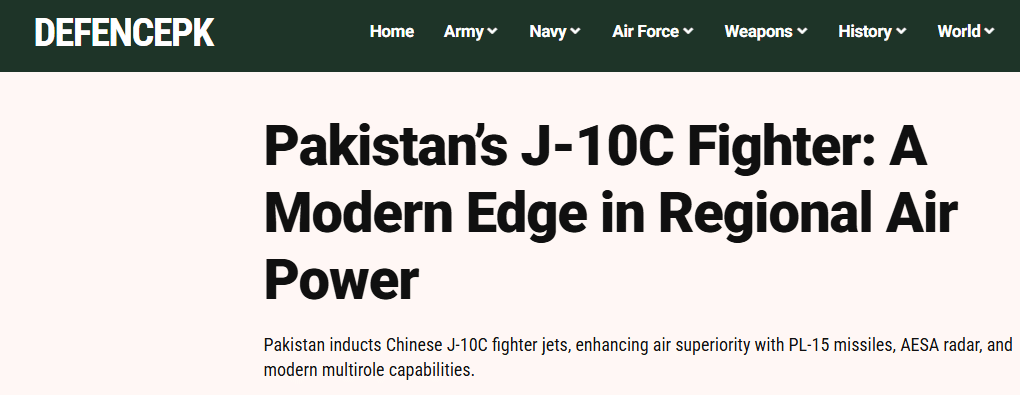
Among the key benefits that Pakistan will receive due to joint air exercises with China, access to the latest technology and modern warfare strategies deserves to be mentioned. Pakistan pilots also train with Chinese aircraft, such as the J-10C, which has advanced avionics, AESA radar, and precision strike capability, during exercises, such as the Shaheen-XI.
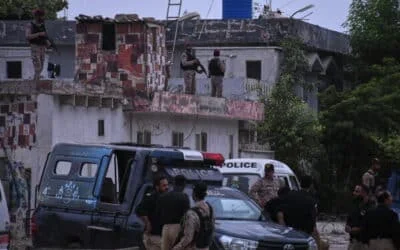
Source: Defence.pk
Such exposure can enable the Pakistan Air Force (PAF) to gain experience on the use of state-of-the-art systems and integration into combined operations as experienced by China. It also empowers Pakistan in terms of electronic warfare, surveillance, and drone activity, which are gaining importance in contemporary conflicts.
The modernization of Pakistan’s air power, more notably the JF-17 Thunder program, co-developed with China, is also assisted by these joint exercises. The real-time combat simulation provides lessons that assist in the design, system integration, and performance enhancements of the newer versions of JF-17, like the Block-III, which is now equipped with helmet-mounted displays and enhanced BVR (Beyond Visual Range) missiles.

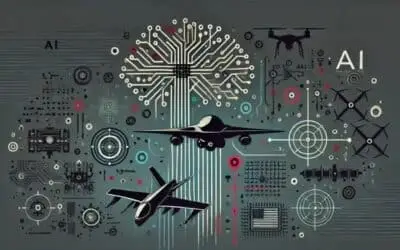
Source: Paradigmshift
Furthermore, it is based on such collaborations that Pakistan is slowly increasing its capacity to deal with network-centric warfare, the employment of integrated systems, data links, and shared intelligence among platforms. This technological learning curve is crucial to operational preparedness in an ever-competitive regional airspace.
Strategic and Geopolitical Effect of Pakistan-China Air Collaboration
The joint air exercises, such as Shaheen-XI, is not only a training exercise; it also conveys a strategic message to the region. With the tensions still high with India and with the U.S. growing defense relationship with New Delhi, the increasing military relationship between Pakistan and China serves as a counterbalance. The joint exercises aid in strengthening credible minimum deterrence of Pakistan, as it demonstrates Pakistan-China have the capabilities and skills to deter any airborne threats. The coordination is also beneficial in regional stability through preparedness and discouraging unilateral aggression.
Meanwhile, these practices reinforce diplomatic relations. Military collaboration enhances confidence between the two nations, aligning with other wide-ranging initiatives such as CPEC, where security is the primary priority. Through frequent bilateral exercises, Pakistan and China are strengthening their institutional relationship, which can extend in the future to joint production and technology transfer.
Other regional powers are also concerned with this partnership, as they consider this to be an indication of the deepening Sino-Pak strategic convergence. In the case of Pakistan, it improves defense capacity and enhanced support in a complicated geopolitical setting.