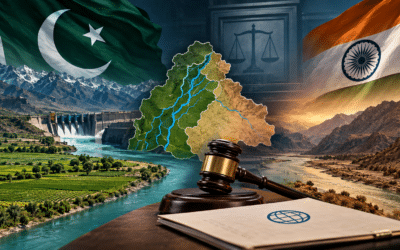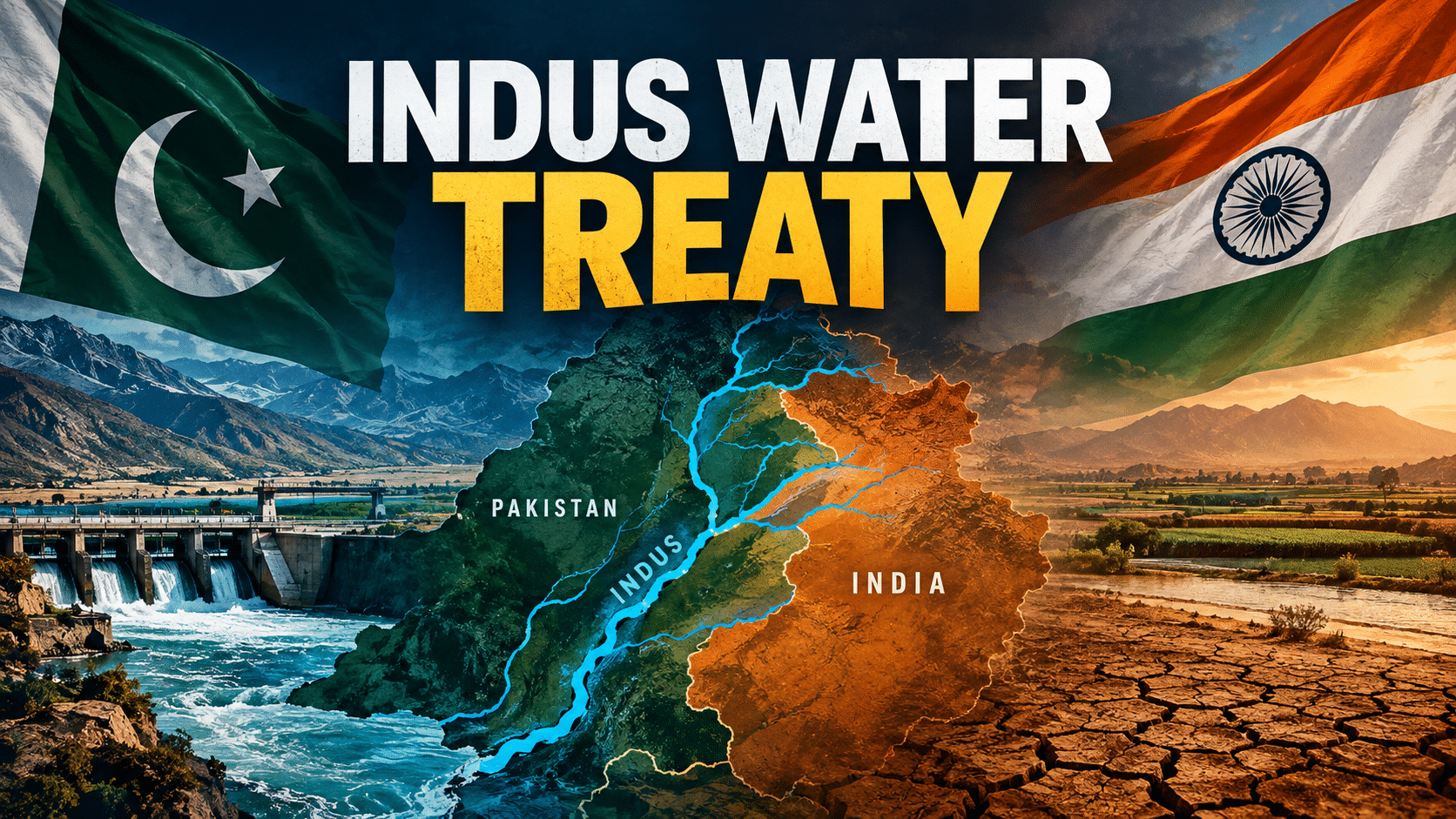





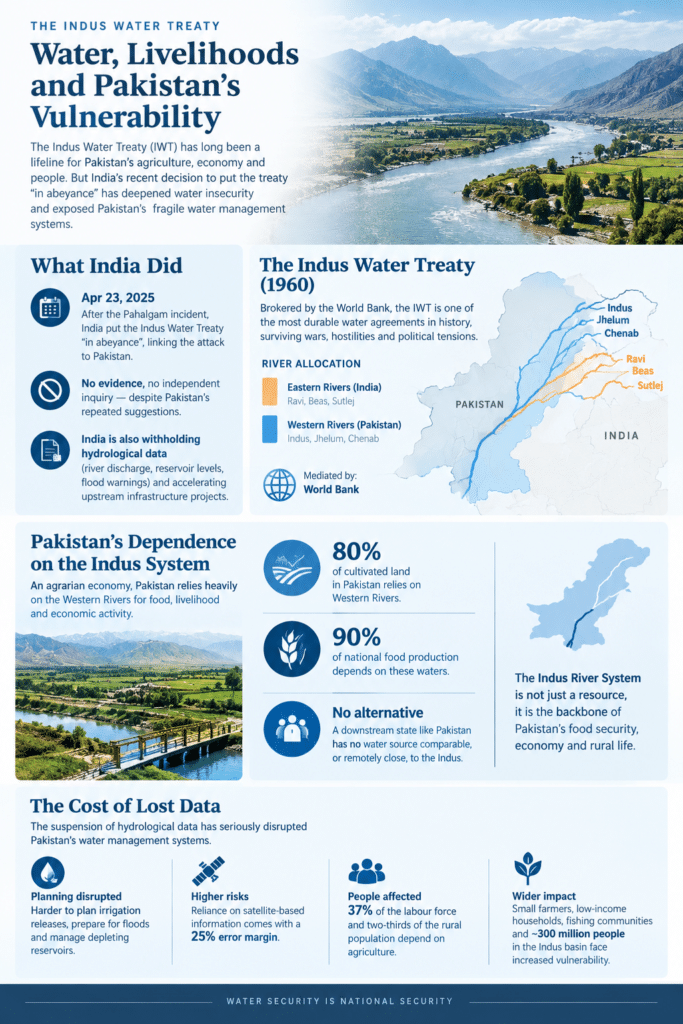
The Indus Water Treaty, brokered by the World Bank in 1960, is one of the most durable frameworks between India and Pakistan, having endured wars, military hostilities, and periods of political tension. As per the Indus Water Treaty, the Eastern Rivers were allocated to India, while the Western Rivers were allocated to Pakistan. After the occurrence of the Pahalgam incident on April 23, 2025, India put the treaty “in abeyance,” linking the terrorist attack with Pakistan. However, India provided no evidence and did not conduct an independent inquiry, despite Pakistan’s repeated suggestions.
India’s decision to unilaterally suspend the treaty departs from the practice of maintaining water cooperation despite security disputes. India cannot immediately stop the flow of western rivers to Pakistan, but it can suspend the sharing of hydrological data. The data is used for flood warning, irrigation planning, and so forth. India is coupling IWT cooperation with political demands while accelerating upstream infrastructure construction. Although Pakistan’s water crisis is long-standing, the abeyance of IWT has added pressure on Pakistan while exposing its fragile system to strategic risks.
Water and Civilizations
Waters have historically cradled ancient civilizations. The Indus Valley Civilization (c. 3300–1300 BCE) settled along the Indus and the Ghaggar-Hakra Rivers; they even developed a sophisticated, indigenous canal irrigation and drainage system. Mesopotamia, which literally means “Land Between Rivers,” was settled between the two rivers, i.e., the Euphrates and the Tigris. Ancient Egyptian Civilization flourished along the River Nile and was later known as “the gift of the Nile,” in the words of ancient historian Herodotus. Similarly, the Chinese Civilization flourished along the Yellow River and Yangtze River.
The above discussion makes it clear that the relationship between water and civilizations is deep; the latter depends on the former. Contemporarily, half of the world’s population lives within 3 kilometers of freshwater bodies; meanwhile, the rest lives within 50 kilometers. According to a report from the UN Food and Agriculture Organization (FAO), agriculture uses 70% of global freshwater. Agrarian economies like Pakistan rely predominantly on river-fed irrigation networks to sustain agricultural output. Therefore, the adverse implications of IWT’s abeyance on Pakistan’s agriculture sector and water management systems become clearer.
How Pakistan’s Agriculture Sector and Water Management Suffer?
Pakistan, an Agrarian economy, relies predominantly on the Indus System for food production, rural livelihood, and economic activity. Statistically, 80% of cultivated land in Pakistan relies on Western Rivers; 90% of national food production does as well. Pakistan relies heavily on these waters; under such circumstances, a downstream state like Pakistan has no alternative water source comparable to, or even remotely close to, the Indus.
Pakistan’s water management systems also suffer from the IWT’s abeyance. The suspension of hydrological data—river discharge, reservoir levels, and flood warnings—sharing has impaired Pakistan’s institutions’ ability to plan irrigation releases, prepare for floods, and manage the depleting water reservoir. Water managers rely on satellite-based information with a 25% error margin, increasing water management risks. As a result, the livelihoods of 37% of the labor force and two-thirds of the rural population that depend on agriculture become vulnerable.
In simple terms, this could burden small farmers, low-income households, fishing communities, and individuals in the Indus basin who depend on it for sustenance—about 300 million people. Climate vulnerability makes this predicament even more acute. Melting glaciers, cloudbursts, and erratic river flows already cause considerable damage.
Pakistan and India’s Legal and Diplomatic Position
Islamabad’s diplomatic and legal position is straightforward; it rests its case on the following arguments;
- Indus Water Treaty has no provision allowing unilateral suspension or abeyance.
- The treaty can only be modified or terminated through a duly ratified agreement between both stakeholders, i.e., Pakistan and India.
- India’s grounds are inadequate to constitute a fundamental change of circumstances under international treaty law.
New Delhi, on the other hand, blames Pakistan for cross-border terrorism and argues that demographic changes and growing energy and irrigation needs justify reassessment of the treaty. India has accelerated the construction of hydropower and canal projects on the western rivers, including the Chenab. Perhaps to expand its control over the shared rivers. Keep in mind the Indus Water Treaty exclusively allocated the Western Rivers to Pakistan.
Permanent Court of Arbitration’s Ruling
The ruling rendered by the Permanent Court of Arbitration is composed of two parts one explains the status of IWT and the other issue interim measures for the stakeholders:
Status of the Indus Water Treaty
The court ruled: First, India’s decision to unilaterally put the treaty in abeyance is not permissible under the treaty or international law. Second, India has no legal authority or justification to terminate or suspend the agreement. Third, New Delhi must fulfill its obligations under the treaty.
Interim Measures
Arbitration Court, agreeing with Pakistan, prohibited India from constructing/concreting the dam wall and power intake structure above specified levels. The restriction will remain in play for 90 days after the decision; meanwhile, a team of Neutral Experts, appointed by the World Bank, will provide the final decisions, expectedly by July 2027. Finally, India will be mandatorily required to report on the construction schedule.
Policy Recommendations
- Pakistan should fund construction of key mega-projects like the Diamer-Bhasha and Mohmand dams to enhance the national storage beyond 30-day capacity. Moreover, Pakistan should build check dams, along with rainwater-harvesting networks and localized storage basins in rural areas, to absorb supply shocks without relying solely on multi-year mega-projects.
- Islamabad should prioritize installing automated, real-time water-flow sensors along the Indus Basin System to eliminate reliance on India. Utilize indigenous satellite monitoring, hydrometeorological radar, and AI-driven predictive modeling to build independent flood, drought, and flow forecasting capabilities.
- Establish a unified authority to oversee cross-provincial water allocation, strategic planning, and crisis management. Implement the 1991 Water Apportionment Accord using real-time telemetry data to reduce inter-provincial trust deficits.
- Modernize canal networks, lining primary and secondary canals to curb the 40% conveyance loss caused by seepage and evaporation. Incentivize farm-level adoption of drip and sprinkler irrigation, laser land leveling, and crop-switching toward less water-intensive agriculture to maximize crop yield per drop.
Conclusion
The Indus Water Treaty is one of the most important agreements brokered by multilateral organizations. Millions of lives depend on both the Eastern and Western Rivers. It is a vital source of sustenance, livelihood, and food security for countries on both sides of the border. A unilateral decision to put the treaty into abeyance is not permissible under international law. The Permanent Court of Arbitration’s ruling supports Pakistan’s position. However, for Islamabad, the ruling alone cannot save it from the hydro-vulnerabilities. Climate change exacerbates the risks posed by water disruption. Multilateral International Organizations, such as the United Nations and the World Bank, should ensure the agreement is implemented in both letter and spirit to sustain regional peace, especially when tensions in the Middle East are already high. Given the rivers’ importance to life, the possibility of another regional conflict between the two nuclear-armed neighbors cannot be ruled out. For context, it must be noted that Pakistan and India engaged in an 88-Hour War in May 2025. Two-thirds of the world’s population lives in South Asia; a full-scale war, over scarce water resources, could trigger a regional catastrophe. Pakistan can secure its water sovereignty through international diplomacy, domestic infrastructure development, autonomous telemetry deployment, modernized irrigation, and unified water governance.
FAQs
What is the Indus Water Treaty?
The Indus Water Treaty, brokered by the World Bank in 1960, is one of the most durable frameworks between India and Pakistan, having endured wars, military hostilities, and periods of political tension. As per the Indus Water Treaty, the Eastern Rivers were allocated to India, while the Western Rivers were allocated to Pakistan.
Is India’s decision to place the Treaty in abeyance justified?
India’s decision to unilaterally suspend the treaty departs from the practice of maintaining water cooperation despite security disputes. India cannot immediately stop the flow of western rivers to Pakistan, but it can suspend the sharing of hydrological data.
What is Pakistan’s Stance on IWT?
Pakistan rests its case on the arguments: Indus Water Treaty has no provision allowing unilateral suspension or abeyance; the treaty can only be modified or terminated through a duly ratified agreement between both stakeholders, i.e., Pakistan and India; India’s grounds are inadequate to constitute a fundamental change of circumstances under international treaty law.