


The recent call by the Insaf Student Federation (ISF) for nationwide road blockades, coupled with the ongoing sit-in by PTI parliamentarians in Islamabad, marks yet another chapter in a recurrent and increasingly disruptive political strategy. While the Pakistan Tehreek-e-Insaf (PTI) frames these actions as a “struggle for human rights,” a closer analysis reveals a pattern of politicizing medical health and utilizing public paralysis as a tool for political leverage.
The Health Narrative vs. Judicial Reality
The core impetus for the current agitation is the reported deterioration of Imran Khan’s eyesight. PTI leaders claim their founder has lost 85% of his vision in his right eye due to state negligence. However, this alarming narrative appears to clash with ongoing legal and medical proceedings:
-
The Supreme Court Intervention: On February 12, 2026, the Supreme Court of Pakistan—led by Chief Justice Yahya Afridi—proactively ordered the formation of an independent medical board to examine Khan’s eyes.
-
State Responsibility: The Attorney General has reaffirmed the state’s duty to provide top-tier medical care, and the government has signaled it will not oppose Khan being treated at a facility of his choice, such as Shifa International Hospital.
-
Evidence Gap: Despite these institutional safeguards, the ISF and PTI parliamentarians have bypassed the judicial process to take the issue to the streets. Critics argue that by framing a sensitive medical condition as a “fault of the state” before the court-ordered medical board can even finalize its findings, the party is prioritizing optics over Khan’s actual recovery.
Pakistan’s Supreme Court has ordered a medical review after a report by a court-appointed lawyer revealed severe vision loss suffered by jailed former PM Imran Khan, after authorities allegedly ignored Khan’s repeated complaints for 3 months.
🔗: https://t.co/wdo86SElXT pic.twitter.com/j1ohFIYRS6
— Al Jazeera English (@AJEnglish) February 13, 2026
Another Day, Another Sit-in: The Toll on Public Life
The strategy of “sit-in politics” (Dharna) has become a predictable, yet deeply problematic, staple of the PTI playbook. The current sit-in at Parliament House and KP House serves as a focal point for political messaging but offers no tangible medical benefit to the incarcerated leader. Instead, the consequences are felt most acutely by the citizenry:
-
Economic Stagnation: Road blockades on major arteries—such as the M-1 Motorway and the Darya Khan Bridge—disrupt the supply chain, causing significant financial losses to transporters and daily wagers.
-
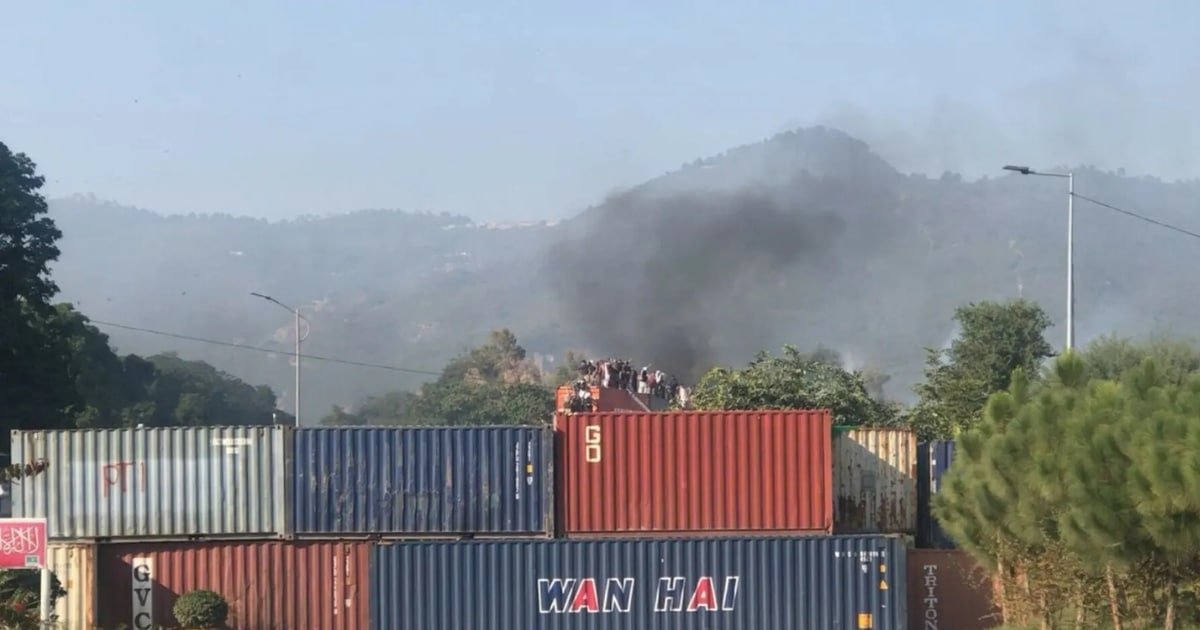
Public Hardship: In Islamabad, the sealing of the Red Zone and the placement of containers have turned a routine commute into a multi-hour ordeal for students, patients, and office-goers.
-
Security Vulnerability: Diverting thousands of police personnel to manage political protesters leaves the rest of the capital vulnerable. This is particularly concerning following the tragic suicide bombing at an Islamabad mosque on February 6, 2026. Experts warn that using the security apparatus for crowd control rather than counter-terrorism is a dangerous misallocation of resources.
The Danger of Delegitimizing Institutions
Perhaps the most damaging aspect of these protests is the consistent attempt to cast the judiciary and medical professionals as complicit in a conspiracy. By attacking the timeline of the Supreme Court’s orders and dismissing government-provided specialist care as “substandard,” the PTI risks eroding public trust in the very institutions it will eventually rely on for relief.
You May Like To Read: Why India and RAW Wanted Gurpatwant Singh Pannun Dead?
Conclusion: From Agitation to Governance
The transition from a “political party” to a “perpetual protest movement” has left Islamabad in a state of constant siege. When medical attention is already being legally facilitated, a sit-in becomes a purposeless exercise in chaos. For Pakistan to move toward stability, political grievances must be settled in courts and committees, not by holding the capital’s residents hostage to a narrative of selective health crises.
Check out our latest video: